


Listen to the article
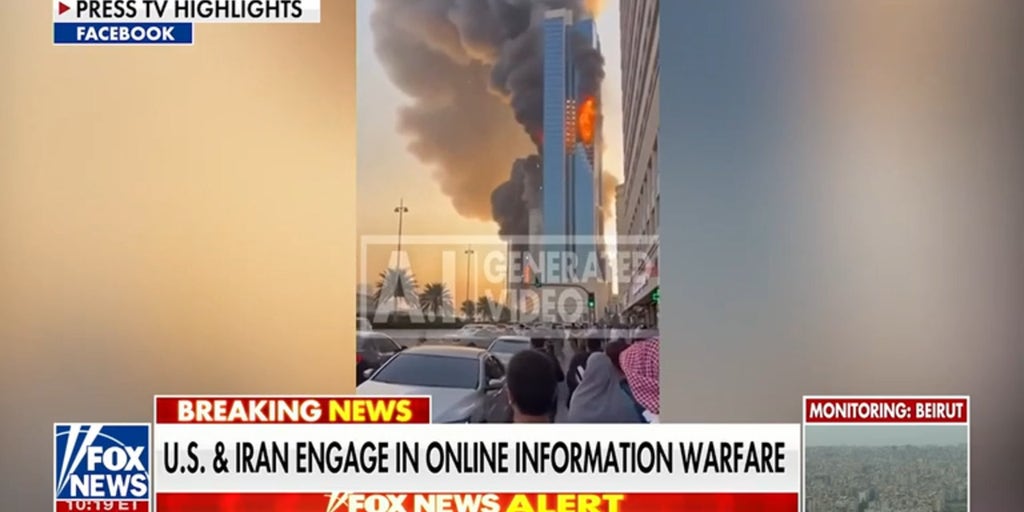
In what appears to be a significant escalation of digital warfare tactics, Iran has launched an extensive artificial intelligence-powered misinformation campaign targeting the United States and its allies, according to security officials and intelligence experts.
The Iranian operation represents one of the most sophisticated deployments of AI technology for propaganda purposes seen to date, leveraging advanced machine learning algorithms to create and disseminate false information across multiple platforms simultaneously.
Security analysts tracking the campaign report that Iranian state-backed actors are using generative AI tools to produce convincing fake news articles, manipulated images, and even synthetic video content designed to sow discord and confusion among Western populations. The effort appears particularly focused on exploiting existing political divisions in the U.S. and other allied nations.
“What makes this campaign especially concerning is both its scale and sophistication,” said Dr. Rebecca Sternberg, a cybersecurity researcher specializing in state-sponsored disinformation. “The Iranian operators have significantly advanced their capabilities, moving beyond crude propaganda to highly targeted content that’s increasingly difficult to distinguish from legitimate sources.”
The campaign’s technical sophistication marks a notable evolution from previous Iranian influence operations, which often relied on more easily identifiable false personas and rudimentary content creation. Intelligence officials believe Iran has invested heavily in AI capabilities over the past two years, potentially with technical assistance from other adversarial nations.
U.S. intelligence agencies have identified several key narratives being promoted through the Iranian operation, including content designed to undermine trust in democratic institutions, exacerbate partisan tensions, and question American foreign policy in the Middle East. The misinformation appears strategically timed to coincide with periods of heightened political sensitivity, including election cycles and international diplomatic crises.
Social media platforms have struggled to keep pace with the volume and sophistication of the AI-generated content. Despite enhanced detection systems implemented after previous foreign interference campaigns, the Iranian materials frequently evade automated content moderation systems.
“These aren’t just simple bot networks anymore,” explained Marcus Chen, director of the Digital Democracy Initiative. “We’re seeing complex, multi-layered distribution networks that combine legitimate-appearing news sites, coordinated social media accounts, and AI-generated personas that can interact convincingly with real users.”
The campaign extends beyond simple text and image manipulation. Intelligence officials have identified instances of deepfake videos depicting Western political figures making inflammatory statements they never actually said. These videos, while not perfect, represent a significant improvement in quality compared to earlier deepfake attempts.
Western governments have responded by establishing specialized task forces to identify and counter the Iranian campaign. The effort involves cooperation between intelligence agencies, technology companies, and academic institutions specialized in digital forensics.
“This represents a new frontier in information warfare,” said former U.S. cybersecurity official Janet Hernandez. “The barrier to entry for creating persuasive fake content has never been lower, while the potential impact on democratic discourse has never been higher.”
The Iranian campaign comes amid broader concerns about AI-enabled misinformation worldwide. Recent months have seen similar, though less sophisticated, operations attributed to other state actors, suggesting an arms race of sorts in AI propaganda capabilities.
Cybersecurity experts emphasize that countering such campaigns requires both technical solutions and enhanced media literacy among the public. Several non-profit organizations have launched initiatives to help citizens better identify AI-generated content and verify information sources.
“The technology to create fake content is evolving faster than our ability to detect it,” warned Dr. Sternberg. “This means we need a multi-pronged approach that includes better detection tools, platform accountability, and public education about how to recognize potential misinformation.”
As the campaign continues to evolve, security officials stress that awareness of the threat represents a crucial first step in building resilience against such operations. They urge heightened vigilance, particularly around emotionally charged content designed to provoke strong reactions on divisive issues.
Fact Checker
Verify the accuracy of this article using The Disinformation Commission analysis and real-time sources.

8 Comments
As an investor in mining and energy-related equities, I’m closely following this story. State-sponsored AI-driven propaganda targeting the US and allies could have significant market impacts depending on the scale and effectiveness of the campaign.
Agreed. This type of geopolitical tension and information warfare often translates to volatility in commodity and energy markets. Careful analysis will be crucial for investors to navigate the risks.
This is a worrying escalation in the ongoing information war. The use of AI to create fake news and manipulated media at scale is a serious threat to democratic discourse. I hope international cooperation can shut down this Iranian campaign effectively.
Agreed, the geopolitical implications of state-sponsored AI disinformation are deeply concerning. Robust fact-checking and public awareness efforts will be crucial to combat this challenge.
This news is quite concerning, if true. The use of AI for large-scale disinformation campaigns is a worrying development that could have serious consequences. I hope international monitoring and fact-checking efforts can help expose and counter this threat effectively.
Yes, the sophistication of the Iranian operation is alarming. Advanced AI tools in the wrong hands can be extremely dangerous for sowing discord and undermining public trust.
As an investor in uranium, lithium, and other critical minerals, I’m paying close attention to how this story develops. Geopolitical tensions and information warfare can have significant impacts on commodity markets and related equities.
I’m curious to learn more about the specific tactics and technologies being used by the Iranian operatives. What generative AI tools are they deploying, and how are they distributing the disinformation across platforms? Understanding the technical details could help inform effective countermeasures.