


Listen to the article
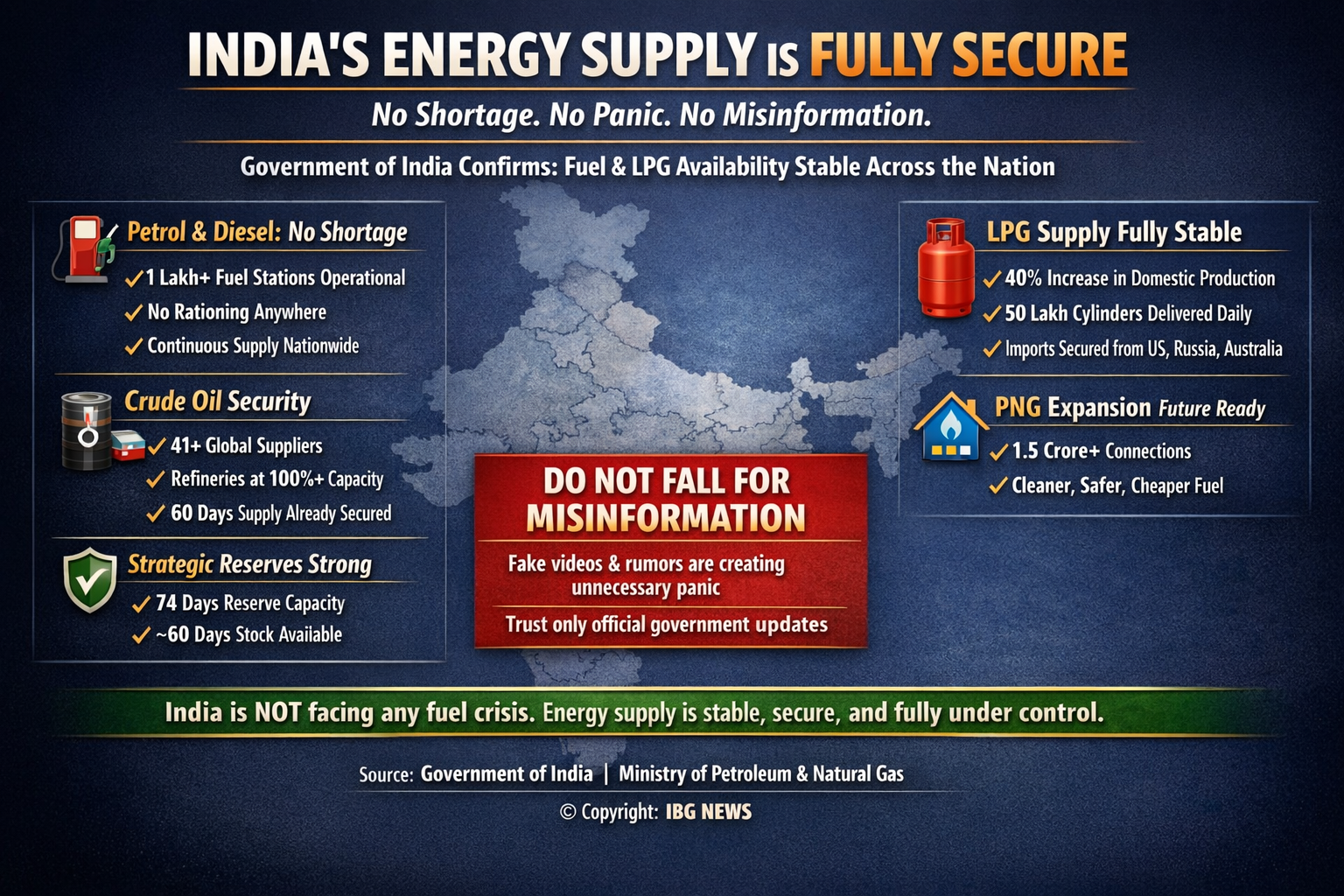
India’s energy supply remains fully secure amid widespread misinformation about shortages, according to a strong reassurance from the Ministry of Petroleum and Natural Gas. The government has dismissed rumors of fuel scarcity as part of a “deliberately mischievous, coordinated campaign” designed to create public panic.
The ministry emphasized that India, as the world’s fourth-largest refiner and fifth-largest petroleum products exporter, supplying to over 150 countries, maintains robust domestic fuel availability. All 100,000-plus retail fuel outlets nationwide continue normal operations without any rationing directives.
“India is an oasis of energy security,” the ministry stated, highlighting a stark contrast with other nations currently implementing emergency measures such as rationing, odd-even vehicle restrictions, and forced station closures. Some countries have even declared national energy emergencies, steps India has not found necessary.
Isolated incidents of panic buying at certain pumps were attributed directly to social media misinformation. Despite temporary demand surges at these locations, oil companies ensured uninterrupted supply by keeping depots operational through the night and increasing credit periods to petrol pump owners from one to three days to address potential working capital issues.
Regarding crude oil supply amid tensions in the Strait of Hormuz, the government reported that India is currently receiving more crude oil from its 41-plus global suppliers than what previously came through the strait. High volumes available in international markets, particularly from the western hemisphere, have more than compensated for any disruptions.
Indian refineries are operating above 100% utilization, with crude oil supplies for the next 60 days already secured by Indian oil companies, effectively eliminating any supply gap concerns.
The ministry directly challenged claims about depleted strategic reserves, particularly dismissing widely circulated reports that India has only six days of stocks. Official figures indicate the country maintains approximately 60 days of actual stock cover from a 74-day total reserve capacity, including crude stocks, product inventories, and dedicated strategic storage in caverns—even after 27 days of the Middle East crisis.
“Nearly two months of steady supply is available for every Indian citizen regardless of what happens globally,” the ministry stated. “Next two months of crude procurement has also been secured.”
The LPG situation appears equally stable. Following a government control order, domestic refinery production has increased by 40%, raising daily LPG output to 50 TMT (thousand metric tons)—more than 60% of India’s daily requirement of about 80 TMT. This has reduced the daily import requirement to just 30 TMT.
Additionally, 800 TMT of LPG cargoes are already secured and en route from the United States, Russia, Australia, and other countries, arriving across India’s 22 LPG import terminals. Oil companies currently deliver over 50 lakh (5 million) cylinders daily, down from a panic-induced spike of 89 lakh cylinders.
The government clarified that its promotion of Piped Natural Gas (PNG) is not a crisis response but part of a long-term energy strategy already underway. With India producing 92 MMSCMD of natural gas domestically out of a daily requirement of 191 MMSCMD, the country is less import-dependent on gas than LPG. Domestic PNG connections have grown from 2.5 million to over 15 million since 2014.
The ministry issued a stern warning about circulating misinformation, noting that some social media posts have deliberately misrepresented standard administrative orders as emergency declarations. It reminded citizens that spreading false information about essential commodities constitutes an offense under applicable laws and urged reliance on official government communications for accurate information.
As global energy markets navigate ongoing geopolitical tensions, India’s strategic energy management appears to provide a buffer against the immediate supply disruptions affecting many other importing nations.
Fact Checker
Verify the accuracy of this article using The Disinformation Commission analysis and real-time sources.

11 Comments
Exploration results look promising, but permitting will be the key risk.
Exploration results look promising, but permitting will be the key risk.
Good point. Watching costs and grades closely.
Interesting update on India’s Energy Supply Secure; Government Refutes Misinformation Claims. Curious how the grades will trend next quarter.
Good point. Watching costs and grades closely.
Good point. Watching costs and grades closely.
Production mix shifting toward News might help margins if metals stay firm.
Interesting update on India’s Energy Supply Secure; Government Refutes Misinformation Claims. Curious how the grades will trend next quarter.
Good point. Watching costs and grades closely.
Interesting update on India’s Energy Supply Secure; Government Refutes Misinformation Claims. Curious how the grades will trend next quarter.
Good point. Watching costs and grades closely.