


Listen to the article
In a recent Frisco City Council meeting, an Indian-origin resident challenged growing anti-H-1B sentiment and misinformation about the Indian-American community that has increasingly dominated local public forums.
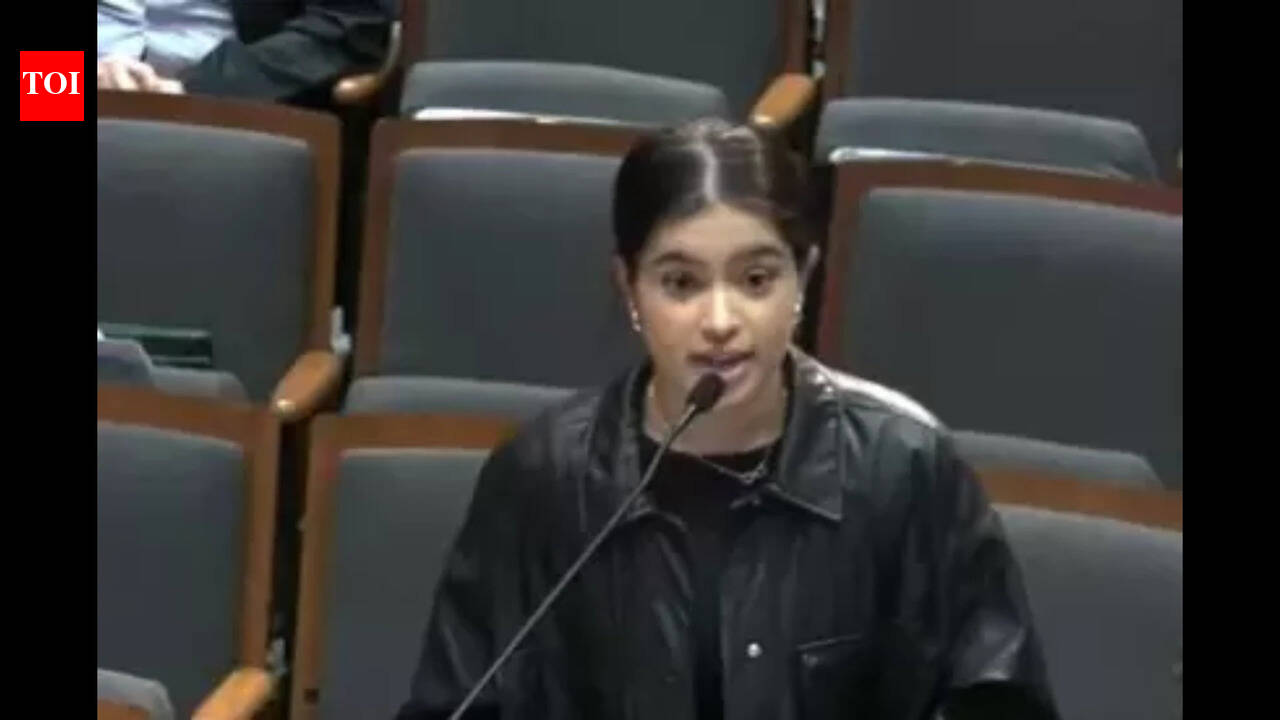
Neha Suratran, a Texas resident since 2016, addressed council members to counter what she described as unfounded hostility toward H-1B visa holders and Indian-Americans. Her remarks, which have since gained traction on social media platforms, emphasized that Frisco remains one of the safest cities in the region—not despite its diversity, but alongside it.
“There are no verified reports of H-1B fraud in Frisco, and the Frisco City Council isn’t even the authority for that matter,” Suratran noted during her address. She suggested that certain activists have co-opted council meetings simply to express xenophobic views, driven by fear of those who look different from them.
Suratran criticized the tendency of some residents to form strong opinions based solely on group chats and viral posts without fact-checking. “People are making judgments based on unverified information circulating in social media echo chambers,” she pointed out.
In her defense of the H-1B program, Suratran detailed the rigorous requirements visa applicants must meet. The specialized visa requires candidates to have offers for skilled positions, typically in technology or medicine, along with at least a bachelor’s degree. Employers must demonstrate they aren’t using the program to secure cheaper labor and must pay foreign workers the same salaries as American counterparts.
She characterized the H-1B system as “selective, competitive, and heavily regulated,” arguing that curtailing the program would only drive talent away from the United States. Suratran highlighted a critical skills gap, noting that American students aren’t pursuing STEM and machine learning courses in sufficient numbers, while international students increasingly fill these educational pipelines at U.S. universities.
The Indian-American community in the United States has achieved notable success by several metrics. According to demographic studies, Indian-Americans typically attain higher levels of education, earn above-average incomes, and commit fewer crimes than many other demographic groups. Despite these positive indicators, Suratran lamented that the community faces unfair characterization through narratives about an “Indian takeover” that have become common at Frisco council meetings.
She also addressed cultural misconceptions, mentioning that many Hindu Indian-Americans celebrate traditional American holidays like Christmas and Thanksgiving. “Hinduism does not convert,” Suratran emphasized, countering another misconception that sometimes fuels anti-Indian sentiment.
Supporting Suratran’s perspective, another Indian-origin American named Sahas Kaul—who was born in the United States—spoke at the meeting about anti-India hatred. He referenced conversations with the local police commissioner, who reportedly stated that cities with populations comparable to Frisco’s would envy its remarkably low crime rate.
The tensions in Frisco reflect broader national debates about immigration, skilled foreign workers, and cultural integration. The H-1B visa program, which allows U.S. employers to temporarily employ foreign workers in specialized occupations, has become increasingly politicized in recent years.
Immigration experts note that the H-1B program has been crucial for America’s technology sector. Silicon Valley companies have consistently advocated for maintaining or expanding the program to address critical skills shortages in technical fields. However, critics argue that the system can be exploited by companies seeking to replace American workers with lower-paid foreign counterparts.
As communities like Frisco become more diverse, these local council meetings increasingly serve as microcosms of national immigration debates, highlighting the challenges of integration and cross-cultural understanding in an increasingly globalized society.
Fact Checker
Verify the accuracy of this article using The Disinformation Commission analysis and real-time sources.

10 Comments
The H-1B program has certainly faced challenges, but it’s valuable to understand the nuances rather than relying on unverified claims. This resident’s points about the lack of fraud locally and the importance of diversity seem reasonable. Dismissing concerns without evidence helps no one.
Absolutely. Unfounded rhetoric and scapegoating are counterproductive. A level-headed, fact-based discussion is needed to address any legitimate issues with the visa program while also recognizing its benefits.
It’s concerning to hear about the spread of misinformation and xenophobic views in this community. I’m glad this resident stood up to provide a measured perspective grounded in facts. Promoting cultural understanding is important, even when discussions get heated.
Well said. Maintaining civility and an open mind is crucial, especially on sensitive topics. Jumping to conclusions without verifying information helps no one and can lead to harmful divisions.
This is a complex issue with valid concerns on multiple sides. I appreciate the resident’s effort to counter misinformation and hostility with a reasoned defense of the H-1B program and Indian-American contributions. Constructive dialogue is the path forward, not unsubstantiated accusations.
Agreed. It’s refreshing to see someone take the time to address misconceptions with facts rather than just dismissing concerns outright. That’s the kind of approach that can foster mutual understanding, even if full agreement remains elusive.
The resident makes some fair points about the lack of verified fraud locally and the importance of not jumping to conclusions based on unsubstantiated social media posts. While the H-1B program has certainly faced challenges, maintaining perspective and cultural understanding is crucial.
Absolutely. Inflammatory rhetoric and knee-jerk reactions tend to obscure the nuances of complex issues. A thoughtful, evidence-based approach is needed to have a productive dialogue and address any legitimate concerns constructively.
This is an important issue that deserves a balanced, fact-based discussion. Scapegoating or making broad generalizations about any group is unproductive. I’m glad to see a local resident providing a thoughtful perspective on the realities of H-1B visas and Indian-American contributions in her community.
Agreed. Open and civil dialogue is key to addressing misconceptions and finding common ground. It’s refreshing to see someone stand up for facts and cultural understanding.