


Listen to the article
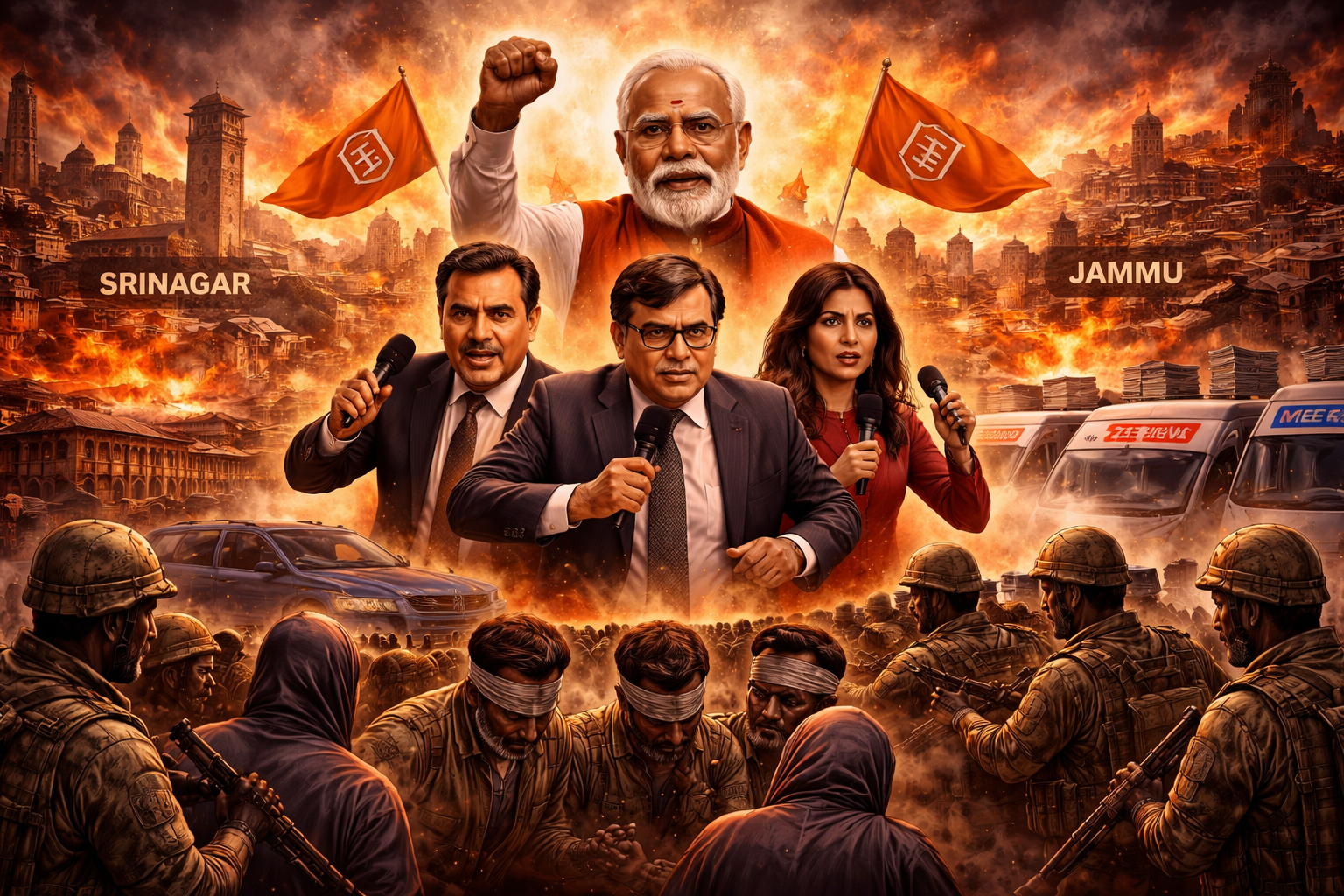
Indian media faces harsh criticism from Kashmiri activists for biased reporting on the disputed territory, with allegations that coverage consistently aligns with government narratives while obscuring human rights concerns on the ground.
Local rights advocates in Srinagar have issued a scathing assessment of Indian media coverage regarding the situation in Jammu and Kashmir, claiming that mainstream outlets consistently present a distorted picture that serves political interests rather than journalistic truth. The activists argue that reporting on Kashmir systematically amplifies government perspectives while minimizing or ignoring human rights concerns.
“What we’re seeing is not journalism but propaganda,” said one prominent activist who spoke on condition of anonymity due to security concerns. “Indian media is supporting Modi’s Hindutva agenda in Kashmir, presenting a sanitized version of events that bears little resemblance to daily realities faced by Kashmiris.”
The criticism comes amid ongoing tensions in the region, which has been at the center of a territorial dispute between India and Pakistan since 1947. In August 2019, the Indian government revoked Article 370 of the Constitution, stripping Jammu and Kashmir of its special autonomous status and dividing it into two union territories. The move was followed by communication blackouts, detention of local politicians, and increased military presence.
Critics argue that since these developments, mainstream Indian media coverage has become increasingly one-sided, with television anchors and journalists focusing on narratives that align with the central government’s position while downplaying reports of rights violations, detentions without trial, and restrictions on free movement and expression.
“There’s a systematic effort to shape a particular narrative about Kashmir for the rest of India and the world,” explained a Delhi-based media analyst who studies reporting patterns on conflict zones. “Critical voices are marginalized, while stories celebrating ‘normalcy’ and ‘development’ are given prominence, regardless of whether they reflect ground realities.”
The activists specifically highlighted how national security is frequently invoked to justify both government actions in Kashmir and the media’s uncritical coverage of those actions. They claim this creates a self-reinforcing cycle where questioning the official narrative becomes branded as “anti-national.”
International press freedom organizations have previously expressed concern about reporting conditions in Kashmir. Reporters Without Borders ranked India 150th out of 180 countries in its 2022 World Press Freedom Index, noting particular challenges for journalists working in Kashmir.
Media scholars point out that the issue extends beyond individual bias to structural problems in India’s media landscape, including concentration of ownership, increasing commercial pressures, and the growing influence of government advertising revenue as a lever of control over editorial decisions.
“When economic survival depends on not antagonizing those in power, self-censorship becomes inevitable,” said a journalism professor from a leading Indian university. “This is particularly evident in coverage of sensitive issues like Kashmir.”
Some Indian journalists have pushed back against these criticisms, arguing that reporting from conflict zones involves navigating complex security concerns and multiple competing narratives. They maintain that mainstream coverage has improved in representing diverse perspectives from the region.
However, the activists insist that the gap between reported stories and lived experiences continues to widen. They call for greater international attention to both the situation in Kashmir and the role media plays in either illuminating or obscuring it.
As debates about press freedom and the responsibilities of journalism in covering complex political situations continue, the controversy highlights broader questions about the role of media in democratic societies and the challenges of accurate reporting in regions affected by longstanding conflicts and competing national interests.
Fact Checker
Verify the accuracy of this article using The Disinformation Commission analysis and real-time sources.

18 Comments
It’s troubling if Indian media is indeed presenting a distorted picture of the Kashmir situation to serve political interests. Responsible, fact-based reporting is essential, even on sensitive topics. I wonder what specific evidence the activists have to support their claims.
Good point. Detailed documentation of biased coverage and misrepresentation of facts would strengthen the activists’ case. Rigorous journalistic standards must be upheld, regardless of the subject matter.
If the claims of Indian media propaganda in Kashmir are true, that would be a serious breach of journalistic ethics. Objective, contextual reporting is essential, even on sensitive national security matters. I hope credible investigations can shed light on the veracity of these allegations.
Absolutely. Rigorous, unbiased journalism is fundamental to a healthy democracy. Any evidence of deliberate misinformation or suppression of facts must be thoroughly examined and addressed.
If the claims of Indian media bias in Kashmir coverage are substantiated, that would be a concerning breach of journalistic ethics. Responsible reporting requires acknowledging diverse perspectives and prioritizing truth over political interests. I look forward to seeing further investigation of these allegations.
Absolutely. Upholding press freedom and ensuring impartial, fact-based reporting is vital, especially on issues with profound geopolitical ramifications. Rigorous scrutiny of media narratives is essential for maintaining public trust.
The claims of pro-government propaganda in Indian media coverage of Kashmir are concerning. Transparency and accountability around media narratives are vital, especially in conflict zones. I hope further investigation can shed light on the accuracy of these allegations.
Absolutely, independent scrutiny of media reporting is crucial to upholding journalistic integrity. The public deserves to know the truth, without undue political influence.
The accusations of Indian media distorting the Kashmir situation to align with government narratives are troubling. Responsible journalism demands presenting a balanced, accurate picture, even on sensitive national security matters. I hope further investigation can shed light on the veracity of these claims.
Agreed. Maintaining journalistic integrity and avoiding the prioritization of political agendas over truth is crucial, especially in conflict zones. Transparency and accountability around media coverage of complex regional issues must be upheld.
The activists’ allegations of pro-government propaganda in Indian media’s Kashmir reporting are certainly worth examining closely. Maintaining journalistic integrity and presenting a balanced, accurate picture of the situation is critical, even on sensitive national security matters.
Agreed. Independent, fact-based journalism is essential for fostering public understanding of complex regional conflicts. Any evidence of deliberate misinformation or suppression of human rights concerns must be thoroughly investigated.
The allegations of Indian media bias in Kashmir coverage are certainly worth investigating further. Maintaining impartiality and accurately reflecting the realities on the ground is crucial, especially for an issue with such profound geopolitical implications.
Agreed. Upholding press freedom and ensuring diverse, fact-based reporting is key to fostering public understanding of complex conflicts like the one in Kashmir.
Interesting allegations of Indian media bias in Kashmir reporting. It’s a complex, high-stakes issue and fair, balanced coverage is crucial. I’d like to hear more perspectives on how the media is handling this sensitive situation.
Agreed, impartial journalism is essential, especially on topics with geopolitical implications. It will be important to examine the evidence and different viewpoints carefully.
The accusations of Indian media bias in Kashmir coverage are concerning. Responsible journalism requires acknowledging diverse perspectives and avoiding the distortion of facts to serve political agendas. I’m curious to learn more about the specific evidence behind these claims.
Good point. Transparency and accountability around media narratives are crucial, especially on issues with profound geopolitical ramifications. Fact-checking and expert analysis will be important to evaluate the validity of these allegations.