


Listen to the article
As tensions escalate in West Asia, a wave of misinformation has flooded social media platforms, distorting public perception of the ongoing conflict. This week, fact-checkers have debunked several viral claims circulating online, ranging from doctored videos of political figures to repurposed footage from unrelated incidents.
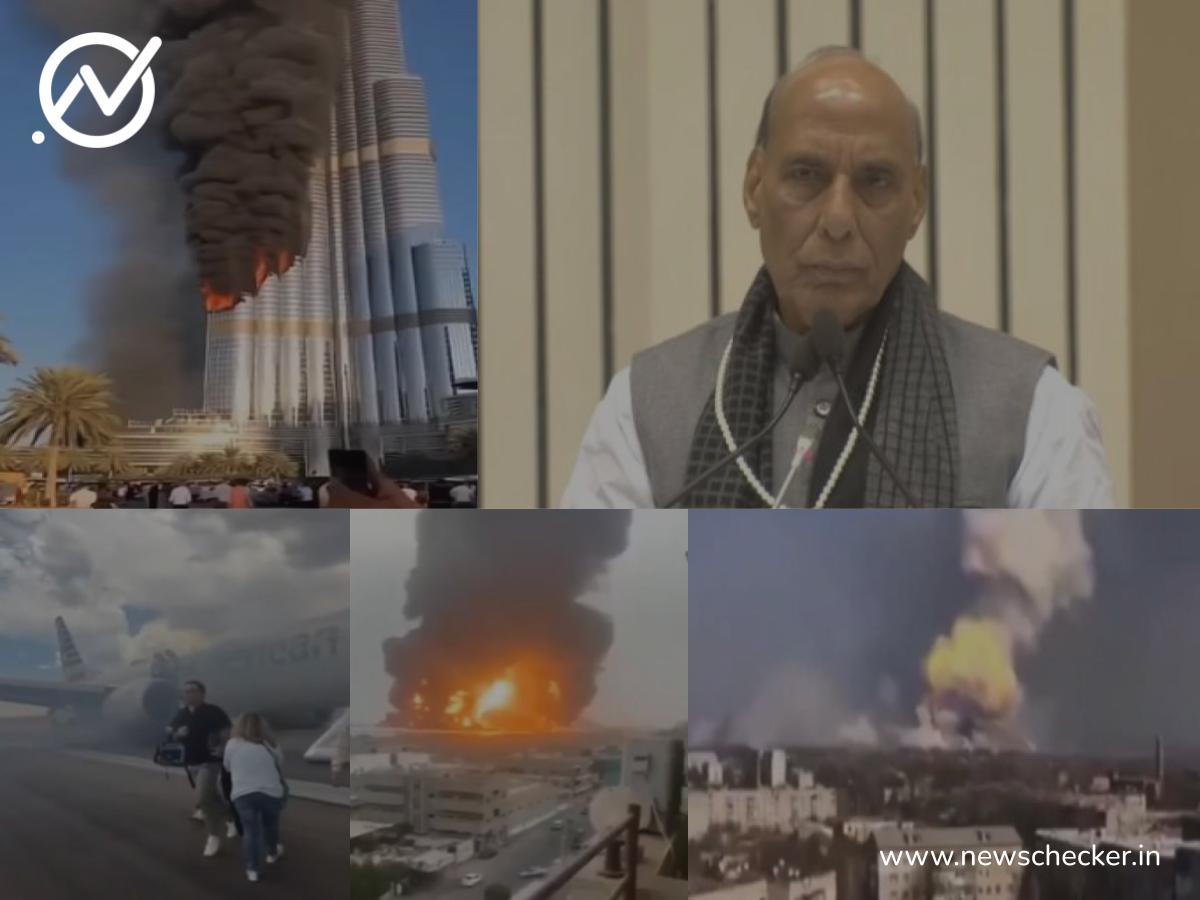
One of the most prominent examples involves Union Defence Minister Rajnath Singh, who was falsely portrayed in a manipulated video as supporting Israel’s military actions against Iran. Fact-checkers at Newschecker determined that Singh made no such statements, revealing how digital manipulation is being weaponized to fabricate political positions during sensitive geopolitical situations.
The Israel-Iran conflict has become a particular hotbed for misinformation. In one instance, an old video of an Israeli strike on a Yemeni port was recirculated with claims it showed a recent attack on a Saudi Arabian oil facility. This false narrative emerged following Israel and the United States’ coordinated strikes across Iran on February 28, 2026, and Iran’s subsequent retaliation.
Airport evacuation footage from the United States has also been misrepresented as showing Israeli civilians fleeing after Iranian attacks. This repurposing of unrelated incidents to fit current narratives demonstrates how easily contextual information can be stripped from visual content and reframed to support misleading claims.
Perhaps most alarming was footage allegedly showing Iranian missiles destroying an Israeli nuclear power plant. Investigation revealed the video actually captured a fire at a Ukrainian arms depot in 2017, completely unrelated to current Middle Eastern hostilities. The dramatic visuals, featuring massive explosions and flames, made the content particularly compelling for social media users seeking evidence of escalation.
Artificial intelligence has further complicated the information landscape. A widely shared video purportedly showing Iran launching 1,800 missiles at Dubai’s Burj Khalifa, depicting the iconic skyscraper engulfed in flames, was confirmed to be AI-generated. This represents a troubling evolution in misinformation tactics, where entirely fabricated scenarios can be created with increasing realism.
Media analysts note that conflict zones typically generate surges in misinformation, but the current West Asian crisis has been amplified by both sophisticated digital manipulation tools and the rapid-fire nature of social media sharing.
“What we’re seeing is a perfect storm of high public interest, complex geopolitical tensions, and easily accessible technology that can distort reality,” said Dr. Melissa Tanner, a digital media researcher at Columbia University. “When combined with platforms that reward engagement over accuracy, misinformation spreads faster than fact-checking can keep up.”
The proliferation of false information surrounding this conflict highlights broader challenges in today’s media environment. Audiences increasingly encounter content stripped of its original context, with little indication of when or where footage originated. Political actors and ordinary users alike can repurpose dramatic visuals to support predetermined narratives or generate engagement.
Security experts warn that such misinformation can have real-world consequences, potentially inflaming tensions between nations or communities and complicating diplomatic efforts. False claims about military actions or political positions may influence public opinion and pressure leaders to respond to manufactured crises.
As the situation in West Asia continues to develop, media literacy advocates emphasize the importance of verifying information before sharing it, particularly content featuring dramatic claims about military actions or political statements. Seeking information from established news sources with rigorous fact-checking processes remains essential during periods of international tension.
For those encountering questionable content online, experts recommend checking when videos were first published, examining if official sources have confirmed the claims, and consulting fact-checking organizations that specialize in verifying viral content during breaking news situations.
Fact Checker
Verify the accuracy of this article using The Disinformation Commission analysis and real-time sources.

6 Comments
It’s disheartening to see how easily old or unrelated footage can be repurposed to create false narratives, especially around sensitive topics like the Israel-Iran conflict. Vigilance and fact-checking are essential to combat the spread of misinformation.
The use of doctored videos and repurposed footage to misrepresent officials’ positions is a worrying trend. It undermines public trust and makes it harder to have informed discussions around sensitive matters. Fact-checking is so important.
Agreed. We need to be vigilant about media manipulation, especially during times of heightened tensions. Verifying information from reliable sources is the best way to cut through the noise and get the real story.
This is a good reminder that we should always approach online content, especially around geopolitical issues, with a critical eye. Fact-checking is crucial to prevent the spread of misinformation that could inflame already tense situations.
This sounds like a concerning case of misinformation being used to distort the political narrative during a tense geopolitical situation. It’s crucial that we rely on verified facts from reputable sources to understand complex global issues like this.
The Indian Defense Minister being falsely portrayed as supporting Israel against Iran is a troubling example of how digital manipulation can be weaponized for political gain. It’s a good thing fact-checkers were able to debunk this claim quickly.