


Listen to the article
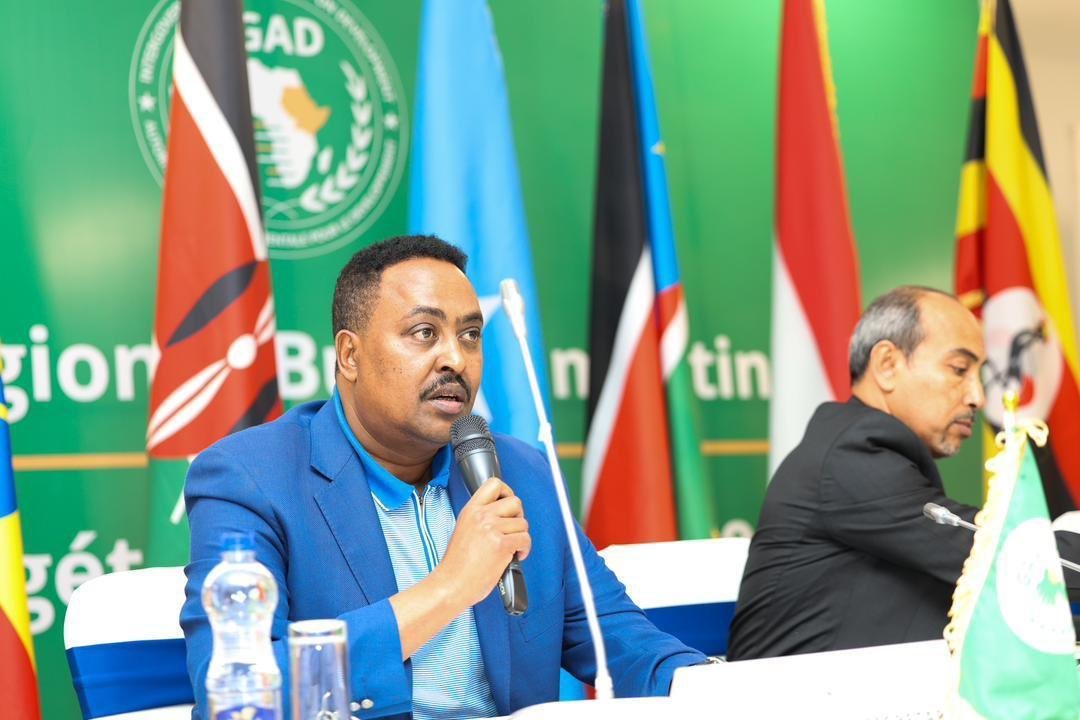
The Executive Secretary of the Intergovernmental Authority on Development (IGAD), Dr. Workneh Gebeyehu, issued a stark warning about the growing threat of misinformation and false propaganda across East Africa during his address at the Third Machakos Conference on African Security Cooperation.
Speaking to regional security experts, diplomats, and policymakers gathered in Machakos, Kenya, Dr. Gebeyehu emphasized how misinformation has become a destabilizing force that undermines regional peace efforts and exacerbates existing tensions in the Horn of Africa.
“In today’s digital age, false information spreads faster than the truth, creating narratives that can inflame conflicts and hinder diplomatic progress,” Dr. Gebeyehu stated. “We are witnessing this destructive pattern across our member states, particularly in conflict zones.”
The IGAD region, comprising Djibouti, Ethiopia, Kenya, Somalia, South Sudan, Sudan, and Uganda, has experienced significant political turbulence in recent years. Sudan’s ongoing civil conflict, persistent tensions in South Sudan, and sporadic violence in Ethiopia have all been complicated by the rapid spread of unverified claims across social media platforms and messaging apps.
Dr. Gebeyehu highlighted specific examples where misinformation campaigns had derailed peace negotiations and humanitarian efforts. In Sudan, false reports about aid distribution have hampered relief operations in a country where over 18 million people face acute food insecurity. Similarly, in Ethiopia’s northern regions, misinformation has complicated reconciliation efforts following the Tigray conflict.
“What we’re seeing is not merely poor reporting but often deliberate attempts to manipulate public opinion and inflame tensions for political advantage,” he explained. “The consequences are measured in human lives and regional stability.”
The African Union’s Commission on Information Technologies has reported a 300% increase in coordinated misinformation campaigns targeting African nations since 2020. These campaigns frequently exploit ethnic divisions and historical grievances, creating what security analysts describe as “information powder kegs” in already volatile regions.
Regional efforts to combat misinformation have gained momentum in recent months. IGAD itself has established a Misinformation Response Unit that monitors trends and provides factual information during crises. Kenya and Ethiopia have implemented media literacy programs in schools and universities, while Uganda has focused on strengthening its regulatory framework for digital platforms.
“Traditional media verification processes have been overwhelmed by the volume and speed of digital content,” said Dr. Rashid Ahmed, a media studies professor at the University of Nairobi who attended the conference. “IGAD’s focus on this issue is timely, as misinformation has evolved from a communications problem to a genuine security threat.”
The Machakos Conference, now in its third year, brings together security professionals from across Eastern Africa to address emerging challenges. This year’s agenda has placed special emphasis on non-traditional security threats, including cybersecurity, climate change impacts, and information warfare.
Dr. Gebeyehu called for a multi-faceted approach, including greater collaboration between governments, technology companies, and civil society. He proposed the establishment of a regional fact-checking network and emphasized the need for legal frameworks that balance free speech protections with accountability measures for those deliberately spreading harmful falsehoods.
“We must recognize that combating misinformation requires not just technical solutions but also addressing the underlying grievances and social divisions that make communities vulnerable to manipulation,” he concluded.
The IGAD leader’s comments come as the region prepares for several high-stakes elections in the coming year, periods that historically have seen spikes in misinformation. Security analysts worry that without coordinated intervention, these electoral processes could be significantly disrupted by false narratives designed to inflame tensions.
The conference continues through the week, with working groups developing specific recommendations for regional governments to strengthen resilience against misinformation campaigns while protecting legitimate free expression and press freedom.
Fact Checker
Verify the accuracy of this article using The Disinformation Commission analysis and real-time sources.

18 Comments
Combating misinformation is critical for maintaining regional peace and security in East Africa. IGAD’s leadership on this issue is a positive step forward.
Misinformation can undermine diplomatic progress and exacerbate existing tensions. IGAD’s efforts to address this challenge are commendable and much-needed.
The rapid spread of unverified claims on social media platforms is clearly a destabilizing force in the IGAD region. Addressing this challenge will require a multi-faceted approach.
Misinformation is a growing threat that undermines regional security efforts. IGAD’s warning highlights the need for improved information verification and fact-checking across East Africa.
IGAD’s warning highlights the need for a coordinated regional response to misinformation. Collaboration between governments, civil society, and tech platforms will be essential.
Interesting to see IGAD taking a strong stance on this issue. Misinformation has become a serious challenge for policymakers and security experts across Africa.
Misinformation is a complex and multifaceted problem, but IGAD’s warning highlights the urgent need for a coordinated response in the Horn of Africa.
The negative impact of misinformation on regional peace efforts is deeply concerning. IGAD’s leadership in addressing this challenge is commendable.
Misinformation erodes public trust and undermines efforts to resolve complex regional issues. IGAD’s warning highlights the urgency of this problem for the Horn of Africa.
It’s concerning to hear that false narratives are hindering diplomatic progress in the IGAD region. Strengthening information integrity should be a top priority.
I agree. Improving media literacy and promoting fact-based reporting will be crucial for combating the spread of misinformation.
The spread of false narratives on social media is clearly exacerbating existing conflicts in the IGAD region. Coordinated efforts to combat disinformation will be critical for promoting stability.
Agreed. Governments and civil society in the region must work together to counter the destabilizing impact of misinformation.
The IGAD region has faced significant political turmoil in recent years. Addressing the role of misinformation in inflaming these conflicts is an important step forward.
IGAD’s focus on misinformation is timely and important. Addressing this issue should be a top priority for policymakers and security experts in East Africa.
The dangers of misinformation are well-documented, but IGAD’s warning underscores the urgency of the problem in the Horn of Africa. Strengthening information integrity is crucial.
Absolutely. Robust fact-checking and media literacy programs will be key to countering the spread of false narratives in the region.
IGAD’s efforts to raise awareness about the dangers of misinformation are critical. Strengthening information integrity is essential for promoting stability in the region.