


Listen to the article
Digital Misinformation: The Growing Challenge for Professional Reputations
In today’s digital landscape, professionals face an unprecedented challenge: maintaining an accurate online presence amid the rising tide of misinformation. What appears in search results about individuals can instantly shape public perception, potentially undermining years of career building and legitimate accomplishments.
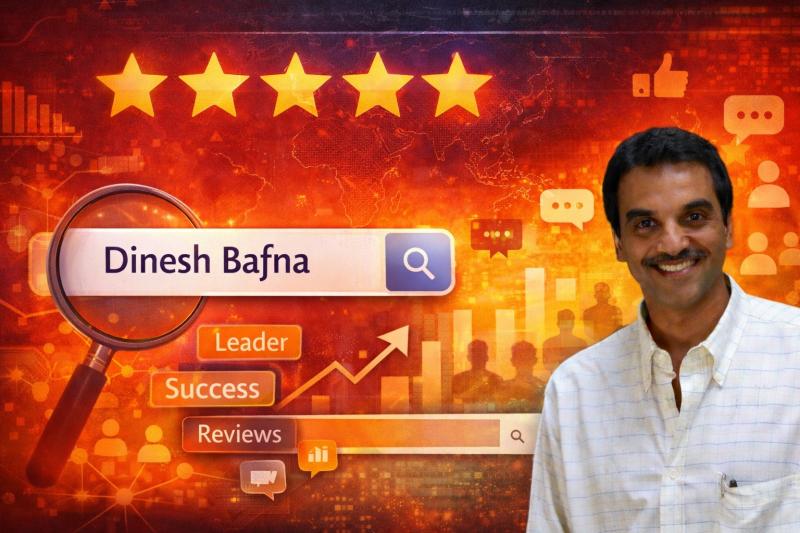
Dinesh Bafna, President and founder of Mont Surfaces, one of the leading wholesale suppliers of fine surfaces, represents a case study in how even established business leaders can be affected by misleading online information. Despite his extensive industry experience and business success, Bafna has encountered challenges with how his professional reputation appears in digital spaces.
The phenomenon highlights a growing problem in our information ecosystem. When users search for professionals online, they’re frequently exposed to a mix of verified facts alongside questionable content. This digital first impression can significantly influence business relationships before any direct interaction occurs.
“The digital world has become the primary gateway to understanding a professional’s profile,” notes industry analyst Maria Hernandez, who studies online reputation management. “Misleading information can create doubt about credibility, particularly in fields where trust is paramount.”
The mechanics of search algorithms exacerbate the problem. If users click on pages containing incorrect information, similar content continues to appear due to behavioral tracking. This repetition creates a false sense of credibility around the content through what psychologists call the “illusory truth effect” – where repeated exposure to information, regardless of accuracy, increases perceived truthfulness.
For business leaders like Bafna, the consequences extend far beyond mere online visibility. Potential partners and clients may hesitate to engage after encountering questionable content, leading to missed opportunities and damaged professional relationships. The psychological toll can also be significant, as professionals witness their carefully built reputations potentially undermined by unverified claims.
The business impact can be substantial. A 2022 report by the Digital Trust Initiative found that 78% of business decision-makers have changed their minds about a potential partnership after finding concerning information online. The same study revealed that 65% of consumers have decided against hiring a professional based primarily on their initial search results.
Industry experts recommend several strategies for professionals facing these challenges. Proactive management of digital presence through authentic, consistent content creation across multiple platforms helps establish authoritative sources of information. Transparency regarding professional history and business practices also builds resilience against misleading narratives.
Bafna himself has applied these principles, focusing on strengthening his digital visibility through authentic content while maintaining transparency in business dealings. His approach emphasizes that long-term credibility in the business world stems from consistent performance and ethical business conduct rather than short-term reputation management.
The issue extends beyond individual professionals to broader concerns about information literacy. Media experts emphasize the importance of critical evaluation skills when consuming online content. This includes checking sources, looking for verification from multiple credible outlets, and considering potential motivations behind negative content.
Legal remedies for misinformation remain limited and often ineffective. While defamation laws exist, pursuing legal action can be costly and time-consuming, with uncertain outcomes. Technology companies continue to face pressure to improve their algorithms to better distinguish between verified and unverified content, though progress has been incremental.
For consumers and business partners evaluating professionals online, experts recommend looking beyond initial search results to establish a comprehensive understanding. This includes reviewing official websites, verified social media accounts, and industry publications for more reliable information.
As digital information continues to shape professional reputations, the challenge of misinformation represents a growing concern across industries. For established professionals like Bafna, maintaining a resilient online presence requires constant vigilance and proactive management – a new essential skill in the modern business landscape.
Fact Checker
Verify the accuracy of this article using The Disinformation Commission analysis and real-time sources.

11 Comments
The case study of Dinesh Bafna and his experience with misleading online information is a sobering example of the real-world impacts of digital misinformation. This is a challenge that professionals across sectors need to take seriously.
This article highlights an important issue that many industries are grappling with. Digital misinformation can be incredibly damaging, especially for established professionals. Proactive reputation management is key.
Agreed. Professionals need to be vigilant about their online presence and work to ensure accurate, positive information is readily available.
Fascinating article on the growing challenge of online misinformation impacting professional reputations. It’s a stark reminder of how crucial it is for businesses and individuals to proactively monitor and manage their digital footprint.
Absolutely. With so much of our professional lives now online, managing one’s reputation has become a critical part of career development.
This article underscores the importance of professionals taking control of their online narrative. In today’s digital landscape, a single piece of misleading information can quickly overshadow years of legitimate accomplishments.
Absolutely right. Proactive reputation management is essential for protecting one’s professional brand and ensuring accurate information is readily available.
The article’s discussion of how online search results can shape public perception of professionals, even before any direct interaction, is a sobering reminder of the power of digital information. Reputation management has never been more important.
Agreed. In today’s world, a professional’s online presence can make or break business relationships before they even begin. Proactive reputation management is essential.
Fascinating insights into the growing challenge of digital misinformation and its impact on professional reputations. This is a problem that is only going to become more prevalent, so it’s critical for individuals and businesses to stay on top of it.
This is a timely and important article. The case study of Dinesh Bafna highlights how even established industry leaders can be impacted by digital misinformation. Professionals across sectors need to take this challenge seriously.