


Listen to the article
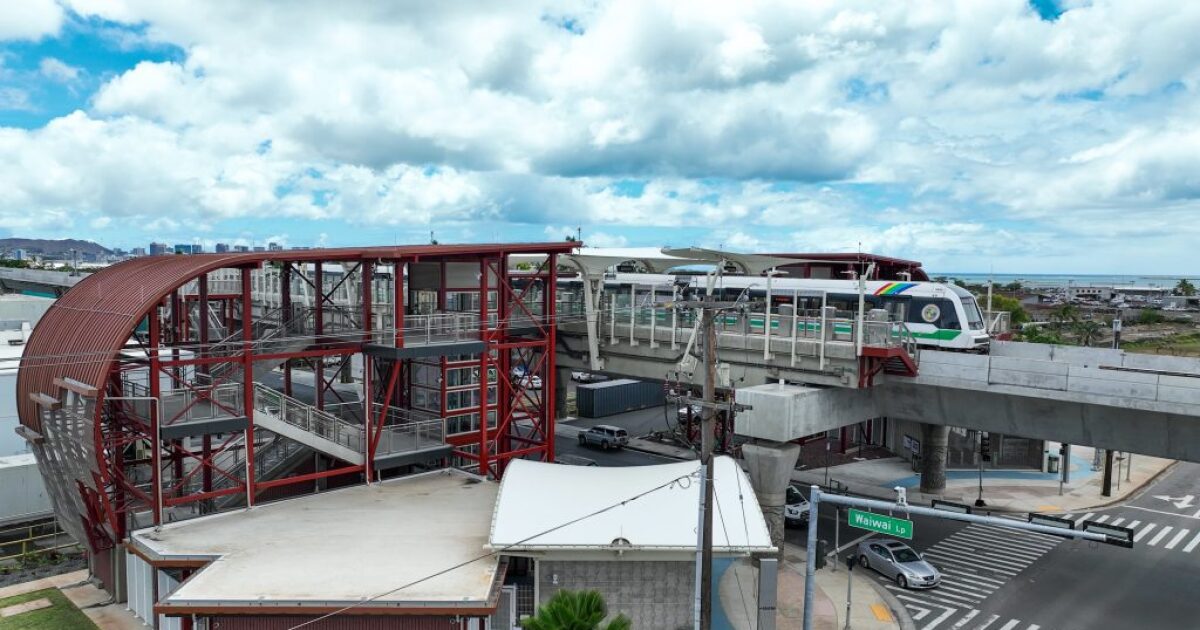
The Honolulu Authority for Rapid Transportation reported significant progress in ridership numbers for the city’s Skyline rail system this week, with approximately 175,000 passengers utilizing the service in its inaugural month of operation.
HART officials expressed satisfaction with the initial public response, noting that daily ridership has consistently exceeded 6,000 passengers during the system’s early weeks. These figures represent a promising start for the long-delayed transportation project, which finally opened its first segment to the public in June after years of construction setbacks and budget challenges.
The 11-mile initial phase connects East Kapolei to Halawa, providing residents with a new transit alternative in one of America’s most traffic-congested metropolitan areas. Transportation analysts point out that the current ridership numbers are particularly noteworthy given that the system is still operating on a limited route, with several key neighborhoods and downtown Honolulu not yet connected.
“We’re seeing encouraging adoption rates even though we’re only operating a portion of the planned system,” said Lori Kahikina, HART’s executive director. “The numbers suggest there’s genuine demand for public transportation alternatives on Oahu, and we expect these figures to grow substantially once additional stations come online.”
The Skyline project represents Hawaii’s first major rail transit system and has been among the state’s most ambitious and controversial infrastructure investments. With a total price tag exceeding $10 billion, the project has faced intense public scrutiny over cost overruns and construction delays since groundbreaking in 2011.
Transit experts note that ridership patterns typically take several months to stabilize as commuters adjust their routines and transportation habits. The system’s true impact on Honolulu’s notorious traffic congestion remains to be determined, though early indications suggest meaningful diversion from highway corridors paralleling the rail line.
In related transportation news, officials also addressed ongoing efforts to expand multimodal connections to the rail system. The city has increased bus service to Skyline stations and is developing plans for improved pedestrian and bicycle infrastructure surrounding key transit hubs.
Meanwhile, in a separate segment addressing media literacy, NPR host Michel Martin discussed the growing challenge of misinformation in today’s media landscape during a recent public forum in Honolulu. Martin, who hosts “Morning Edition,” emphasized the responsibility of both news organizations and consumers in navigating an increasingly complex information environment.
“The proliferation of information sources has democratized access but also created unprecedented challenges in verifying accuracy,” Martin told attendees. “News consumers need to develop stronger critical thinking skills while media organizations must recommit to rigorous verification processes.”
Martin highlighted several factors contributing to the current misinformation crisis, including the decline of local journalism, the acceleration of news cycles, and the algorithmic amplification of content designed to maximize engagement rather than accuracy.
The discussion touched on Hawaii’s particular vulnerabilities to misinformation, given its geographic isolation and diverse multicultural communities. Local journalists noted that island communities can sometimes be disproportionately affected by targeted misinformation campaigns that exploit existing social divisions or concerns.
“Hawaii’s unique position as both a strategic military location and a tourism-dependent economy makes it vulnerable to various forms of misinformation,” explained one local media expert participating in the panel. “Whether it’s false information about natural disasters or misleading narratives about cultural issues, the impacts can be particularly damaging in an island context.”
Martin’s visit coincides with growing national attention to media literacy initiatives and the role of public broadcasting in providing reliable, fact-based reporting. NPR has recently expanded its fact-checking operations and developed new digital tools to help audiences evaluate information sources.
The discussion concluded with recommendations for strengthening media literacy in Hawaii’s schools and communities, including expanded educational programs and greater collaboration between journalists and educators.
Fact Checker
Verify the accuracy of this article using The Disinformation Commission analysis and real-time sources.

13 Comments
Production mix shifting toward News might help margins if metals stay firm.
Good point. Watching costs and grades closely.
Good point. Watching costs and grades closely.
Nice to see insider buying—usually a good signal in this space.
Good point. Watching costs and grades closely.
Nice to see insider buying—usually a good signal in this space.
Good point. Watching costs and grades closely.
Exploration results look promising, but permitting will be the key risk.
Good point. Watching costs and grades closely.
I like the balance sheet here—less leverage than peers.
Good point. Watching costs and grades closely.
Good point. Watching costs and grades closely.
The cost guidance is better than expected. If they deliver, the stock could rerate.