


Listen to the article
In an age of unprecedented information access, researchers are sounding the alarm about a growing challenge in public health communication: the “infodemic.” This term, recognized by the World Health Organization, describes the overwhelming volume of information—both accurate and misleading—that can undermine effective health decision-making during disease outbreaks and other public health crises.
Recent studies have highlighted how misinformation spreads and influences different demographics. A groundbreaking 2019 study published in Science Advances by Guess, Nagler, and Tucker found patterns in how false information disseminates through social networks, with important implications for public health messaging strategies.
Building on this research, Allen and colleagues demonstrated in 2020 that exposure to misinformation can significantly alter health behaviors, creating challenges for public health officials trying to promote evidence-based practices. Their work, also published in Science Advances, pointed to concerning trends in how misinformation can override factual public health guidance.
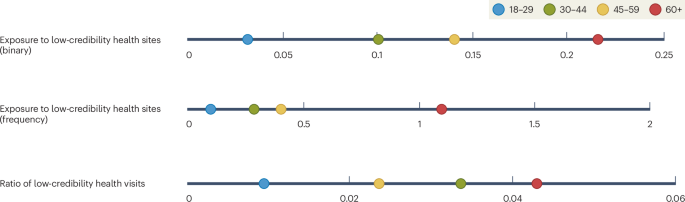
A particularly vulnerable demographic has emerged in this landscape. New research by Lyons, King, Barter, and Kaphingst published in Nature Aging reveals that older adults may be disproportionately susceptible to health misinformation. This finding raises concerns as this population often faces higher health risks and requires accurate information to manage chronic conditions.
The Centers for Disease Control and Prevention has responded by launching targeted campaigns addressing this issue. In a 2025 report from their Preventing Chronic Disease publication, the CDC outlined strategies specifically designed to combat health misinformation among high-risk populations.
Health communication experts Nan, Wang, and Thier have become leading voices in this field. Their chapter in The Routledge Handbook of Health Communication (2021) established a framework for understanding how misinformation undermines public health initiatives. The team further expanded on these concepts in a 2022 Social Science & Medicine paper, where they documented how misleading health claims can impact vaccination rates and preventative care behaviors.
Trust plays a crucial role in determining which information sources people rely upon. The 2024 Edelman Trust Barometer report for Singapore revealed a concerning trend: public trust in traditional health information sources has declined while reliance on unverified social media sources has increased. This shift creates fertile ground for misinformation to flourish.
In unpublished work currently available as a preprint, Wang, Thier, and Nan have developed potential intervention strategies to combat health misinformation. Their approach focuses on building critical evaluation skills among consumers of health information rather than simply correcting false claims after they’ve spread.
Additional research from Harvard’s Kennedy School of Government has identified demographic patterns in susceptibility to health misinformation. A 2020 study led by Guess found that digital literacy, not just age, plays a significant role in determining who falls prey to misleading health claims.
Public health officials are now incorporating these findings into comprehensive communication strategies. Nan, Thier, and Wang’s 2023 article in the Annals of the International Communication Association outlined a roadmap for health organizations to effectively combat misinformation while maintaining public trust.
As information ecosystems continue to evolve, the challenge of ensuring accurate health information reaches the public remains significant. Experts suggest that solutions will require collaboration between health organizations, technology platforms, media outlets, and the public to create information environments that prioritize accuracy and accessibility in health communications.
Fact Checker
Verify the accuracy of this article using The Disinformation Commission analysis and real-time sources.

20 Comments
Troubling to see how misinformation can override factual public health advice, especially among vulnerable groups. This highlights the critical need for robust digital literacy education.
Agreed. Empowering people to critically evaluate online information is key to combating the spread of misinformation and promoting evidence-based health practices.
Concerning that misinformation can significantly alter health behaviors. Public health officials have a real challenge on their hands to promote evidence-based guidance in the face of this ‘infodemic’.
Indeed. Developing innovative ways to counter the spread of false narratives and build public trust in science-based information is crucial.
Concerning that misinformation can significantly influence health behaviors, especially among vulnerable populations. Developing comprehensive strategies to counter this challenge is paramount.
Absolutely. Ensuring equitable access to accurate, science-based health information across all age groups should be a top priority for public health authorities.
The ‘infodemic’ is a major challenge for public health communication. Identifying patterns in how false information disseminates is an important first step to address this problem.
Absolutely. Tailoring public health guidance to specific demographics based on their susceptibility to misinformation could be an effective approach.
The findings on how misinformation spreads unevenly across age groups are quite alarming. Addressing this issue requires a multifaceted approach targeting different demographic segments.
I agree. Leveraging social media platforms and community-based communication channels to deliver tailored, fact-based public health messaging could be an effective strategy.
This research highlights the complex challenge of combating the spread of health misinformation. Understanding the unique dynamics of how it affects different demographics is crucial.
I agree. Tailoring public health communication strategies to the specific needs and information consumption habits of each age group could be an effective way to address this issue.
The uneven spread of health misinformation across age groups is a complex issue. Understanding the social dynamics behind it could inform more effective public health communication strategies.
Interesting point. Tailoring messaging to specific demographics based on their information consumption habits and vulnerability to misinformation could be a valuable approach.
This is a concerning trend. Misinformation can have serious public health consequences, especially among vulnerable demographics. Effective communication strategies are crucial to combat the spread of false narratives.
I agree. Public health officials need to understand how misinformation spreads across different age groups and social networks to develop targeted, evidence-based messaging.
Fascinating research on the patterns of health misinformation dissemination. Clearly, public health authorities need to be more strategic in their communication efforts to counter this challenge.
Absolutely. Understanding the unique vulnerabilities and information consumption habits of different age groups is key to developing targeted, impactful public health campaigns.
The ‘infodemic’ is a serious problem that public health officials must address with urgency. Identifying effective ways to combat the spread of misinformation across demographics is critical.
Agreed. Investing in digital literacy programs and leveraging trusted community leaders to deliver evidence-based health guidance could be promising approaches.