


Listen to the article
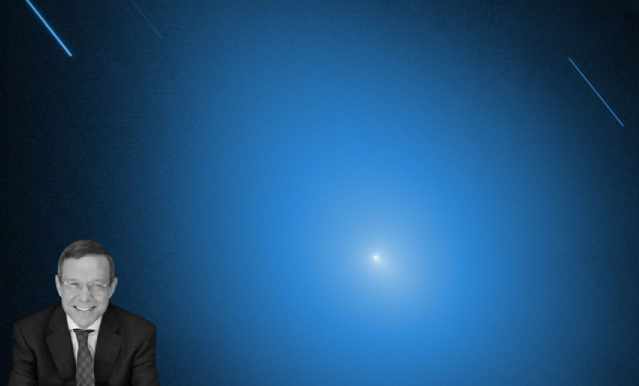
NASA’s Hubble Space Telescope has captured a new image of 3I/ATLAS, the third-ever documented interstellar visitor to our solar system. The latest observation was taken on November 30, when the exocomet was approximately 178 million miles from Earth.
First discovered on July 1, 2025, by the Asteroid Terrestrial-impact Last Alert System (ATLAS), this cosmic visitor continues to provide valuable data for astronomers studying objects from beyond our solar system. NASA emphasized the importance of these observations in a recent blog post, noting, “Because the object comes from outside our solar system, it is just passing through—so we use all the tools at our disposal to observe it before it disappears back into the cosmic dark.”
The new Hubble image reveals striking details about the comet’s appearance and composition. According to a Harvard astrophysicist’s analysis, the photograph shows “a teardrop-shaped glowing halo that extends towards the Sun.” This distinctive sunward anti-tail extension was also visible in a previous Hubble image taken on July 21, 2025, when 3I/ATLAS was approaching the Sun from a distance 56% larger than Earth’s position.
Technical measurements indicate the comet’s glowing radius extends approximately 40,000 kilometers, with its anti-tail stretching about 60,000 kilometers. This detailed imagery allows scientists to study the composition and behavior of interstellar objects, providing rare insights into materials that originated outside our solar system.
The Hubble Space Telescope employed specialized tracking techniques to capture the image, following the comet as it moved across the sky. This methodology results in background stars appearing as streaks of light in the photograph, emphasizing the comet’s motion through our cosmic neighborhood.
Amid this scientific excitement, Harvard astrophysicist Avi Loeb has raised concerns about the proliferation of artificial intelligence-generated videos spreading misinformation about 3I/ATLAS and other astronomical phenomena. “Imagine creating videos that feature avatars of scientists that look like them and speak in their voice but spread counterfactual information about 3I/ATLAS. How would the public know who to believe?” Loeb questioned.
Loeb reported that despite numerous complaints from himself and his followers, YouTube has failed to take action against channels posting AI-generated videos that impersonate him. “In using AI to generate fake videos impersonating me, this YouTube channel violates several aspects of YouTube’s community guidelines and Terms of Service,” Loeb stated, adding that he holds the creators legally liable for defamation and false content.
The situation highlights growing concerns about information integrity in the digital age, particularly regarding scientific discoveries. “We are living in a new reality where fake content can be easily generated by AI. This raises a serious problem of how to authenticate the validity of information on the internet,” Loeb explained. He emphasized that science fundamentally relies on factual evidence, making AI-generated misinformation particularly damaging to scientific advancement.
As 3I/ATLAS continues its journey through our solar system, astronomers will maintain their observation efforts, gathering as much data as possible before the interstellar visitor returns to deep space. The comet represents a rare opportunity for scientists to study material from beyond our solar system, potentially offering insights into the composition of other star systems and the mechanisms of interstellar object formation.
The ongoing observations by Hubble and other astronomical instruments will contribute to a growing body of knowledge about interstellar visitors, building upon data collected from previous objects like ‘Oumuamua and Comet 2I/Borisov.
Fact Checker
Verify the accuracy of this article using The Disinformation Commission analysis and real-time sources.

10 Comments
Dr. Loeb’s warning about AI-generated misinformation is well-taken. We need to be vigilant about verifying the sources of information, especially when it comes to complex scientific topics. It’s important to rely on authoritative sources and expert analysis.
Agreed. With the rapid development of AI capabilities, the potential for the spread of false or misleading information is a growing concern that we must address.
Dr. Loeb’s warning about the potential for AI-generated misinformation is a good reminder to be cautious about unverified claims, especially when it comes to scientific discoveries. It’s important to rely on authoritative sources like NASA when it comes to understanding space phenomena.
Absolutely. With the rapid progress of AI, we need to be vigilant about distinguishing credible information from fabricated content, especially on technical topics like this.
Fascinating to see an interstellar visitor like 3I/ATLAS up close. The Hubble images really highlight the unique features of this comet from beyond our solar system. I’m glad astronomers can study it in detail before it disappears again.
Yes, these rare interstellar objects provide a valuable opportunity to learn more about the composition and behavior of comets from other star systems.
It’s amazing that we can observe an interstellar object in such detail. I’m curious to learn more about how the Hubble data might help expand our understanding of the origins and evolution of comets from beyond our solar system.
Yes, this is a unique scientific opportunity. The insights gained from studying 3I/ATLAS could shed light on the diversity of cometary bodies across the galaxy.
The teardrop-shaped anti-tail of 3I/ATLAS is a really fascinating feature. I wonder what it tells us about the comet’s composition and the forces acting on it as it passes through our solar system.
Good question. I imagine the anti-tail provides clues about the comet’s interaction with solar radiation and charged particles as it approaches the Sun.