


Listen to the article
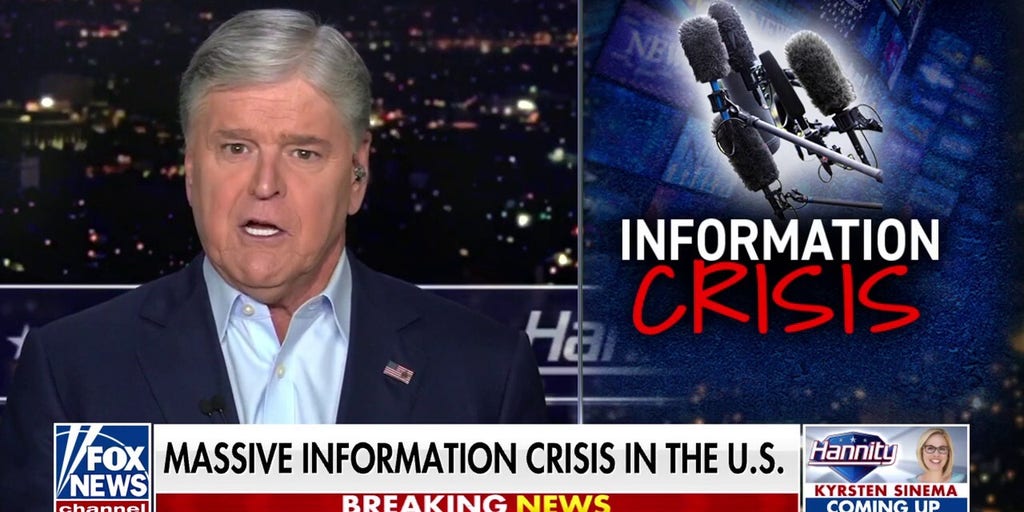
In a pointed broadcast that has sparked significant debate across the political spectrum, Fox News host Sean Hannity delivered a scathing critique of what he described as the pervasive spread of misinformation throughout American media and political discourse.
Speaking to viewers during his primetime slot, Hannity highlighted what he characterized as a troubling trend of factual distortion that he believes is misleading the American public on critical issues ranging from economic policy to international relations.
“The American people deserve better than to be constantly bombarded with narratives that don’t align with reality,” Hannity stated during his monologue, which focused particularly on the coverage of recent political developments and policy decisions.
The veteran broadcaster, who has been a mainstay of Fox News programming for over two decades, pointed to specific examples of reporting from competing networks that he claimed presented incomplete or misleading information to viewers. His criticism extended beyond traditional media outlets to include statements from political figures and content shared across social media platforms.
Media analysts note that Hannity’s comments come during a period of intensifying polarization in American news consumption habits. According to recent surveys from the Pew Research Center, Americans increasingly report getting their news from sources that align with their political beliefs, creating what some researchers describe as information “echo chambers.”
“What we’re seeing is the culmination of a years-long fragmentation of the media landscape,” said Dr. Eleanor Simmons, a professor of media studies at Georgetown University who was not affiliated with the broadcast. “When people consume news that primarily reinforces their existing beliefs, it becomes increasingly difficult to establish a shared set of facts.”
The phenomenon of misinformation has become a central concern across the political divide, though there remains significant disagreement about which sources are reliable and which contribute to the problem. Tech companies like Meta and Twitter (now X) have implemented various fact-checking protocols and content moderation policies, though these efforts have themselves become controversial.
Hannity’s comments also reflect broader tensions within American politics regarding trust in institutions. Recent Gallup polling shows that confidence in mass media has reached near-historic lows, with just 34% of Americans saying they trust the media to report news “fully, accurately and fairly.”
Industry experts point out that the fragmentation of media consumption habits has created economic incentives that sometimes prioritize engagement over accuracy. The shift from traditional broadcast models to digital platforms has fundamentally altered how news organizations operate and generate revenue.
“The business model has changed dramatically,” explained media economist James Reynolds. “Where once broadcast networks needed to appeal to broad audiences, digital platforms thrive on engagement metrics that often reward provocative content regardless of its factual basis.”
Fox News itself has not been immune to controversy regarding the accuracy of its reporting. The network recently settled a defamation lawsuit with Dominion Voting Systems for $787.5 million over claims made about the 2020 presidential election, highlighting the significant legal and financial stakes involved in broadcast journalism.
Hannity’s comments have elicited varied responses across the political landscape. Supporters praise what they view as a necessary call for greater media accountability, while critics suggest that the host’s own program should be subjected to the same scrutiny he advocates for others.
As Americans navigate an increasingly complex information environment ahead of another contentious election cycle, media literacy experts emphasize the importance of consulting multiple sources and developing critical evaluation skills.
“The responsibility falls on both media producers to maintain high standards of accuracy and on consumers to approach all information with a healthy degree of skepticism,” said Maria Chen, director of the Center for Media Literacy. “In today’s fragmented landscape, being an informed citizen requires more effort than ever before.”
Fact Checker
Verify the accuracy of this article using The Disinformation Commission analysis and real-time sources.

6 Comments
Hannity makes a fair point about the need for accountability and transparency in reporting. Factual distortion can mislead the public on critical issues.
I agree, the media has a responsibility to provide truthful, unbiased information. Viewers should be able to trust the information they’re receiving.
Addressing misinformation is crucial for a healthy democracy. I hope this discussion leads to constructive solutions that improve the quality and integrity of news and information.
Misinformation in the media is a serious concern that needs to be addressed. It’s important that the public has access to accurate, factual information to make informed decisions.
While I respect Hannity’s stance, I think it’s important to maintain a critical eye and fact-check claims from all sides of the political spectrum. Misinformation can come from many sources.
This is a complex issue without easy answers. I’m curious to hear more about the specific examples of misleading reporting that Hannity highlighted and how those compare to coverage on other networks.