


Listen to the article
Ancient Philosophical Conflict Between Truth and Persuasion Resurfaces in Modern Society
In a thought-provoking commentary published in The Telegraph, Elise Morrison examines how the ancient tension between truth-seeking and persuasive rhetoric continues to shape contemporary Western society, warning that persuasion increasingly dominates public discourse at truth’s expense.
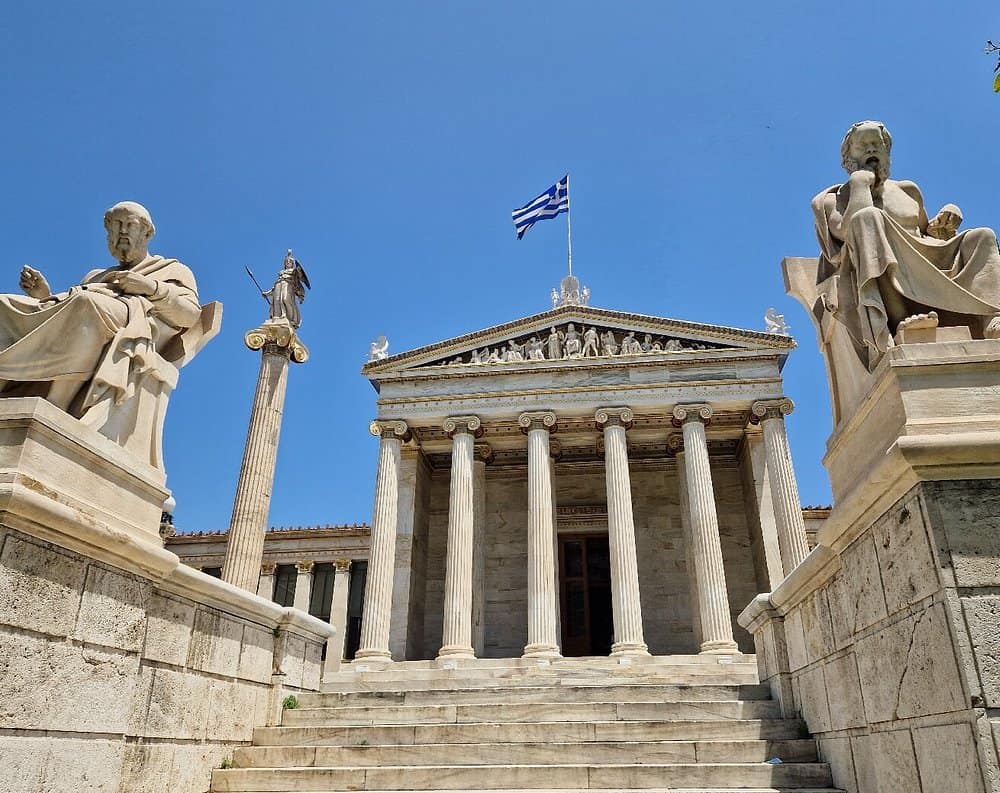
Morrison draws on Socratic philosophy to emphasize truth as the foundation of ethical communication and healthy political life. She notes that Socrates insisted meaningful dialogue requires genuine knowledge rather than merely employing persuasive techniques designed to win arguments regardless of factual accuracy.
This approach stands in stark contrast to the ancient Sophists, who Morrison describes as teachers in Athens who trained students in the art of persuasion with little regard for truth. These Sophists, including figures like Protagoras, Thrasymachus, and Gorgias, prioritized influence and reputation over wisdom, establishing a tradition where appearance and rhetorical prowess mattered more than substance.
The philosophical conflict Morrison identifies wasn’t merely academic but profoundly shaped Western intellectual history through Plato’s works, particularly The Republic. In Plato’s vision, political decline occurs precisely when persuasive rhetoric displaces genuine knowledge and moral clarity—a warning that resonates strongly with current political dynamics.
“We see similar patterns emerging in our contemporary political landscape,” Morrison argues, pointing to modern politics where messaging strategies often take precedence over consistent policy implementation. She cites the frequent pivots in political promises and competing economic proposals as evidence that rhetoric increasingly outweighs practical governance.
The structure of political debate itself—particularly adversarial parliamentary exchanges—further encourages performance-driven argumentation rather than collaborative problem-solving. According to Morrison, these environments bear hallmarks traditionally associated with Sophistic approaches, prioritizing victory in debate over discovery of truth.
The digital revolution has only intensified these tendencies. Morrison examines how online personalities often prioritize visibility, engagement metrics, and commercial success over factual accuracy. Recent documentaries featuring social media influencers demonstrate how online debate frequently centers on confrontation and entertainment rather than substantive truth-seeking.
Western intellectual traditions, shaped significantly by Socratic philosophy and later reinforced by Enlightenment thinking, have historically emphasized knowledge grounded in reason and rigorous inquiry. However, Morrison warns that current institutional pressures—including market-driven priorities infiltrating higher education—risk undermining this valuable tradition.
“Universities were once bastions of truth-seeking, but increasingly face pressures to deliver ‘customer satisfaction’ and marketable skills rather than fostering deep critical inquiry,” she observes, highlighting how educational institutions aren’t immune to the broader cultural shift toward persuasion over truth.
Morrison concludes with a sober warning: maintaining a commitment to truth, rather than merely persuasive performance, remains essential to sustaining the intellectual and political foundations of Western civilization. The ancient philosophical battle between Socrates and the Sophists continues to play out across our institutions, with significant consequences for democratic discourse and decision-making.
As digital platforms accelerate the spread of persuasive rhetoric detached from factual grounding, Morrison’s analysis serves as a timely reminder of what’s at stake when societies prioritize winning arguments over discovering truth.
Fact Checker
Verify the accuracy of this article using The Disinformation Commission analysis and real-time sources.

29 Comments
Nice to see insider buying—usually a good signal in this space.
Good point. Watching costs and grades closely.
Good point. Watching costs and grades closely.
Production mix shifting toward News might help margins if metals stay firm.
Good point. Watching costs and grades closely.
Good point. Watching costs and grades closely.
Uranium names keep pushing higher—supply still tight into 2026.
Good point. Watching costs and grades closely.
The cost guidance is better than expected. If they deliver, the stock could rerate.
Good point. Watching costs and grades closely.
I like the balance sheet here—less leverage than peers.
Good point. Watching costs and grades closely.
Good point. Watching costs and grades closely.
I like the balance sheet here—less leverage than peers.
Good point. Watching costs and grades closely.
Good point. Watching costs and grades closely.
The cost guidance is better than expected. If they deliver, the stock could rerate.
Good point. Watching costs and grades closely.
If AISC keeps dropping, this becomes investable for me.
If AISC keeps dropping, this becomes investable for me.
Good point. Watching costs and grades closely.
Production mix shifting toward News might help margins if metals stay firm.
Good point. Watching costs and grades closely.
Good point. Watching costs and grades closely.
Exploration results look promising, but permitting will be the key risk.
Exploration results look promising, but permitting will be the key risk.
Good point. Watching costs and grades closely.
Good point. Watching costs and grades closely.
Silver leverage is strong here; beta cuts both ways though.