


Listen to the article
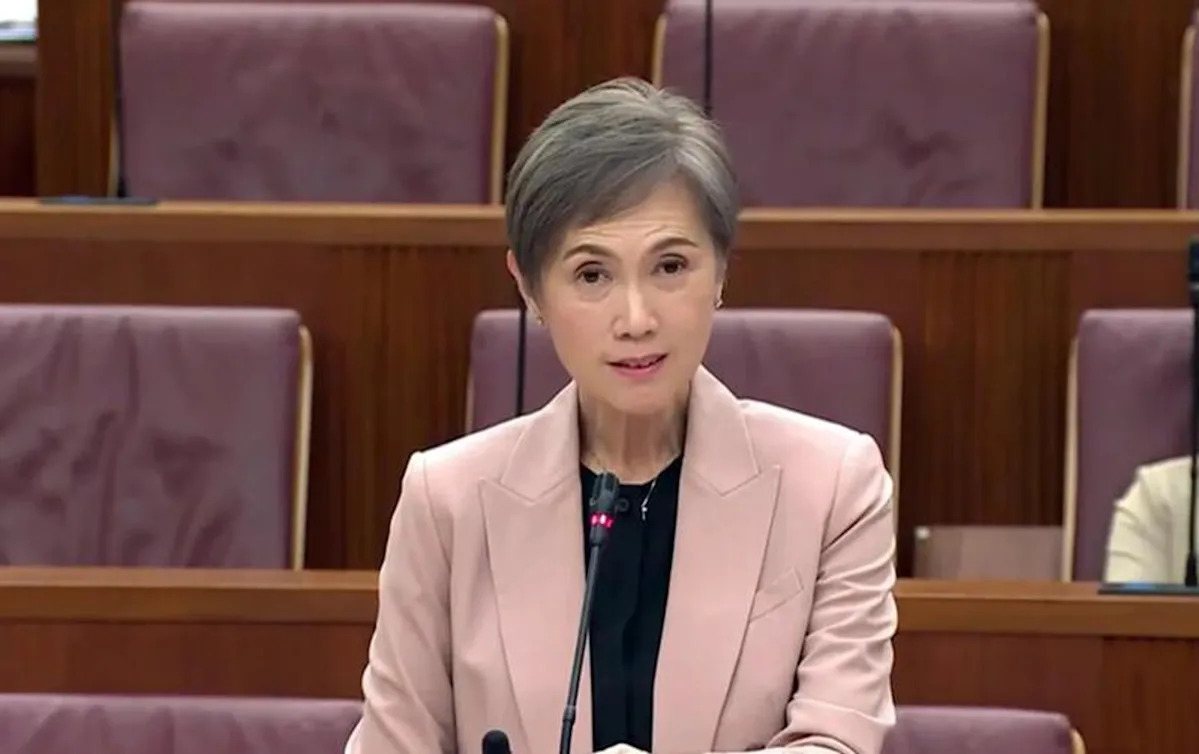
Singapore’s public service media outlets have emerged as crucial bulwarks against misinformation, reaching over 90 percent of the population and maintaining high levels of public trust, Minister for Digital Development and Information Josephine Teo said on March 2.
During a parliamentary budget debate, Teo emphasized the government’s commitment to working with these media entities to preserve their extensive reach while bolstering their fact-checking capabilities in an increasingly complex information landscape.
The minister was responding to concerns raised by Members of Parliament Henry Kwek and Tin Pei Ling about combating fake news in the age of artificial intelligence and supporting public service media amid industry fragmentation.
“As an open society, Singapore must contend with sophisticated misinformation,” Tin noted, citing AI-generated videos falsely claiming that Prime Minister Lawrence Wong’s leadership position was under threat. These fabricated reports have proven convincingly realistic, with Tin revealing that at least one of her constituents “believed the story so wholeheartedly that I found it hard to dissuade him.”
Singapore’s mainstream media outlets, including The Straits Times, Lianhe Zaobao, and CNA, continue to enjoy exceptional trust levels that surpass even respected international outlets. According to the Reuters Institute’s Digital News Report released in June 2023, The Straits Times leads with a 75 percent trust rating among Singaporean audiences, followed closely by CNA at 74 percent and Channel 5 News at 73 percent. By comparison, international outlets like BBC News and CNN registered trust levels of 65 percent and 61 percent respectively.
The government plans to strengthen these trusted platforms through several initiatives. CNA will establish a dedicated digital verification team, while government agencies are collaborating with The Straits Times on its AskST series specifically designed to address misinformation.
Financial viability remains a significant concern for public service media worldwide. MP Kwek highlighted the challenges facing even prominent international outlets like The Washington Post, which recently laid off more than 300 journalists—approximately one-third of its staff—despite being owned by billionaire Jeff Bezos.
Kwek questioned whether Singapore might follow countries like Australia and the United Kingdom in requiring smart TV manufacturers to feature local public service media apps prominently to maintain their visibility and accessibility.
Teo acknowledged these concerns, stating that the government “will support efforts to keep public service media content visible and easily discoverable” given their critical role in Singapore’s information ecosystem. “We are studying approaches in other countries and will consult the industry to ensure that initiatives are implemented reasonably and effectively,” she added.
Financial support remains a cornerstone of the government’s strategy. In 2022, the government committed up to $900 million in funding for SPH Media Trust over five years, with annual disbursements of up to $180 million contingent upon meeting key performance targets.
“The Government will continue investing in our public service media entities, helping them develop new capabilities as the media landscape evolves,” Teo affirmed.
The emphasis on supporting trusted media sources comes at a crucial time when technological advancements in AI have made distinguishing between authentic and fabricated content increasingly difficult for citizens. By maintaining strong, trusted local media outlets, Singapore aims to preserve the integrity of its information environment while adapting to rapid technological change.
Fact Checker
Verify the accuracy of this article using The Disinformation Commission analysis and real-time sources.

20 Comments
Addressing the threat of misinformation in an open society like Singapore is a complex challenge. Strengthening public service media’s fact-checking capabilities is a prudent step to safeguard against the spread of fabricated narratives.
I agree. The ability of AI to generate convincingly realistic fake content is a growing concern. Investing in robust fact-checking is a wise move to protect citizens from being misled.
Interesting to see the government’s commitment to supporting public service media’s fact-checking efforts. Combating sophisticated misinformation tactics, including AI-generated deepfakes, is a critical challenge for any open society.
I agree. Strengthening the capabilities of public service media is a prudent approach to safeguarding the integrity of information and maintaining a well-informed citizenry.
This is an important initiative to address the growing threat of misinformation, particularly with the rise of AI-generated content. Kudos to Singapore for recognizing the pivotal role of public service media in this fight.
Absolutely. Preserving public trust in authoritative and fact-based news sources is crucial in an open society. Enhancing the fact-checking capabilities of public service media is a sensible strategy.
Combating misinformation is crucial in today’s digital age. Kudos to Singapore’s public service media for maintaining high trust and reach. Strengthening fact-checking capabilities will be key to staying ahead of sophisticated disinformation tactics.
I agree, AI-generated deepfakes can be incredibly convincing. Robust fact-checking is essential to protect the public from being misled.
It’s encouraging to see the Singapore government taking proactive steps to support public service media in their efforts to combat misinformation. Maintaining high public trust and reach will be crucial in this battle.
Absolutely. With the proliferation of AI-generated deepfakes, fact-checking has become more important than ever. Glad to see the government is taking this challenge seriously.
Maintaining public trust in authoritative news sources is essential in an open society like Singapore. This initiative to enhance the fact-checking capabilities of public service media is a prudent step in the fight against misinformation.
I concur. Combating sophisticated disinformation tactics, including AI-generated content, requires a collaborative approach between the government and media entities. This is a positive development.
Kudos to the Singapore government for recognizing the vital role of public service media in combating misinformation. Preserving their reach and enhancing their fact-checking skills will be crucial in this ongoing battle.
Absolutely. In an age of AI-powered deepfakes, maintaining public trust in authoritative and fact-based news sources is paramount. This initiative is a step in the right direction.
This is an important initiative to combat the rise of AI-powered misinformation. Strengthening public service media’s fact-checking capabilities will be key to keeping citizens informed and maintaining a healthy information ecosystem.
Agreed. Tackling fake news requires a multi-pronged approach. Kudos to Singapore for recognizing the vital role of public service media in this fight.
Interesting to see the Singapore government’s commitment to collaborating with public service media. Preserving their extensive reach while upgrading fact-checking will help safeguard against the spread of misinformation.
Yes, an open society must be vigilant against sophisticated disinformation campaigns. Proactive measures to support public trust in media are crucial.
Combating misinformation is a complex challenge, and I’m glad to see the Singapore government collaborating with public service media to tackle this issue. Strengthening their fact-checking skills and maintaining their reach will be key.
Agreed. With the rise of AI-powered deepfakes, robust fact-checking has become more critical than ever to protect citizens from being misled by fabricated narratives.