


Listen to the article
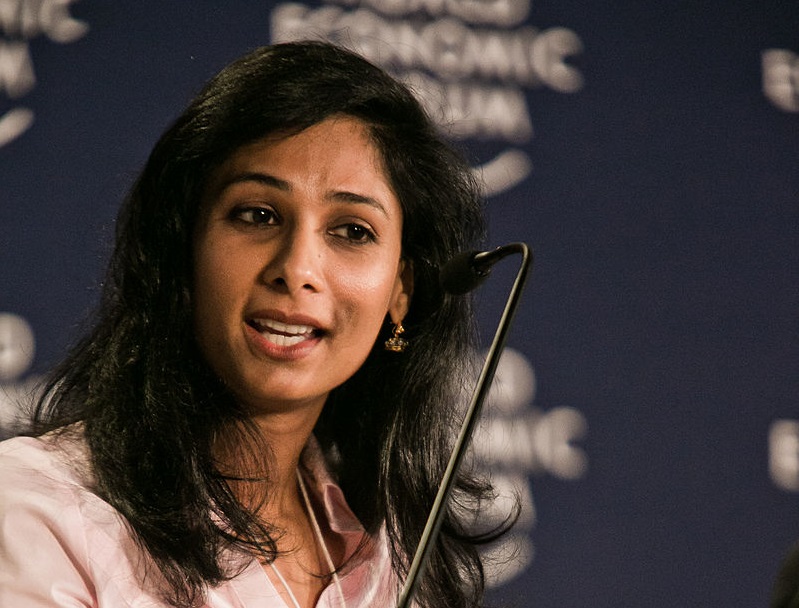
In a firm statement released Tuesday, Harvard economist Gita Gopinath has categorically denied having any presence on Facebook, warning the public about fake profiles and fabricated conversations circulating in her name across social media platforms.
“I do not have any Facebook account,” Gopinath declared in a post on X (formerly Twitter), addressing widespread screenshots of alleged private conversations attributed to her. The economist emphasized that the circulating messages are completely fabricated and urged people to refrain from believing or sharing such content.
Gopinath, who previously served as the Chief Economist and First Deputy Managing Director at the International Monetary Fund (IMF), has become the latest high-profile victim of digital impersonation—a growing concern for public figures in today’s interconnected world.
The false content appears to have gained significant traction across multiple social media channels before Gopinath issued her denial. Digital security experts note that fabricated screenshots can be particularly damaging as they often appear authentic to casual observers and can spread rapidly through shares and reposts.
“What we’re seeing with Dr. Gopinath’s situation is unfortunately becoming more common,” said Melissa Rajkumar, a cybersecurity analyst specializing in digital identity protection. “Public figures with influence in economic or policy matters are prime targets for impersonation because their supposed words carry weight in public discourse.”
As one of the world’s most prominent economists, Gopinath regularly provides expert commentary on global economic trends and policies, making her opinions highly valued in financial and academic circles. Her work at Harvard University and her distinguished tenure at the IMF have established her as an authoritative voice on international economics.
The timing of this incident coincides with heightened global economic uncertainty, where financial markets remain particularly sensitive to comments from respected economists. False statements attributed to someone of Gopinath’s stature could potentially influence market sentiment or policy discussions if taken seriously.
This case highlights the broader challenges of digital literacy and information verification in an era where creating convincing fake content requires minimal technical skill. Social media platforms continue to struggle with effective verification mechanisms that can quickly identify and remove impersonation accounts.
“The speed at which misinformation travels now outpaces traditional verification processes,” explained Dr. Samir Patel, director of the Digital Media Ethics Center at Boston University. “By the time a false claim is debunked, it may have already reached millions of users and shaped their perceptions.”
For social media users, Gopinath’s experience serves as a reminder to verify account authenticity before accepting content as genuine. Official accounts typically have verification markers and consistent posting histories that align with the public figure’s known positions and communication style.
The economist’s firm denial emphasizes the importance of source verification in an information landscape increasingly cluttered with misleading content. Just last year, similar incidents affected several Federal Reserve officials and European Central Bank members, causing temporary market fluctuations before the statements were debunked.
As false narratives attributed to Gopinath continue circulating online, her direct response aims to curtail further misinformation. The incident adds momentum to ongoing discussions about platform responsibility and the need for more robust verification systems across social media.
Gopinath returned to Harvard University in 2025 after her tenure at the IMF, where she continues her research and teaching while occasionally providing expert commentary through verified channels and official appearances.
Fact Checker
Verify the accuracy of this article using The Disinformation Commission analysis and real-time sources.

9 Comments
Digital impersonation is a growing problem, and I appreciate Gopinath’s direct approach in addressing this issue. It’s important for public figures to be vigilant and quickly shut down any attempts to misrepresent them online.
I appreciate Gopinath’s firm and direct response to the fake content circulating in her name. It’s important for influential voices to shut down disinformation and protect their reputations. Digital security is a growing challenge for many leaders these days.
Absolutely. Proactive communication is key to mitigating the damage from these types of impersonation attempts.
This is a concerning trend that speaks to the broader challenge of online misinformation. While public figures have to be vigilant, I’m curious what digital security experts think could be done to better safeguard against these fabricated screenshots and false accounts.
While it’s unfortunate that Gopinath has to deal with this, I’m glad she took the time to clearly refute the fake Facebook account. Maintaining control over one’s online presence is increasingly challenging for high-profile individuals. Curious to see if platforms like X can do more to verify identities.
Agreed. Online identity verification is an important but complex challenge that platforms continue to grapple with. Proactive steps by users are crucial, but systemic solutions would help too.
It’s good that Gopinath called out this fabricated content so directly. Impersonation of public figures on social media is a serious issue that can have real consequences. Transparency and rapid response are important to mitigate the damage.
It’s a shame that public figures like Gita Gopinath have to deal with this kind of digital impersonation. Fabricated content can spread so quickly online, which is really troubling. I’m glad she was able to swiftly address this and clarify that she has no Facebook account.
I’m not surprised to hear that Gita Gopinath doesn’t have a Facebook account. As a prominent economist, she’s probably very selective about her online presence and engagement. Kudos to her for quickly shutting down these fake profiles in her name.