


Listen to the article
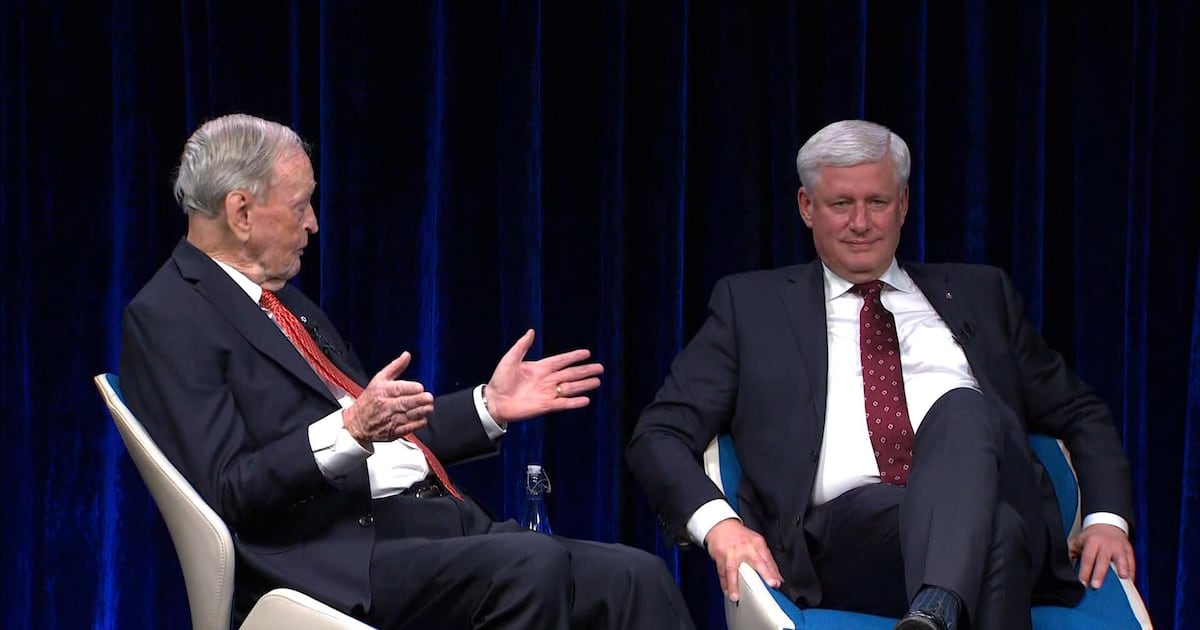
In a rare display of bipartisan agreement, former Canadian Prime Ministers Jean Chrétien and Stephen Harper have voiced shared concerns about the proliferation of misinformation on social media platforms, warning about the consequences for democratic institutions and public discourse.
Speaking at separate events, the two former leaders—who represent opposite ends of Canada’s political spectrum—found common ground on the dangers posed by unverified information spreading rapidly through digital channels.
Chrétien, who served as Liberal Prime Minister from 1993 to 2003, emphasized how today’s media landscape differs dramatically from his time in office. “During my years in government, information moved more slowly, allowing time for fact-checking and verification,” Chrétien remarked. “Today, falsehoods can circle the globe before the truth has a chance to put its boots on.”
The 90-year-old former leader expressed particular concern about the impact on younger generations, who often consume news exclusively through social platforms without the critical filters traditionally provided by established news organizations.
Harper, who led Canada’s Conservative government from 2006 to 2015, echoed these sentiments while speaking to students at a policy forum. He pointed to the algorithmic nature of social media as a key driver of polarization and misinformation.
“These platforms are designed to maximize engagement, not accuracy,” Harper noted. “The business model rewards content that triggers emotional responses, regardless of its relationship to factual reality.”
Political analysts view the convergence of opinions between these historically adversarial figures as significant. Dr. Melissa Thompson, professor of political communications at the University of Toronto, explains: “When leaders from opposing political traditions identify the same threat, it suggests we’ve moved beyond partisan concerns to something more fundamental about how our democracy functions.”
The former Prime Ministers’ comments come amid growing global concerns about digital misinformation. Canada’s current government under Justin Trudeau has proposed several regulatory measures aimed at combating online falsehoods, including the Online News Act and Online Streaming Act, both of which have generated significant debate.
Industry experts point out that the challenge extends beyond simple falsehoods to include sophisticated manipulation campaigns. “We’re dealing with everything from foreign interference to domestic actors who deliberately seed misinformation for political or financial gain,” says Cameron Richards, director of the Digital Democracy Institute.
Social media companies have responded to these criticisms by implementing fact-checking systems and warning labels for questionable content, but critics argue these measures remain insufficient. Facebook, Twitter (now X), and other platforms continue to face scrutiny over their role in spreading unverified information during critical events such as elections and public health crises.
Both Chrétien and Harper suggested that media literacy education should be prioritized to help citizens navigate the increasingly complex information landscape. “We need to equip people with the tools to distinguish credible sources from manipulation,” Harper stated, while Chrétien emphasized the importance of critical thinking skills in educational curricula.
The former leaders stopped short of endorsing specific regulatory approaches, reflecting the delicate balance between combating harmful content and protecting free expression. This tension continues to challenge policymakers worldwide as they grapple with regulating digital spaces without impinging on democratic freedoms.
Public opinion research indicates that Canadians across the political spectrum share these concerns. A recent survey by the Digital Democracy Project found that 76 percent of Canadians worry about their ability to distinguish real from false information online, while 68 percent believe social media companies should take greater responsibility for content on their platforms.
As Canada approaches its next federal election, expected by October 2025, the issue of digital misinformation is likely to remain prominent in public discourse. The rare consensus between Chrétien and Harper—political rivals who seldom find agreement—underscores the non-partisan nature of what many now consider an existential challenge to democratic systems worldwide.
Fact Checker
Verify the accuracy of this article using The Disinformation Commission analysis and real-time sources.

16 Comments
As someone working in the mining and commodities sector, I’m curious to hear the former PMs’ views on how misinformation could impact public understanding and policy decisions related to these industries.
That’s an insightful question. Misinformation about mining, energy, and other natural resource issues could sway public opinion and complicate regulatory frameworks if not addressed properly.
As someone with an interest in the mining and energy sectors, I’m curious to learn more about how misinformation could impact public perceptions and policy decisions related to these industries.
That’s an important consideration. Misleading narratives about the environmental or economic impacts of mining, energy production, and related commodities could sway public opinion and complicate regulatory frameworks if not addressed.
The comparison between the slower information flow during Chretien’s time in office versus today’s rapid social media environment highlights the complexity of this issue. Fact-checking and verification will be key going forward.
You make a good point. The increasing speed and volume of information sharing online presents new challenges for maintaining the integrity of public discourse.
This bipartisan discussion on social media misinformation is an important reminder of the challenges we face in the digital age. The speed and reach of online information can undermine democratic discourse if not properly addressed.
I agree – the ability to rapidly spread unverified claims is a serious concern that requires thoughtful solutions from leaders across the political spectrum.
It’s concerning to hear former PMs from different parties acknowledge the dangers of misinformation online. The impact on younger generations who rely heavily on social media for news is particularly worrying.
Absolutely. Fostering critical thinking and media literacy skills in youth will be crucial to combating the spread of false narratives on digital platforms.
It’s encouraging to see bipartisan agreement on the threat of social media misinformation, even from former political rivals like Chretien and Harper. Tackling this challenge will require collaborative, multi-stakeholder solutions.
This discussion highlights the need for robust fact-checking and media literacy initiatives to empower citizens in navigating the digital information landscape. The consequences of unchecked misinformation can be far-reaching.
The shared concerns expressed by Chretien and Harper underscore the bipartisan nature of this challenge. Misinformation on social media threatens the integrity of democratic discourse, regardless of political affiliation.
Absolutely. Combating the spread of false narratives online requires a unified, non-partisan approach to safeguard the foundations of a healthy democracy.
The former PMs raise valid points about the speed and reach of online falsehoods compared to the past. This underscores the need for robust media literacy education to empower citizens to critically evaluate information sources.
Agreed. Equipping the public, especially younger generations, with the skills to discern fact from fiction online is crucial for preserving the integrity of public discourse.