


Listen to the article
Nurse Battles Witchcraft Myths to Save Lives Through Vaccination in Eswatini
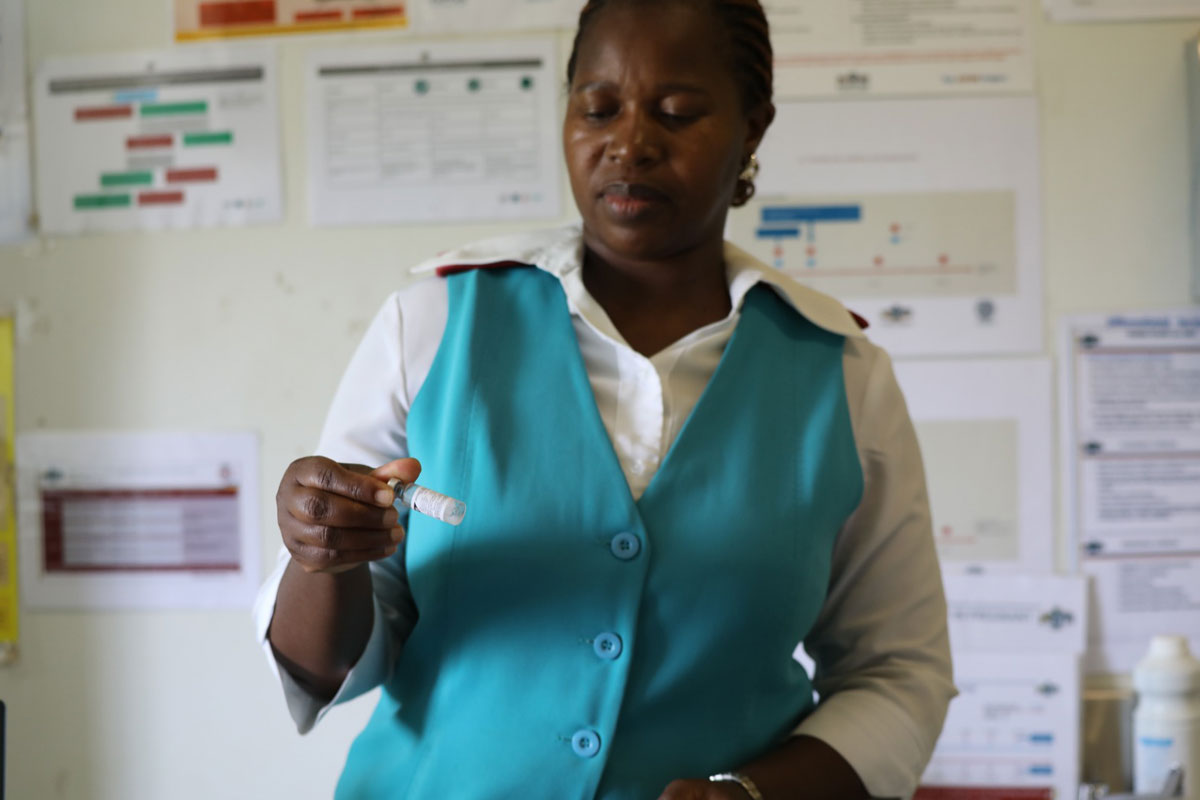
Sister Thuli Magagula knows firsthand that while witchcraft isn’t real, its shadow can be deadly. In her hometown of Macetjeni, located in Eswatini’s eastern lowveld, supernatural explanations for disease remain commonplace—a dangerous reality that obscures treatable illnesses and puts children’s lives at risk.
For nearly three decades, this dedicated 52-year-old nurse and midwife has fought against misinformation that attributes disease symptoms to magical forces rather than recognizing them as preventable medical conditions.
“I witnessed first-hand how preventable diseases like measles, tetanus and polio affected children, as many families were losing their infants. Some of the children were said to have died from bewitching,” Magagula recalls with evident concern. “I lost friends to measles when I was young. That experience ignited a fire in me to ensure no other child suffers the same fate.”
These childhood experiences propelled Magagula to join Eswatini’s Expanded Programme on Immunization (EPI) after completing nursing school. Now serving as an EPI Immunization Officer, she spends most days traveling to remote villages to vaccinate children and educate families.
“Meeting mothers who lost children due to these diseases that could have been prevented with vaccines strengthened my resolve to ensure that no family has to endure such a loss,” she explains.
Eswatini has made significant progress in vaccination coverage in recent years, with much credit due to dedicated professionals like Magagula. According to WHO and UNICEF data, coverage with the first dose of measles-containing vaccine has steadily increased from a 2020 low of 76% to 85% in 2023. Second-dose coverage rose from 82% to 86% during the same period.
Despite these gains, the country remains below the critical 95% threshold needed for herd immunity. The threat is imminent, as neighboring South Africa and Mozambique currently battle measles epidemics. This prompted Eswatini to launch a nationwide measles-rubella vaccination campaign in mid-September, with Magagula at the forefront of implementation efforts.
Rejoice Nkambule, Deputy Director of Eswatini’s Ministry of Health, emphasizes the critical role health workers play: “Their work is crucial in building rapport through community engagement and sensitisation. Health workers address misinformation and conduct home visits to ensure families understand the importance of vaccinations, and identify zero-dose and under-immunised children, linking them to the nearest facilities for essential health interventions.”
Misinformation remains one of the biggest obstacles to full vaccination coverage. Magagula consistently encounters myths and unfounded fears in her community interactions, which she addresses with patience and evidence-based explanations.
Bongekile Ndlovu, a 27-year-old single mother of two from the rural village of Nyakatfo, experienced this firsthand when she approached Magagula with concerns fueled by village rumors about vaccines. After a thoughtful conversation where Magagula explained the science behind vaccinations and shared safety information, Ndlovu felt reassured.
“After speaking with the nurse, I realised that vaccinations are not just about needles; they are a shield for my children against serious diseases. She helped me understand that protecting their health is the best choice I can make as a mother,” Ndlovu shared.
The recent vaccination campaign achieved remarkable success, reaching approximately 87% of the target population and strengthening the nation’s defenses against potential outbreaks. This achievement relied heavily on dedicated professionals like Magagula building strong connections with communities.
Working alongside rural health motivators like 45-year-old Phindile Thwala, Magagula ensures that reliable, evidence-based information reaches even the most remote areas. Thwala notes that in-person follow-ups make a significant difference in vaccination uptake, explaining that “many people in remote areas don’t own radios or have access to updates about health services.”
For many families in Eswatini’s rural regions, a knock on the door from a well-trained health worker like Magagula represents their only opportunity to learn the crucial difference between harmful myths and life-saving medical facts. Through these persistent, personal connections, Magagula continues her mission to replace superstition with science, one conversation at a time.
Fact Checker
Verify the accuracy of this article using The Disinformation Commission analysis and real-time sources.

8 Comments
It’s great to see this nurse’s personal experiences motivating her to protect children in her community. Addressing deep-seated beliefs around disease is no easy task, but her dedication is truly inspiring.
Absolutely. Nurses on the frontlines of public health crises like this play a crucial role. Their compassion and perseverance can make all the difference.
Measles outbreaks are always concerning, but it’s especially troubling to see them fueled by misinformation. I hope the vaccination efforts in Eswatini are successful in controlling this outbreak and preventing future ones.
The traditional beliefs around disease in Eswatini highlight the need for more public health education and outreach. While respecting cultural practices, it’s vital that preventable illnesses are recognized and treated properly to save lives.
Agreed. Bridging the gap between traditional beliefs and modern medicine is a delicate but important challenge. Compassionate health workers like Sister Magagula can make a real difference.
While traditional practices and beliefs are important, when they put lives at risk, it’s crucial that accurate medical information and care becomes more accessible. I commend Sister Magagula for her tireless efforts to save children in Eswatini.
This is a concerning issue. Misinformation can be incredibly dangerous, especially when it comes to public health and children’s wellbeing. I’m glad to see dedicated nurses like Sister Thuli Magagula working to combat these harmful myths and promote life-saving vaccinations.
You’re right, access to accurate medical information is crucial. It’s admirable how this nurse is tirelessly educating her community and ensuring children receive the care they need.