


Listen to the article
Fact Check Roundup: Debunking Viral Misinformation on Sports, Politics and Entertainment
In an era where information travels at lightning speed across social media platforms, misleading content continues to spread unchecked, often muddying public discourse on events ranging from international sports to regional conflicts. This week saw a particularly troubling wave of misinformation targeting Indo-Pakistani relations, the ongoing Manipur crisis, and international diplomacy.
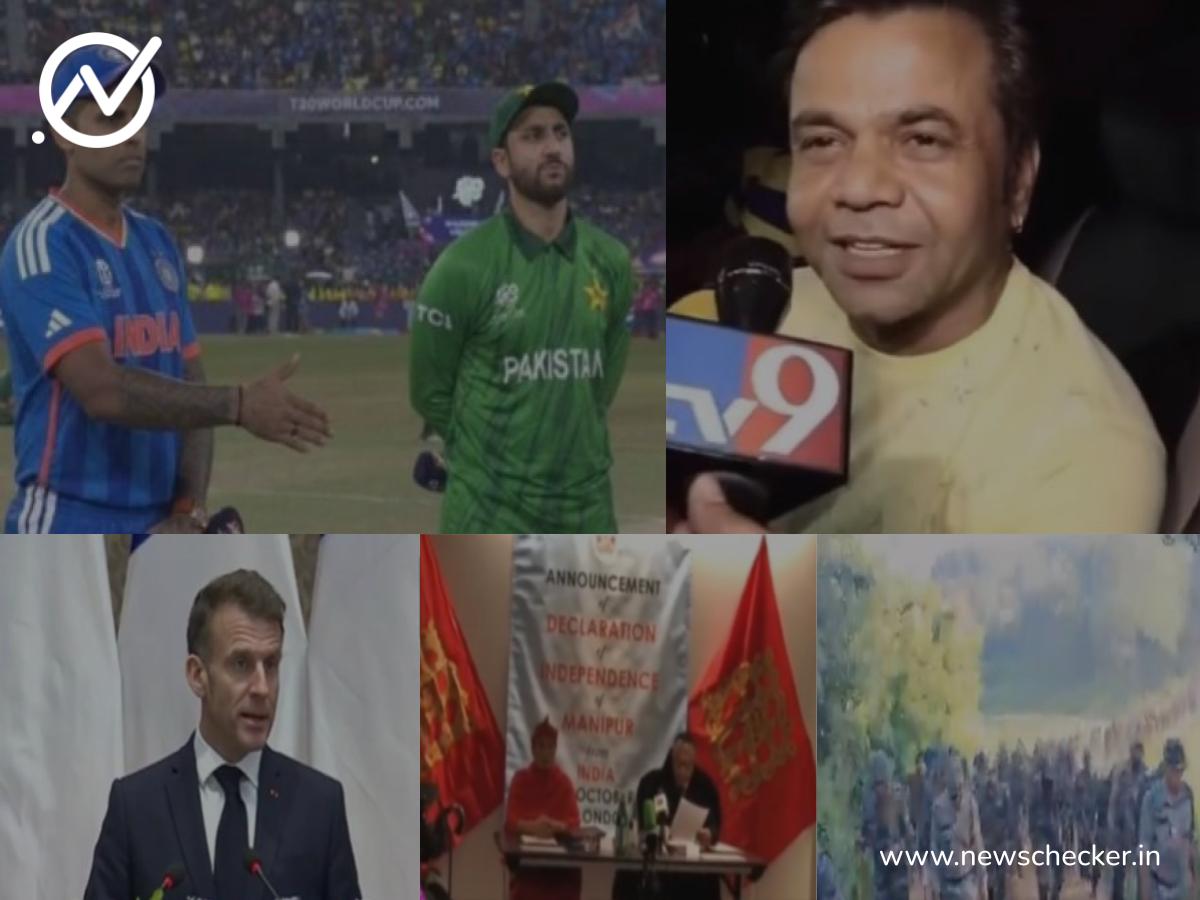
The recent T20 World Cup match between India and Pakistan became fertile ground for manufactured controversy when a doctored photograph began circulating widely across social media platforms. The manipulated image purported to show Pakistani captain Salman Ali Agha snubbing Indian skipper Suryakumar Yadav’s handshake during the pre-match toss. The image quickly gained traction among users looking to inflame tensions between the cricket rivals. A thorough investigation by fact-checking organization Newschecker confirmed the photograph was fabricated, likely created to exploit the historic sporting rivalry between the two nations.
Meanwhile, the ongoing unrest in Manipur has spawned multiple strands of dangerous misinformation. One particularly alarming video claimed to show Indian security forces “surrendering” in the conflict-torn northeastern state. The footage, which showed uniformed personnel laying down weapons, was presented as evidence of retreating Indian forces. However, fact-checkers determined the video actually depicted an anti-drug operation in neighboring Tripura, completely unrelated to the Manipur situation.
In a similar vein, another viral clip alleged that Manipur leaders had declared “freedom from Indian occupation,” announcing a formal separation from the country while citing supposed violations by the Indian Army. This false narrative, which could potentially inflame an already volatile situation in the region, was debunked by investigators who found no credible evidence of such a declaration.
The spread of misinformation extended to international relations when a doctored video emerged purporting to show French President Emmanuel Macron criticizing the Indian Air Force. In this fabricated clip, Macron allegedly claimed that France had refused India’s request for a full defense partnership after Dassault Aviation—manufacturer of the Rafale fighter jets—suffered massive stock market losses due to “inefficiency within the Indian Air Force.” Fact-checkers confirmed this video was manipulated, likely intended to undermine the Indo-French defense relationship that has strengthened significantly in recent years.
Even Bollywood wasn’t spared from the wave of misinformation. A video showing actor Rajpal Yadav speaking to media was circulated with claims that he was thanking superstar Salman Khan after being granted bail in a ₹9 crore cheque bounce case. Investigation revealed this was an old, unrelated clip being repurposed to create a false narrative about the relationship between the two actors.
These examples highlight the increasingly sophisticated nature of misinformation campaigns. From doctored photographs and manipulated videos to completely fabricated scenarios, false information now comes packaged in forms that can appear convincing to casual observers. The targeted nature of these falsehoods—focusing on sensitive geopolitical tensions, regional conflicts, and public figures—suggests deliberate attempts to manipulate public opinion rather than simple misunderstandings.
Digital literacy experts note that such misinformation thrives in environments where emotional topics intersect with complex situations that many people don’t fully understand. Sports rivalries, regional conflicts, and international relations provide perfect conditions for misleading content to flourish.
As social media platforms continue to grapple with content moderation challenges, the responsibility increasingly falls on news consumers to approach viral content with healthy skepticism, particularly when it appears designed to provoke strong emotional reactions. The work of fact-checking organizations remains crucial in this ecosystem, providing the verification infrastructure needed to separate fact from fiction in our increasingly complex information landscape.
Fact Checker
Verify the accuracy of this article using The Disinformation Commission analysis and real-time sources.

11 Comments
Interesting to see the fact-checking efforts around the India-Pakistan cricket match and the Manipur crisis. It’s important to stay vigilant against misinformation, especially when emotions are running high around sensitive geopolitical issues.
Absolutely. Fact-checking is crucial to cut through the noise and provide accurate information, especially on topics that are prone to divisiveness and polarization.
Misleading images and false narratives can be so damaging, especially when they involve conflicts between nations. I’m glad the fact-checkers were able to debunk the doctored photograph from the cricket match.
Yes, it’s important that responsible media outlets and fact-checking organizations work to quickly identify and correct misinformation. Kudos to them for their diligence.
The ongoing unrest in Manipur is a complex and sensitive issue. I hope the fact-checking efforts can help provide a clearer, more nuanced understanding of the situation, rather than fueling further division.
Agreed. Addressing misinformation around regional conflicts is crucial, as it can otherwise exacerbate tensions and undermine efforts towards a peaceful resolution.
Misinformation around sports rivalries and regional conflicts is particularly troubling, as it can exacerbate tensions and undermine mutual understanding. Kudos to the fact-checkers for their important work.
It’s concerning to see how quickly misinformation can spread, especially on social media. I’m glad the fact-checkers are working to counter these false narratives and provide the public with accurate information.
Absolutely. Fact-checking is an essential safeguard against the erosion of public discourse. We need more of this kind of rigorous, impartial analysis.
The role of fact-checkers is so crucial in an age of rampant misinformation. Their efforts to debunk the doctored cricket photo and clarify the Manipur situation are commendable.
I agree. Fact-checking is the bedrock of maintaining a well-informed public. It’s heartening to see this level of diligence in exposing falsehoods and setting the record straight.