


Listen to the article
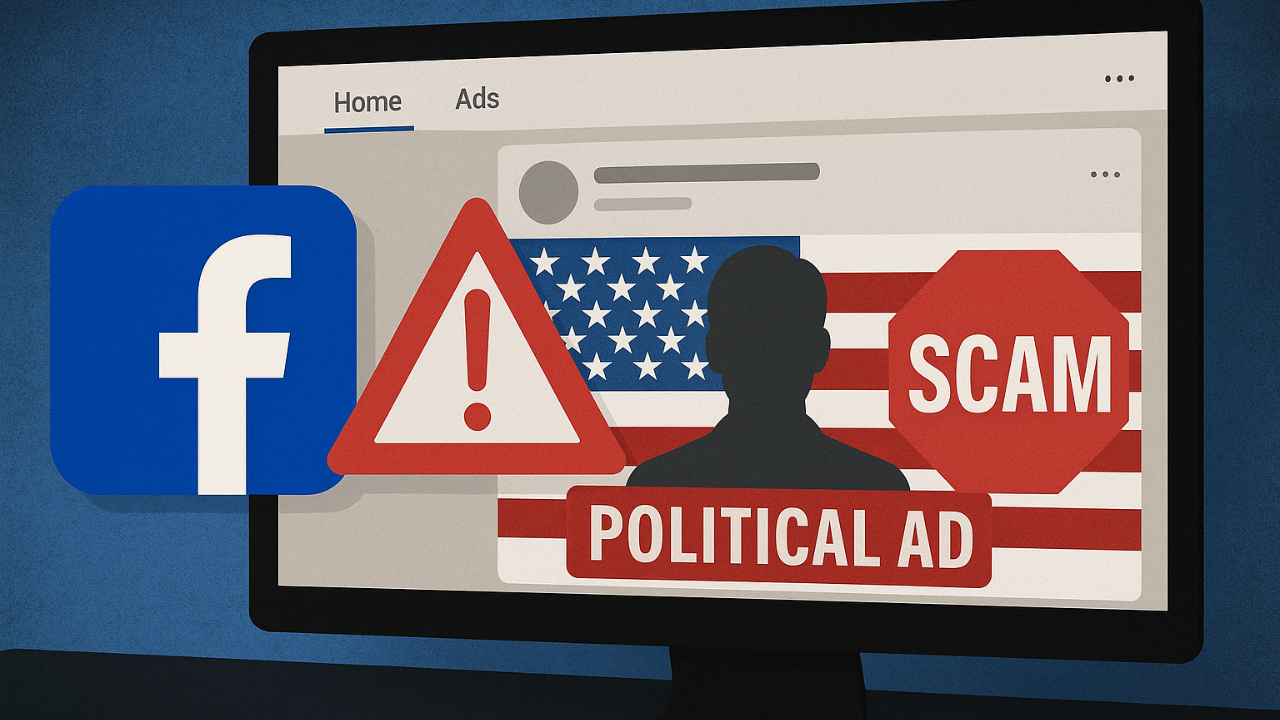
The scourge of Facebook’s political ad ecosystem has reached alarming new heights as the platform struggles to contain a growing wave of spam, scams and deepfake content targeting voters. This proliferation of misleading political advertisements has triggered concerns across multiple fronts, from user safety to the integrity of democratic processes.
Facebook’s massive reach and sophisticated targeting capabilities have transformed it into a premier destination for legitimate political campaigns. However, these same features have created fertile ground for malicious actors seeking to deceive users through increasingly sophisticated methods.
Security researchers have identified a troubling trend of fraudulent political advertisements designed to mimic official campaign materials. These ads often leverage contentious political issues or breaking news to capture attention before directing users to fraudulent websites. Once there, unsuspecting visitors are prompted to provide personal information or financial contributions under false pretenses.
“These scammers are becoming increasingly sophisticated in how they present themselves,” said a spokesperson from the Digital Election Integrity Coalition, who requested anonymity due to ongoing work with platforms. “They’re mimicking campaign aesthetics, language, and even donor contribution pages with remarkable precision.”
Perhaps most concerning is the emergence of deepfake technology within political advertising. These AI-generated videos can create convincing but entirely fabricated speeches or endorsements from political figures. The technology has advanced rapidly, making detection increasingly difficult for average users.
In one recent case, a series of advertisements featured what appeared to be a prominent senator endorsing a cryptocurrency investment scheme. The deepfake was sophisticated enough that thousands of users engaged with the content before it was ultimately removed.
Facebook has implemented several countermeasures in response to these threats. The company has enhanced its ad review processes, requiring political advertisers to complete identity verification steps and disclose funding sources. The platform has also expanded its fact-checking partnerships and improved tools for users to report suspicious content.
“We’re committed to maintaining the highest standards for ads transparency and authenticity, especially for content related to elections,” a Facebook spokesperson stated. “Our teams are continuously working to stay ahead of bad actors who attempt to misuse our platform.”
Despite these efforts, significant challenges remain. The volume of content flowing through Facebook’s advertising system creates substantial moderation difficulties. Additionally, scammers continuously adapt their tactics to circumvent detection measures.
The implications for democratic processes are profound. Voters exposed to misleading or fraudulent political content may form opinions based on false information. The prevalence of such content can also contribute to a general erosion of trust in online information sources, potentially depressing civic engagement.
“When voters can’t distinguish between legitimate campaign messages and scams, it undermines the entire foundation of informed electoral decision-making,” noted Dr. Elena Rodriguez, a political communication researcher at Georgetown University. “This isn’t just about individual instances of fraud—it’s about the cumulative effect on democratic institutions.”
As election seasons approach in numerous countries, calls for stronger regulation have intensified. Advocacy groups are pushing for more rigorous enforcement of existing advertising laws and the development of new frameworks specifically addressing synthetic media in political contexts.
Experts suggest that addressing these challenges will require coordinated action across multiple fronts: improved platform self-regulation, enhanced government oversight, advanced detection technologies, and greater digital literacy among users.
With political polarization already high in many democracies, the stakes could not be higher. The battle against deceptive political advertising represents not just a technical challenge for Facebook, but a fundamental test of how digital platforms can support rather than undermine democratic processes in the information age.
Fact Checker
Verify the accuracy of this article using The Disinformation Commission analysis and real-time sources.

8 Comments
As an individual investor, I’ll be paying close attention to how this issue unfolds and what steps the major platforms take to address it. Protecting the integrity of information is crucial, especially around sensitive political and economic topics.
This is a concerning development for the integrity of political discourse online. Deepfakes and misinformation can sow real confusion and erode public trust. Social media platforms must do more to detect and remove this kind of deceptive content.
Agreed. Voters deserve accurate information to make informed decisions. Platforms need robust fact-checking and enforcement to curb the spread of malicious deepfakes and false ads.
As an investor, I’m closely watching how this issue could impact the performance of social media and tech companies. The risk of reputational damage and regulatory scrutiny is high if they can’t get a handle on it.
Good point. The financial implications for these platforms could be significant if they fail to address the deepfake and misinformation problem effectively. Shareholders will be watching closely.
The mining and energy sectors are also vulnerable to this kind of deceptive content, especially around issues like climate change and ESG policies. Fact-checking and transparency will be critical to maintaining investor confidence.
This is a complex challenge without easy solutions. But the stakes are high for the health of our democracies. I hope to see strong, collaborative efforts between platforms, governments, and civil society to tackle it head-on.
Agreed, a multi-stakeholder approach is essential. Platforms, policymakers, and the public all have a role to play in combating the scourge of online misinformation.