


Listen to the article
Civic Dialogue Initiative Fosters Media Literacy in Baton Rouge
Ninety people gathered at the 6th & Main event space in downtown Baton Rouge on January 22 to participate in a civic dialogue focused on media literacy and combating misinformation. The event, called Civic Sips, represents a collaborative effort between The Public Affairs Research Council of Louisiana (PAR) and the Reilly Center for Media and Public Affairs at Louisiana State University.
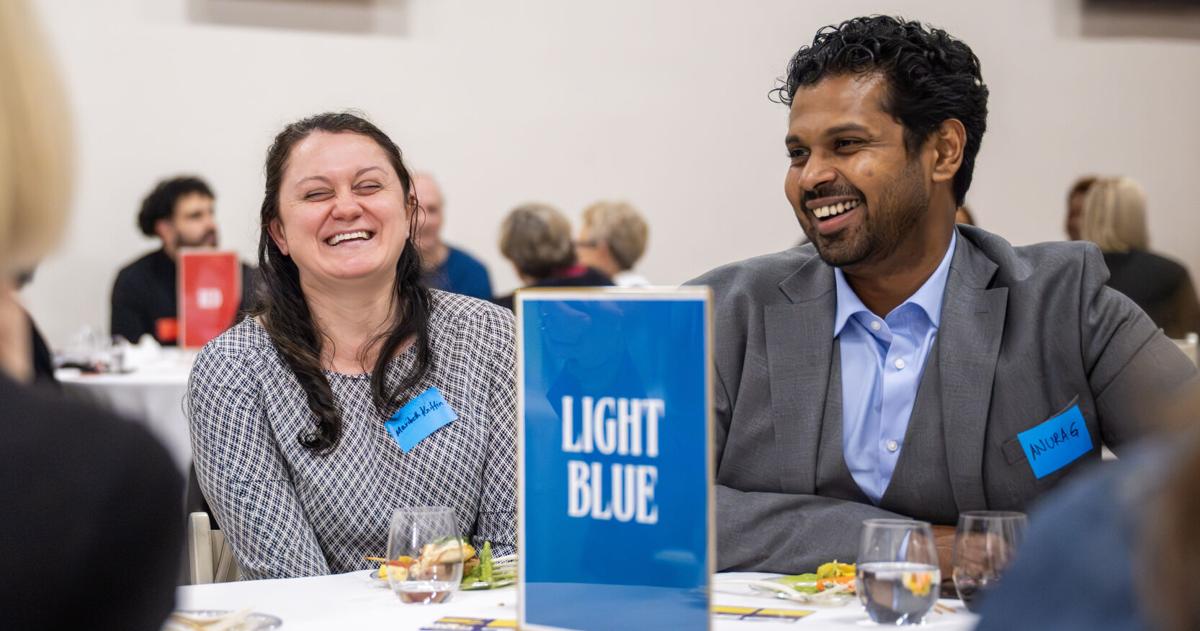
When attendees arrived, they received color-coded name tags corresponding to designated tables, creating an environment where strangers could connect over food, drinks, and meaningful conversation. The evening began with a lighthearted icebreaker, with participants sharing their guilty pleasures before diving into the night’s substantive topic.
“The goal is simple: bring people together from various backgrounds, whether it’s ideological backgrounds and perspectives, for meaningful, respectful conversation,” explained Michael DiResto, director of the Reilly Center for Media and Public Affairs, as he welcomed participants.
This Civic Sips event was the second in a series launched in November 2023, stemming from a broader initiative called the Common Ground Project. In August, LSU’s Reilly Center and PAR announced their partnership to understand and reduce political polarization in Louisiana through nonpartisan research and programming.
“We were giving a presentation to someone else,” said Steven Procopio, president of PAR, explaining how the evening’s focus emerged. “They said, ‘Hey, can we ask y’all, who can we trust? What are the trusted media sources?’ I don’t think that the best thing to do is to come up with a list. I think the best thing to do is to try and give people tools so they can make that evaluation themselves.”
This sentiment resonated with attendee Joyce Tippy, who arrived early expressing curiosity about distinguishing fact from fiction in news, especially on social media platforms.
“We’re not going to tell you where you should get your news or what social media you should use,” DiResto clarified before the evening’s presentation. “But we’re going to explore how it impacts us, and maybe there are some ways that we can think about how we can have a more well-rounded media diet.”
The featured speaker, Len Apcar, professional-in-residence and holder of the Wendell Gray Switzer Jr. Endowed Chair in Media Literacy at LSU, shared insights from his extensive media background. Apcar explained that while media literacy lacks a universal definition, it represents the critical evaluation process journalists and editors employ within newsrooms to assess information quality.
Each participant received a pamphlet from LSU’s Manship School of Mass Communication containing practical tips to identify misinformation. Apcar highlighted key questions to help people evaluate media sources:
- Who says? Check the attribution.
- How do they know? Check for records and data.
- Are they independent? Check for motive and bias.
- What is the URL? Watch for similar URLs that may indicate fake news.
- What about the quotes? Verify quotes by seeing if they appear in other media outlets.
- What about the images? Check whether images have been manipulated, using tools like Google Image search when necessary.
Following Apcar’s presentation, tables engaged in discussions about news stories that had challenged their perspectives. One participant mentioned how reading multiple viewpoints on the Israel-Palestine conflict broadened their understanding, while another described gaining new insights on current events in Iran through diverse reporting.
Julie O’Donahue, a journalist with the Louisiana Illuminator, shared her professional method for assessing credibility: “Look at who is participating in the story and willing to go on record,” she advised, emphasizing the importance of real-time sources and the number of people contributing to a story.
The conversations continued well past the scheduled conclusion, with many participants lingering to continue discussions with their new acquaintances. Maria DeRoche, the Reilly Center program coordinator, noted the community’s enthusiasm: “It’s been really encouraging to see how much of an appetite there is in Baton Rouge for a space where people can come together, connect with one another and have meaningful conversations about our democracy and civic life.”
The next Civic Sips event is scheduled for April 16, with a focus on “American media at 250 years,” commemorating the nation’s upcoming milestone anniversary. This ongoing series exemplifies a growing effort to foster civil discourse and media literacy in an increasingly polarized information landscape.
Fact Checker
Verify the accuracy of this article using The Disinformation Commission analysis and real-time sources.

12 Comments
I’m curious to learn more about the specific misinformation discussed at this Civic Sips event. Identifying and addressing false narratives is crucial for an informed citizenry.
Yes, understanding the nature of the misinformation will help shape effective solutions. A focus on facts and critical thinking is key.
Interesting event aimed at combating misinformation and promoting media literacy. Fostering respectful dialogue between diverse perspectives is an important step in today’s polarized climate.
Agreed. Building understanding through open and civil discussions is crucial, especially around complex topics like this.
Kudos to the organizers for bringing people together to tackle this critical issue. Media literacy is a crucial skill in today’s information landscape.
I agree. Equipping citizens to think critically about the media they consume is vital for a healthy democracy.
I’m skeptical of claims around ‘combating misinformation’ – that phrase is often used to suppress dissenting views. Hopefully this event lived up to its stated goals of fostering respectful dialogue.
Fair point. The true test will be whether diverse perspectives were genuinely welcomed and considered, not just dismissed as ‘misinformation’.
As someone with a background in mining and energy, I’m curious to know if any misinformation related to those industries was discussed at this event. Fact-based dialogue is essential.
That’s a good question. Understanding misinformation in specific sectors like mining and energy could help improve public understanding of those complex topics.
Promoting media literacy is so important these days. With the proliferation of online information, being able to discern reliable sources is a vital skill.
Absolutely. Events like this that bring the community together to discuss these issues are a great way to empower people.