


Listen to the article
In an age where digital platforms dominate information sharing, misinformation has become a persistent concern across social media channels, news outlets, and online forums. The phenomenon has reached such proportions that it now regularly features as subject matter in political commentary, including editorial cartoons that capture its essence and impact.
Editorial cartoons have long served as powerful visual commentaries on current events, using satire and metaphor to distill complex issues into single-panel illustrations. Today’s cartoonists increasingly focus on the misinformation ecosystem, highlighting how false claims spread and the consequences for public discourse and democratic institutions.
The proliferation of misinformation has accelerated dramatically in recent years, particularly during high-stakes political events. During the 2020 U.S. presidential election, fact-checking organizations documented unprecedented levels of false claims circulating online. The trend has continued through subsequent electoral cycles, with social media platforms struggling to implement effective countermeasures.
Media literacy experts point to several factors driving the misinformation crisis. The collapse of traditional media business models has reduced the resources available for professional journalism, while algorithm-driven content delivery systems often prioritize engagement over accuracy. Additionally, political polarization creates audiences receptive to information that confirms existing beliefs, regardless of its veracity.
“Editorial cartoonists are uniquely positioned to comment on the misinformation phenomenon,” explains Dr. Martha Cohen, professor of media studies at Northwestern University. “Through visual metaphor, they can show not just what misinformation is, but how it functions in society—often more effectively than a lengthy article could.”
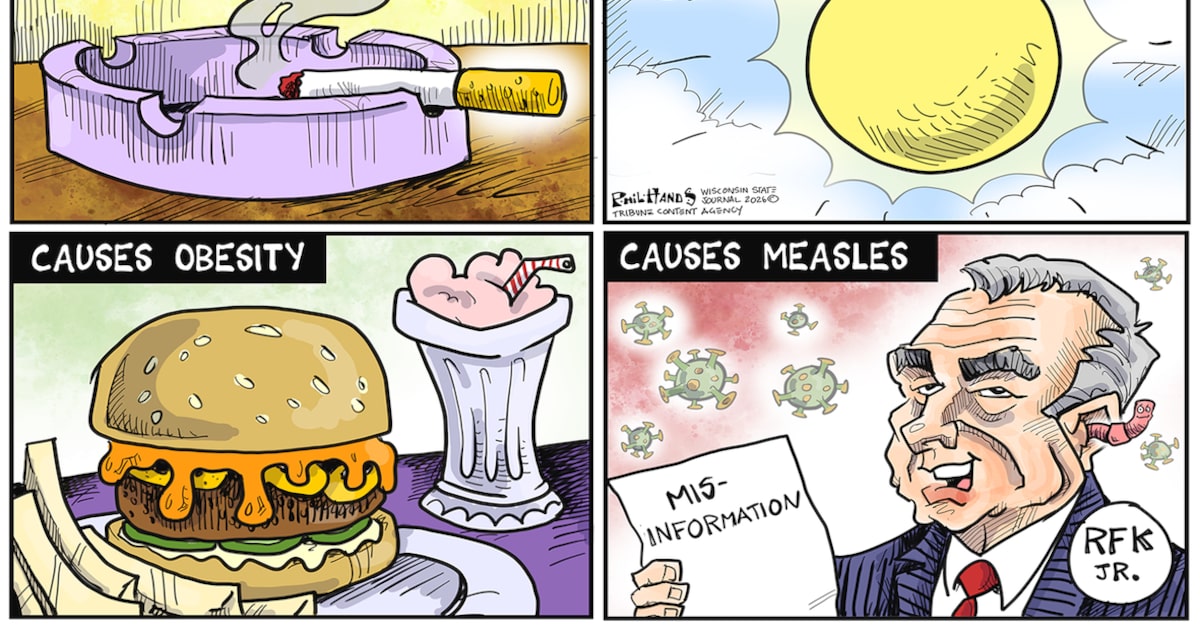
These visual commentaries frequently depict misinformation as a contagion spreading through social networks, as weapons wielded by political actors, or as fog obscuring citizens’ view of reality. Such imagery resonates with audiences who may themselves struggle to navigate increasingly complex information environments.
The stakes are particularly high in Texas, where polarized politics and a diverse media landscape create fertile ground for misinformation campaigns. Local officials across the state have reported increased challenges in communicating factual information about elections, public health initiatives, and government services when competing with viral misinformation.
Dallas County Election Administrator Michael Scarpello noted during a recent press conference that his office now dedicates significant resources to combating false claims about voting procedures. “We’re not just administering elections anymore,” Scarpello said. “We’re constantly fighting rumors that threaten to undermine public confidence in the entire system.”
Social media companies have implemented various strategies to address the problem, including labeling questionable content, reducing algorithmic amplification of unverified claims, and partnering with third-party fact-checkers. However, critics argue these efforts often fall short, particularly when misinformation comes from influential accounts with large followings.
The economic incentives driving misinformation present another challenge. A recent study by the Digital Forensic Research Lab found that websites publishing false or misleading content generated over $235 million in advertising revenue in 2022, creating financial motivation to produce sensationalized, unverified stories.
Education remains a crucial counterforce, with media literacy programs expanding in schools across Texas. These initiatives teach students to evaluate sources, recognize manipulation tactics, and verify information before sharing—skills increasingly viewed as essential for civic participation.
For editorial cartoonists, the challenge of depicting misinformation continues to evolve as new technologies emerge. The rise of artificial intelligence and deepfakes presents both new subjects for commentary and new challenges for distinguishing between authentic and manipulated content.
As public discourse increasingly acknowledges the damage caused by misinformation, editorial cartoons serve as both warning and reflection—visual shorthand for a complex problem that threatens the shared understanding necessary for democratic governance.
Fact Checker
Verify the accuracy of this article using The Disinformation Commission analysis and real-time sources.

16 Comments
As the article notes, the proliferation of misinformation has accelerated, especially during high-stakes political events. This cartoon effectively conveys the pervasive nature of this problem and the need for solutions.
Absolutely. Misinformation erodes public discourse and democratic institutions. Tackling this issue requires a multi-pronged approach from tech companies, policymakers, and citizens.
This editorial cartoon is a timely and insightful commentary on the troubling prevalence of misinformation. The visual metaphor of a disease outbreak is apt, highlighting the urgent need for solutions.
Absolutely. Misinformation poses a serious threat to informed decision-making and the integrity of public discourse. Addressing this challenge requires a multi-faceted approach from tech companies, policymakers, and citizens.
The cartoon’s depiction of misinformation as a spreading contagion is a thought-provoking metaphor. It underscores the importance of strengthening information verification and digital literacy efforts to combat this issue.
Agreed. The cartoon’s visual metaphor is a stark reminder of the pervasive and damaging nature of misinformation. Concerted action from all stakeholders is needed to address this challenge effectively.
This editorial cartoon is a powerful visual commentary on the concerning spread of misinformation. The metaphor of a contagious disease is apt, highlighting the urgent need to address this challenge.
Well said. Misinformation can have devastating real-world consequences, which makes this cartoon all the more impactful. Improving media literacy is crucial to combat the problem.
The cartoon’s depiction of misinformation as a spreading contagion is a powerful and thought-provoking metaphor. It underscores the scale and severity of this problem, which undermines trust in information and democratic institutions.
Well said. Misinformation is a complex challenge that requires concerted efforts from multiple stakeholders. Strengthening media literacy, fact-checking, and content moderation are crucial steps to combat the spread of false information.
This editorial cartoon provides a stark visual representation of the troubling spread of misinformation. The metaphor of a contagious disease is apt, highlighting the urgent need for robust solutions to address this issue.
Agreed. Misinformation poses a serious threat to informed decision-making and the integrity of public discourse. Tackling this challenge requires a multi-pronged approach involving tech companies, policymakers, and citizens.
Misinformation is a serious issue that undermines public trust and informed decision-making. This cartoon captures the worrying spread of falsehoods across digital platforms. Fact-checking and media literacy are crucial to combat this challenge.
Agreed. The speed and scale at which misinformation can propagate online is deeply concerning. Robust efforts are needed to promote accurate, evidence-based information.
The cartoon’s depiction of misinformation as a contagious disease is a powerful and thought-provoking metaphor. It underscores the scale and severity of this problem, which undermines trust in information and democratic institutions.
Well said. Misinformation is a complex challenge that requires concerted efforts from multiple stakeholders. Strengthening media literacy, fact-checking, and content moderation are crucial steps to combat the spread of false information.