


Listen to the article
The Election Commission (EC) has issued an important clarification regarding the upcoming election process, emphasizing that voting will remain “direct and secret” in accordance with constitutional requirements. The statement comes amid circulating concerns about potential changes to voting procedures.
According to the EC announcement, all citizens must continue to follow established voting protocols, which include casting ballots privately within designated voting booths and personally depositing them into ballot boxes. The commission specifically prohibited voters from photographing or revealing their marked ballots to others, reinforcing measures designed to protect voter independence and ballot secrecy.
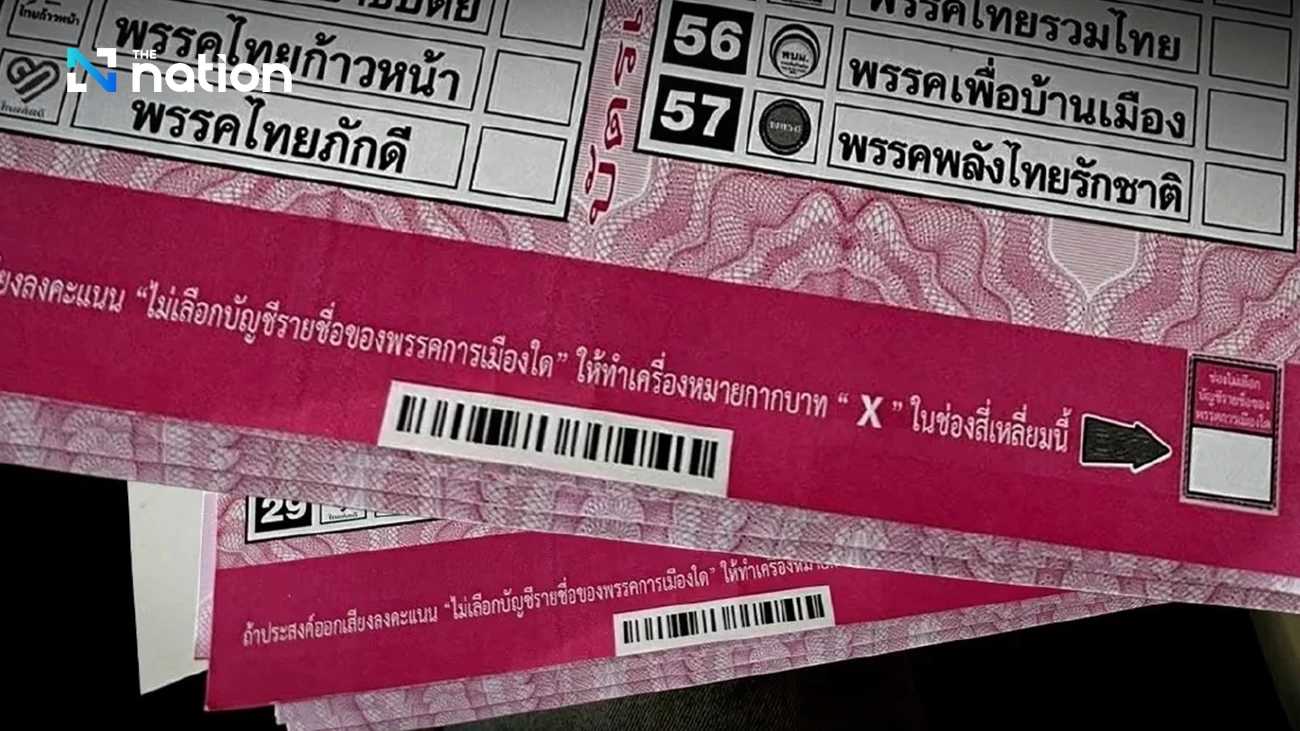
The clarification addresses questions about the introduction of barcode technology in the electoral process. The EC explained that barcodes are being implemented as an additional security feature to strengthen election integrity, not to track individual voting choices. Officials stressed that the system has been designed specifically to ensure that no person or entity can trace or verify how any individual citizen voted.
“The barcode system serves as an anti-fraud measure to protect the democratic process,” said an EC spokesperson who requested anonymity because they weren’t authorized to speak publicly on the matter. “It’s important that citizens understand this technology preserves rather than undermines ballot secrecy.”
The commission’s statement comes at a time of heightened political tension in the country, with various stakeholders expressing concerns about election transparency. Voting integrity has become a central issue in recent months, with both ruling and opposition parties scrutinizing electoral procedures.
In a significant warning, the EC cautioned that individuals spreading misinformation about the election process could face serious legal consequences. The commission specifically referenced the Computer Crime Act as the legal framework under which charges might be brought against those attempting to distort or mislead the public regarding election integrity.
Under the Computer Crime Act, disseminating false information through computer systems can result in imprisonment for up to five years and substantial fines, depending on the nature and impact of the violation.
Civil society organizations have generally welcomed the EC’s commitment to ballot secrecy while calling for continued transparency in all aspects of the electoral process. The Asia Democracy Network, a regional watchdog organization, noted that clear communication about new technologies is essential for maintaining voter confidence.
“When introducing new elements like barcodes into the voting system, election management bodies must be exceptionally clear about their purpose and limitations,” said electoral systems expert Maria Hernandez from the International Foundation for Electoral Systems. “Transparency builds trust, which is the foundation of any legitimate election.”
The upcoming election represents a crucial moment for the country’s democratic institutions, with millions of eligible voters expected to participate. Political analysts suggest that voter turnout could be significantly affected by public perception of electoral integrity.
The EC has announced plans to launch a comprehensive voter education campaign in the coming weeks to address misconceptions about the voting process and to familiarize citizens with proper voting procedures. The campaign will include television broadcasts, social media content, and community outreach programs designed to reach voters across all demographic groups.
As election day approaches, the commission has urged citizens to seek information from official sources rather than relying on unverified reports circulating on social media platforms, where electoral misinformation has been particularly prevalent.
Fact Checker
Verify the accuracy of this article using The Disinformation Commission analysis and real-time sources.

10 Comments
I appreciate the EC taking a proactive stance to address questions about ballot procedures. Protecting the integrity of elections is vital, but it must be balanced with safeguarding the secrecy of the vote. Curious to see how this develops.
Exactly, it’s all about finding the right balance. The EC’s assurances on voter privacy are reassuring, but the proof will be in the real-world implementation.
Maintaining voter privacy is crucial for a healthy democracy. The EC’s clarification on the barcode system seems to address concerns around potential ballot tracking. As long as it’s designed properly, this could be an effective anti-fraud tool.
Agreed, the key is ensuring the system can’t be used to trace individual votes. Transparency around the technical implementation will be important for public confidence.
Ballot secrecy is a fundamental democratic principle. I’m glad to see the EC taking steps to address concerns around the barcode system and reaffirming their dedication to voter privacy. Effective anti-fraud measures are important, but they must be carefully designed.
Curious to learn more about how the EC’s barcode system works in practice. While I appreciate the focus on election integrity, it’s critical that any new voting technologies are thoroughly vetted to ensure they don’t compromise the secrecy of the ballot.
The use of barcodes on ballots is an interesting security measure to combat fraud. It’s good to see the EC reaffirming their commitment to voting secrecy and independence. Curious to learn more about how the system works in practice.
The EC’s commitment to upholding voting secrecy is commendable. Barcodes could be a useful fraud deterrent, as long as the system is airtight in protecting individual privacy. I’ll be watching this issue closely as the election approaches.
The EC’s explanation of the barcode system seems reasonable, but the proof will be in the implementation. Maintaining voter privacy is paramount, so I hope they continue to be transparent about how the technology functions to build public trust.
Interesting to see the EC deploying new security features like barcodes. While I’m skeptical of any changes to voting systems, their explanation of how it preserves ballot secrecy is encouraging. Transparency will be key going forward.