


Listen to the article
Cervical Cancer Vaccine Drive Faces Hesitancy Despite Public Health Benefits
The Chandigarh UT administration’s renewed efforts to vaccinate young girls against cervical cancer have encountered persistent hesitancy, largely stemming from controversies surrounding the Gardasil vaccine in India. Despite cervical cancer being the second most common cancer affecting Indian women, response to the government’s free vaccination initiative remains tepid.
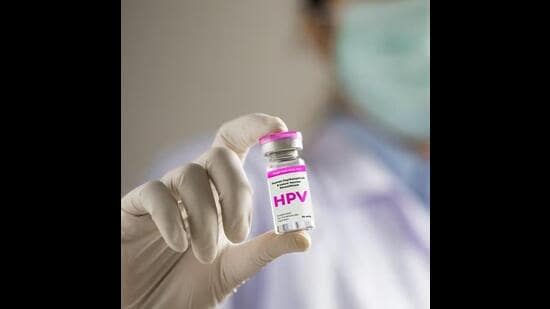
On February 28, the central government launched a nationwide campaign offering free Human Papillomavirus (HPV) vaccinations to girls aged 14. The single-dose vaccine is available at no cost in government hospitals, aiming to reduce the country’s significant cancer burden. However, the response has been underwhelming, with only 13 girls coming forward on the launch day at the Government Multi Specialty Hospital (GMSH-16) in Chandigarh.
India bears a disproportionate share of the global cervical cancer burden, accounting for 25% of worldwide deaths from the disease. One in every five women suffering from cervical cancer globally is Indian, with the country ranking fourth internationally in cervical cancer-related morbidity.
The vaccination program utilizes Gardasil, a quadrivalent vaccine manufactured by Merck & Co., which has been incorporated into the national immunization program. The vaccine targets four HPV strains: types 16 and 18, which are responsible for approximately 80% of cervical cancers, and types 6 and 11.
Public hesitancy toward the vaccine appears largely driven by online misinformation campaigns claiming the vaccine is harmful and lacks long-term, placebo-controlled trials demonstrating efficacy. Compounding these concerns is the vaccine’s controversial history in India. In 2013, a parliamentary standing committee report on Gardasil vaccine trials identified serious ethical, consent, and regulatory violations, further eroding public trust.
Dr. Bhawna Rai, professor in the Department of Radiotherapy and Oncology at PGIMER, emphasized the importance of vaccinating girls against HPV, explaining that the virus is transmitted through sexual contact. “It is ideal to give vaccine before one becomes sexually active,” Dr. Rai stated. “The vaccine builds immunity by creating antibodies which prevent human papillomaviruses from making carcinogenic changes.”
Medical experts stress that HPV vaccination represents a crucial preventive measure. Dr. Shweta Tehlan, senior consultant of gynecological oncology and robotic surgery at Fortis Hospital, noted that Gardasil has been in use for over 15 years with multiple efficacy trials. “The vaccine is recommended between 9 to 14 years of age as antibodies response is high in teenage,” Dr. Tehlan explained, adding that while the vaccine can be administered up to age 45, its effectiveness diminishes with age.
The World Health Organization has endorsed the single-dose regimen of Gardasil, which is routinely administered in countries including the United Kingdom, Canada, and Australia. While the vaccine is available for both genders to prevent various HPV-related conditions, India’s national immunization program currently targets only 14-year-old girls due to the high prevalence of cervical cancer among women.
Dr. Rashmi Bagga, professor in the Department of Obstetrics and Gynaecology at PGIMER, emphasized that regular screening remains essential even for vaccinated individuals. She recommends all women, including those who have received the HPV vaccine, undergo Pap smear testing every three years until age 65. This five-minute screening procedure, which costs ₹100 at PGI, can detect precancerous cells and HPV infection in the cervix.
Currently, free Gardasil vaccines are available at several locations in Chandigarh, including GMSH-16, civil hospital Manimajra, and health centers in Sectors 45 and 22, according to Dr. Suman Singh, Director of Health Services. Girls aged 14 can receive the HPV vaccine at the model immunization center of GMSH-16, located in the OPD building, on weekdays between 9 am and 2 pm. Women older than 14 can access the vaccine through consultation with a gynecologist.
As health officials work to overcome vaccine hesitancy, they continue emphasizing the significant potential of HPV vaccination to reduce India’s substantial cervical cancer burden through this preventive public health measure.
Fact Checker
Verify the accuracy of this article using The Disinformation Commission analysis and real-time sources.

7 Comments
The low initial turnout for the HPV vaccine launch in Chandigarh is concerning. More public education and outreach will be needed to overcome the stigma and misconceptions surrounding this important cancer prevention tool.
Agreed. Increasing awareness of the vaccine’s benefits and addressing cultural barriers will be critical to driving higher immunization rates, especially among young girls.
Cervical cancer disproportionately affects women in India. Improving HPV vaccination coverage is crucial to reducing this significant public health burden. Doctors should leverage digital and community outreach to boost awareness and access.
Combating vaccine misinformation is crucial to increase HPV vaccination rates and reduce the cervical cancer burden in India. Doctors need to emphasize the proven safety and efficacy of the vaccine to address public hesitancy.
Absolutely. Transparent and factual communication from healthcare providers will be key to building trust in the vaccination program.
This vaccination campaign is a positive step, but the low initial uptake is troubling. Doctors must continue to be proactive in debunking myths and educating the public on the safety and importance of the HPV vaccine.
India’s high cervical cancer burden underscores the urgent need for widespread HPV vaccination. Doctors should work closely with communities to tailor messaging and make the vaccine more accessible.