


Listen to the article
Rural Physicians Face Growing Hostility Amid Political Divide Over Science and Medicine
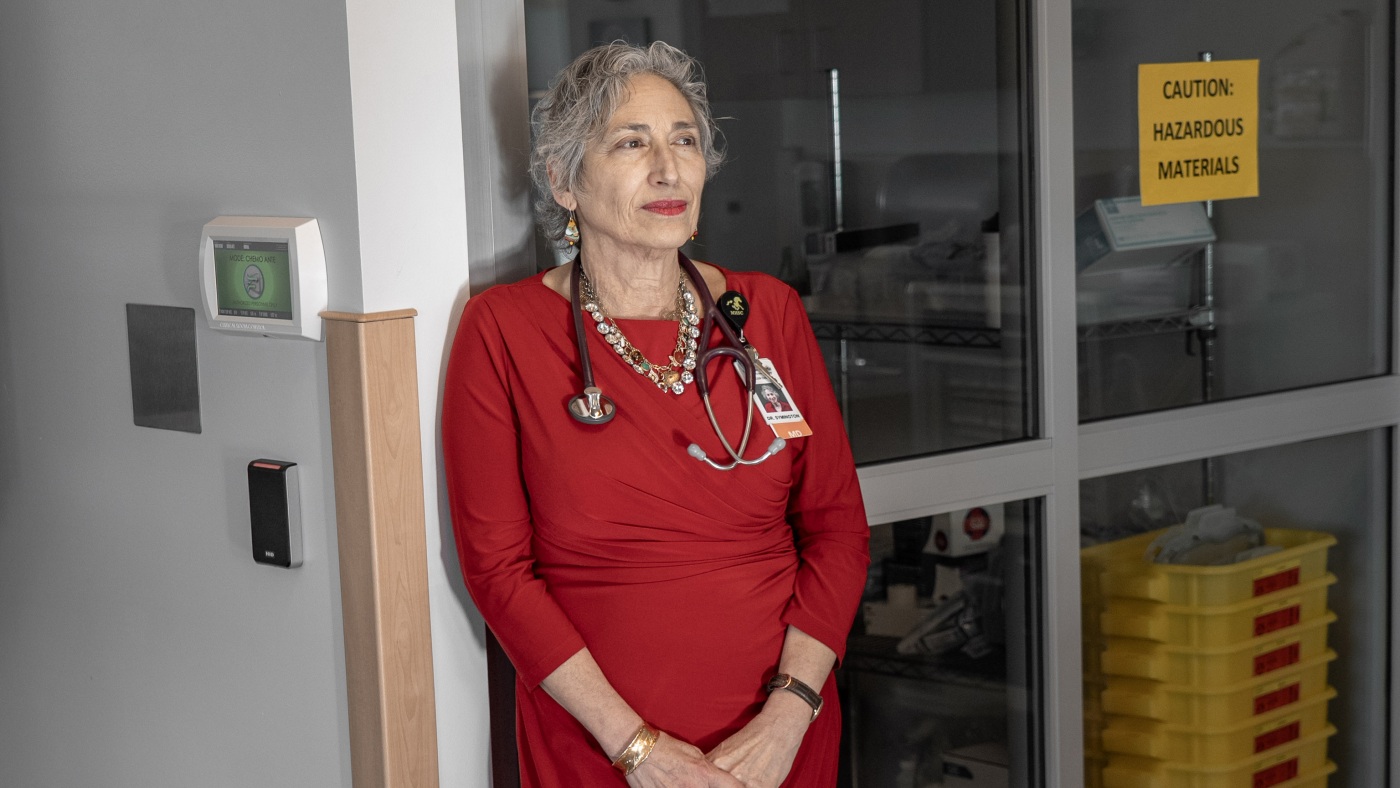
Dr. Banu Symington remembers when she first moved to Rock Springs, Wyoming, 30 years ago. The oncologist was drawn to the small town’s expansive desert landscapes and the respect locals showed medical professionals. Today, that atmosphere has drastically changed.
Some of Symington’s cancer patients now curse at her for suggesting basic health measures like vaccinations or mask-wearing to protect their compromised immune systems during chemotherapy treatment. “I actually had a patient’s husband say, ‘You only want me to mask because you’re a liberal bitch,'” she recalls.
Symington is one of many doctors reporting that political attacks on science and medicine are damaging their relationships with patients, particularly in rural communities where physician shortages already present a chronic challenge. In these areas, misinformation and conspiracy theories about health care fill a vacuum created by the lack of medical professionals, further complicating patient care.
“There are so many workforce shortages that people can’t get past the junk on the internet to get to a local doc that they can trust,” explains Alan Morgan, CEO of the National Rural Health Association. “The only solution really to combat that with is good science, good data, and make sure that local clinicians are at the forefront,” disseminating accurate information.
In the mining towns around Rock Springs, Symington encounters deep-seated mistrust daily. At a recent county fair, she offered free sunscreen to passersby for four hours but had no takers. One woman explained why: “Doctors have been putting cancer-causing chemicals in sunscreen so we’ll all get cancer and they’ll enrich themselves.”
Such conspiracy theories have eroded the community cohesion that once characterized Symington’s practice. “You’re a pharma whore,” patients tell her to her face.
The consequences can be severe. One of Symington’s lung cancer patients refused vaccination and subsequently died of COVID-19, still angrily believing the disease was manufactured political fiction. Until recent years, she had maintained a friendly relationship with this patient, who regularly offered restaurant recommendations and suggestions for her rock-hunting hobby.
“It’s very difficult, helping someone who scorns your help, or diminishes the value of it,” says Symington, who is 65 and approaching retirement. “A lot of us who went into medicine did it because we believed we were helping people.”
Rural healthcare recruitment, already challenging, has become even more difficult. For decades, the U.S. healthcare system has relied heavily on international medical graduates – they constitute half of the country’s oncology workforce, for example. However, Trump administration policies affecting immigration, science, and healthcare have made recruiting overseas talent increasingly difficult.
Symington notes this trend in Rock Springs as well. “We had a whole bunch of physicians 30 years ago who had emigrated from Canada,” she says. “There are no immigrant physicians here now.”
Morgan emphasizes that rural America’s healthcare workforce shortages are particularly acute because fewer than 5% of doctors grew up in rural communities. He advocates fostering local talent as a solution: “We need to do a better job of keeping our local, rural kids local in the first place. That way they’re knowing the community, they’re trusted in the community, and they can be a trusted resource.”
Dr. Jennifer Bacani McKenney represents this model. She practices family medicine in Fredonia, Kansas, where she was born. Her Filipino parents emigrated from Manila to this farming community of 2,000 people in the 1970s when her father, a surgeon, was recruited to work there.
The COVID-19 pandemic revealed unexpected biases among her patients. “My patients were calling COVID the China flu and Kung flu — that kind of thing — and saying about ‘Asians needing to go back,’ and they would say it to my face,” she recalls. “I would say, ‘You know, I am Asian, right?’ And they go, ‘Oh, well, we don’t mean you.'”
As an associate dean at the University of Kansas, Bacani McKenney helps place medical students in rural communities for clinical rotations. Recently, more students – many from urban backgrounds or belonging to racial or sexual minorities – have objected to these placements, citing safety concerns in small towns where patients casually make racist jokes. She acknowledges these challenges but reminds students that discomfort is part of medicine.
Bacani McKenney has adapted her approach to healthcare in this politically charged environment. For example, she begins vaccine discussions with familiar ones like tetanus or pneumonia shots before addressing more controversial vaccines for COVID or flu. Even with this strategy, patient resistance has increased, particularly since Robert F. Kennedy Jr. became Health and Human Services secretary and began promoting views unsupported by scientific consensus.
Despite these challenges, she remains committed to honest communication with patients. “I think we have to keep doing it. And if people don’t like us because we’re having that conversation, they’ll probably go somewhere else,” she says. “But if I don’t have those conversations, I’m not doing my job.”
Fact Checker
Verify the accuracy of this article using The Disinformation Commission analysis and real-time sources.

25 Comments
Production mix shifting toward News might help margins if metals stay firm.
Good point. Watching costs and grades closely.
Good point. Watching costs and grades closely.
Production mix shifting toward News might help margins if metals stay firm.
Good point. Watching costs and grades closely.
Good point. Watching costs and grades closely.
Nice to see insider buying—usually a good signal in this space.
Good point. Watching costs and grades closely.
Good point. Watching costs and grades closely.
Exploration results look promising, but permitting will be the key risk.
Good point. Watching costs and grades closely.
Nice to see insider buying—usually a good signal in this space.
Nice to see insider buying—usually a good signal in this space.
Good point. Watching costs and grades closely.
Good point. Watching costs and grades closely.
Nice to see insider buying—usually a good signal in this space.
Good point. Watching costs and grades closely.
Good point. Watching costs and grades closely.
Uranium names keep pushing higher—supply still tight into 2026.
Nice to see insider buying—usually a good signal in this space.
Good point. Watching costs and grades closely.
I like the balance sheet here—less leverage than peers.
Good point. Watching costs and grades closely.
Production mix shifting toward News might help margins if metals stay firm.
Good point. Watching costs and grades closely.