


Listen to the article
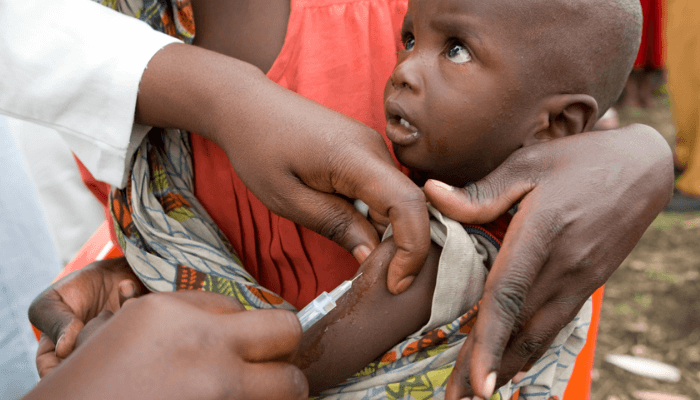
Lagos’s recent 10-day measles and rubella vaccination campaign has encountered significant resistance, highlighting growing challenges in public health initiatives across the metropolis. The campaign, which ran from January 27 to February 5, 2026, targeted children between 9 months and 14 years as part of the state government’s broader efforts to reduce preventable diseases.
Despite the critical importance of the vaccines, field observations revealed widespread hesitancy and outright rejection in several communities. Vaccinators frequently faced suspicion and refusal from parents concerned about the vaccines’ safety and purpose.
Conspiracy theories emerged as a major obstacle to successful implementation. Many parents cited rumors that the vaccination program was part of a “population reduction agenda.” These unfounded claims spread through community networks, with some residents asserting that receiving the vaccine could be fatal – allegations that health officials have categorically dismissed as dangerous misinformation.
Economic context also played a significant role in vaccine resistance. In a period of rising costs and financial hardship for many Lagos families, some parents questioned the government’s priorities. “Government no give us food, na vaccine them wan give us?” became a common refrain, according to field observers. This sentiment reflects how public health initiatives are increasingly viewed through the lens of broader socio-economic grievances rather than purely health considerations.
Ihe Chimezie Samuel, a World Health Organization Local Government Area Facilitator who monitored the exercise, identified several key factors behind the resistance: “Popular among the reasons why some parents refused to receive the vaccine is the ongoing propaganda about population reduction. We also have the issue of lack of confidence in government, while others may be due to past ugly vaccination experiences.”
Knowledge gaps about immunization fundamentals further complicated the campaign. Some parents declined the vaccine because they believed their children were already healthy, failing to understand that vaccines are preventative measures designed to protect against future infection rather than treat existing illness.
Cultural perceptions about free services created additional barriers. In a society where many citizens believe political leaders rarely act in the public interest without personal gain, free vaccines triggered skepticism. Some residents questioned why something truly valuable would be offered at no cost – a perception that equates price with importance and quality.
The campaign also suffered from awareness challenges. Despite publicity efforts across various channels, many residents claimed they only learned about the vaccination drive when health workers arrived in their neighborhoods, suggesting gaps in the communication strategy that preceded the campaign.
Public health experts emphasize that these experiences highlight a critical lesson for future health initiatives: providing vaccines alone is insufficient. Building community trust, addressing misinformation directly, and ensuring widespread awareness before implementation are essential components of successful public health campaigns.
Samuel stressed the importance of continuous community engagement: “I think the first thing that should be done is to engage in constant aggressive sensitization of citizens while trying to disabuse their minds of all negative narratives.”
The Lagos vaccination campaign illustrates the complex interplay of social, economic, and informational factors that influence public health outcomes. As preventable diseases like measles continue to threaten child health, authorities face the dual challenge of not only providing vaccines but also cultivating the trust necessary for communities to accept them.
For future campaigns to succeed, health officials will need to develop more robust strategies that address both the medical and social dimensions of vaccine hesitancy in Nigeria’s diverse and rapidly changing urban communities.
Fact Checker
Verify the accuracy of this article using The Disinformation Commission analysis and real-time sources.

11 Comments
This is a troubling development that highlights the urgent need for robust public education and community engagement on the importance of vaccination. Health officials must work tirelessly to counter misinformation and restore public confidence.
Misinformation-driven vaccine hesitancy is a serious public health concern that requires a multifaceted response. Transparent communication, targeted outreach, and addressing economic barriers will be crucial to improving vaccination coverage in Lagos.
Vaccine hesitancy driven by misinformation and economic challenges is a complex issue. Innovative strategies that address both the informational and socioeconomic factors will be key to improving vaccination rates in Lagos.
This is concerning, as vaccines are critical for public health. Misinformation can have serious consequences, especially for vulnerable populations. Health officials need to address community concerns transparently and build trust through open dialogue.
This is a worrying trend. Vaccines save lives and protect vulnerable populations. Robust public education campaigns are needed to address the root causes of vaccine hesitancy in Lagos.
Absolutely. Transparent communication, community outreach, and addressing economic barriers will be critical to improving vaccination coverage and protecting public health.
It’s disheartening to see vital public health initiatives undermined by the spread of dangerous misinformation. Building trust and addressing the root causes of vaccine hesitancy should be a top priority for authorities.
Vaccine hesitancy is a growing challenge globally. While some distrust stems from misinformation, economic hardship can also play a role. Addressing both the informational and socioeconomic barriers will be key to improving vaccination coverage.
Agreed. A holistic approach targeting both the spread of misinformation and the underlying socioeconomic factors is crucial. Rebuilding public trust in health institutions will be essential.
Conspiracy theories about vaccines are extremely dangerous and counterproductive. Health authorities must redouble efforts to combat these false narratives with clear, factual communication and community engagement.
The spread of misinformation is a serious obstacle to public health efforts. Trusted community leaders and health professionals must work together to counter false narratives and promote the proven benefits of vaccination.