


Listen to the article
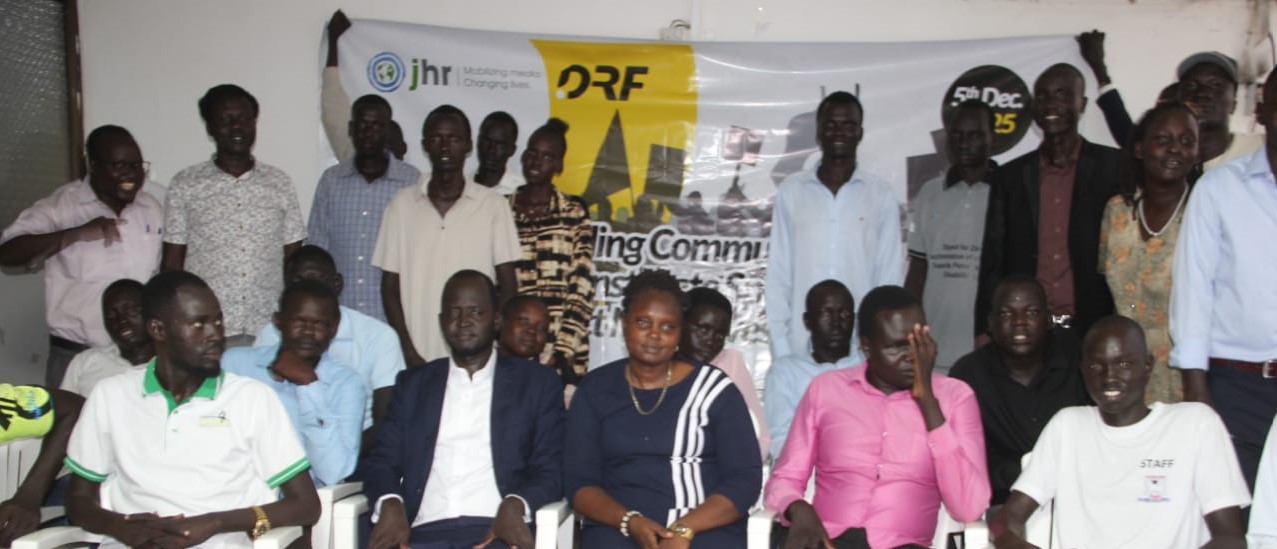
South Sudan’s Jonglei State hosted a significant forum last Friday aimed at tackling the growing challenge of misinformation and hate speech that has contributed to cycles of violence in the region. The event, held in the town of Bor, brought together 50 key community stakeholders in an effort to build local capacity for information verification and conflict prevention.
Digital Rights Frontlines (DRF), with support from Journalists for Human Rights (JHR), organized the one-day gathering that included representatives from civil society organizations, youth groups, women’s associations, traditional leadership structures, and state government officials.
The timing of this initiative is particularly relevant for Jonglei State, a region that has long suffered from intercommunal violence often triggered or exacerbated by false information. Local conflicts frequently revolve around cattle raiding and retaliatory attacks between communities, with misinformation playing a significant role in escalating tensions.
Paul Machar, who served as a facilitator and represented DRF at the forum, emphasized the direct connection between misinformation and regional instability. “Misinformation is fuelling fear, hatred, and violence,” Machar told participants. “We want communities to understand how to verify information and prevent falsehoods from influencing actions that threaten peace.”
The forum’s practical focus on information verification techniques and community-based solutions resonated strongly with attendees. Jessica Ajok, representing a local community-based organization, highlighted how misinformation directly impacts community safety: “Many conflicts begin with rumours or misleading messages. Learning how to detect and challenge such information will help us protect our communities and rebuild trust.”
South Sudan, Africa’s youngest nation after gaining independence in 2011, has struggled with internal conflicts and community violence. In regions like Jonglei, where traditional communication networks intersect with growing digital connectivity, false information can spread rapidly with devastating consequences. Cattle, which represent both economic livelihood and cultural significance in many South Sudanese communities, are often at the center of disputes that can quickly escalate when fueled by unverified claims.
The initiative comes amid broader concerns about digital literacy across the country. While mobile phone usage has expanded significantly in South Sudan over recent years, critical media literacy skills haven’t kept pace, creating vulnerability to manipulation and misinformation campaigns. This digital divide has particular consequences in conflict-prone areas.
Local journalists attending the forum noted the challenges they face in promoting accurate reporting in a context where rumors can travel faster than verified news. Several described instances where false information shared via mobile phones or social media platforms had triggered immediate violent responses before any verification could occur.
The forum concluded with participants developing concrete action plans, including commitments to collaborate on community awareness campaigns, promote local fact-checking initiatives, and work directly with traditional leaders to establish community-based protocols for information verification. These leaders hold significant influence in rural communities and their involvement is considered essential for any successful intervention.
State officials present at the event acknowledged the government’s responsibility in promoting accurate information and pledged to support community-led initiatives addressing the issue. However, participants also emphasized that sustainable solutions must be rooted in local ownership rather than externally imposed programs.
Digital Rights Frontlines indicated that this forum represents the beginning of a broader effort to strengthen information integrity across South Sudan’s conflict-affected regions. The organization plans to conduct follow-up workshops and establish community information verification networks in the coming months.
For Jonglei State, where cycles of violence have displaced thousands and undermined development efforts, addressing misinformation represents a critical component of broader peacebuilding strategies. As one traditional leader remarked during the closing session, “Peace begins with truth, and truth requires vigilance from all of us.”
Fact Checker
Verify the accuracy of this article using The Disinformation Commission analysis and real-time sources.

12 Comments
Combating misinformation is a critical challenge, and I’m glad to see this forum in Bor taking it on. Building digital literacy and conflict prevention skills within local communities is a smart approach. I hope the organizers are able to sustain this effort and expand it to other parts of South Sudan.
Kudos to the organizers for bringing together such a diverse group of stakeholders to tackle misinformation and hate speech in Jonglei State. Building local capacity for information verification and conflict prevention is a critical need. I hope this is the start of ongoing efforts.
Agreed. Sustained engagement with community leaders, youth, and civil society is key to addressing the root causes of misinformation and violence in the region.
Combating misinformation is crucial for stability in South Sudan. This forum in Bor seems like an important step to build local capacity and raise digital literacy. I’m curious to learn more about the specific strategies and initiatives discussed to address this challenge.
Absolutely. Misinformation has fueled too much conflict in the region. Equipping community leaders and stakeholders with the tools to verify information and prevent escalation is a smart approach.
This initiative in Bor is a welcome development. Tackling misinformation and hate speech at the grassroots level is crucial for stability in Jonglei State. I’m curious to learn more about the specific training and capacity-building activities that were part of the forum.
Absolutely. Equipping local leaders and community members with the tools to verify information and de-escalate tensions is essential. I hope this forum leads to ongoing, impactful programs in the region.
Interesting to see this focus on combating misinformation in South Sudan. Cycles of violence fueled by false information are a major challenge. I’m curious to learn more about the specific strategies and tools discussed at the Bor forum to empower communities.
Misinformation is a major driver of instability in South Sudan. This forum in Bor seems like an important step to empower local communities with the digital literacy skills needed to combat false narratives and prevent escalation of conflicts. I’m optimistic about the potential impact.
This forum in Bor sounds like an important initiative. Strengthening information verification skills and conflict prevention capacity at the community level is crucial. I hope the event leads to tangible outcomes and continued engagement on these critical issues.
Agreed. Sustainable solutions to misinformation and instability require long-term investment in digital literacy and conflict resolution capabilities within local communities.
Digital literacy is a pressing need, especially in areas prone to violence like Jonglei State. I’m glad to see organizations like DRF and JHR supporting this forum to empower local communities. Tackling hate speech and misinformation at the grassroots level is essential.