


Listen to the article
Digital Organization Launches Campaign to Combat Online Misinformation
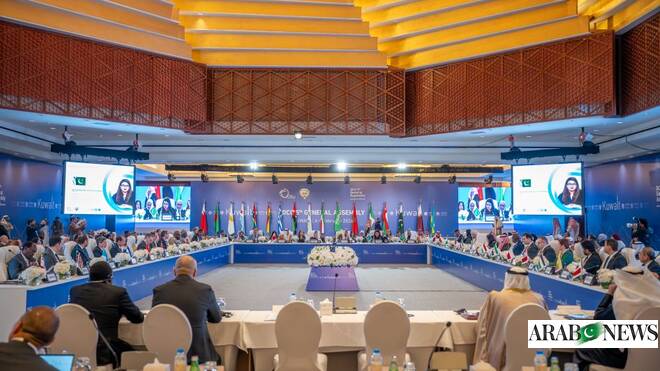
The Digital Cooperation Organization (DCO) has launched a new campaign to combat online misinformation, which government experts now consider a primary threat to national security. The announcement came during the organization’s fifth General Assembly meeting held Wednesday in Kuwait City.
“Misinformation is not an abstract concern; it puts at risk the social cohesion that holds our communities together,” said Omar Saud Al-Omar, Kuwait’s minister of state for communication affairs and current chairperson of the DCO Council. According to Al-Omar, more than 80 percent of government-identified misinformation is now ranked as a top risk to national security.
The initiative marks a significant milestone in multilateral efforts to address digital integrity concerns. Kuwait, during its DCO presidency, activated the Ministerial Committee on Online Misinformation, which Al-Omar now chairs. The new campaign creates a platform for countries and partners to make concrete pledges and shared commitments in the fight against false information.
Saudi Arabia’s Communications and Information Technology Minister Abdullah Al-Swaha reinforced the urgency of this effort, noting that “the top five risks for the global workforce is misinformation.” He emphasized the need for stronger international cooperation to build an inclusive digital future centered on trust, talent empowerment, and the effective use of advanced technologies, particularly artificial intelligence.
Al-Swaha praised Kuwait’s leadership during its DCO presidency, highlighting several impactful initiatives beyond misinformation, including promoting trusted cross-border data flows and launching a responsible AI framework. Collectively, these efforts aim to enhance global trust in the digital ecosystem.
The DCO has grown significantly in recent years and now represents approximately 10 percent of the world’s population with member states contributing nearly $3.6 trillion to the global economy. These countries are achieving growth rates that exceed the global average and foster significant technological advancement, with more than 2 million technology professionals and 16 unicorn companies emerging from member states.
Artificial intelligence featured prominently in discussions throughout the assembly. DCO Secretary-General Deemah Al-Yahya highlighted the organization’s evolution over five years and emphasized its core mission of ensuring the digital economy is shaped inclusively.
“Five years ago, the DCO was born from a simple but powerful conviction: that the digital economy is too important to be shaped by a few, and too critical to be left to chance,” Al-Yahya said.
She warned about the uneven distribution of digital transformation gains, with infrastructure, capital, and skills concentrated among a privileged few. “If we do not act with urgency and coordination, the divide will not close… it will deepen,” she cautioned.
Al-Yahya stressed that AI is already reshaping industries, redefining labor markets, and transforming government services. The critical question, she suggested, is not whether AI will change societies but “who will benefit?”
The DCO’s growing influence was evident at the assembly, which now includes 16 member states and more than 60 observers. The organization has fostered “a growing ecosystem of governments, institutions, and innovators working side by side,” according to Al-Yahya, who emphasized that trust has been the most important achievement.
Pakistan’s Minister of Information and Technology and Telecommunications, Shaza Fatima Khawaj, also participated in the event, commending the DCO’s efforts to bridge the digital divide and promoting “trust, innovation and inclusion.” Pakistan is scheduled to assume the presidency of the general assembly in 2027.
The annual assembly brings together the full spectrum of the digital ecosystem—ministers from member states, observers, partners, policymakers, CEOs, innovators, and representatives from more than 60 countries—providing a platform to shape the global digital agenda during a critical period of technological transformation.
Fact Checker
Verify the accuracy of this article using The Disinformation Commission analysis and real-time sources.

9 Comments
Securing digital integrity is crucial in today’s world. I’m hopeful this new campaign can make meaningful progress in the fight against online misinformation and its impacts on national security.
Misinformation is a complex challenge, but I’m glad to see governments and international organizations stepping up to address it. This campaign by the Digital Cooperation Organization is a welcome development.
The emphasis on building social cohesion is important. Misinformation can erode public trust, so a comprehensive approach focused on strengthening communities is needed.
Combating misinformation requires a multilateral, coordinated effort. This initiative by the Digital Cooperation Organization seems like a positive step in the right direction.
I’m curious to see what specific commitments and actions come out of this campaign. Consistent implementation across countries will be key to its success.
With over 80% of misinformation now considered a top national security risk, this is clearly a growing concern that requires a strong response. I appreciate the Digital Authority taking a leadership role on this issue.
The creation of a Ministerial Committee on Online Misinformation is an interesting approach. I hope it can drive concrete actions and accountability across participating nations.
Combating online misinformation is a critical issue facing governments and societies today. This new campaign by the Digital Cooperation Organization sounds like a positive step towards addressing this challenge through multilateral cooperation.
I’m curious to learn more about the specific initiatives and commitments that will come out of this campaign. Coordinated international action will be key to effectively tackling the spread of false information.