


Listen to the article
As the first week of early voting concludes, Americans are increasingly exposed to political content online that may not be what it appears. With artificial intelligence technology rapidly advancing, distinguishing between authentic and fabricated political media has become a significant challenge for voters navigating the digital landscape.
Fake political videos are proliferating across social media platforms, prompting concern among media experts during this crucial election season. Mariano Castillo, who teaches media literacy at Texas A&M University in College Station, is offering practical guidance to help voters shield themselves from sophisticated digital manipulation.
Castillo emphasizes the importance of understanding two fundamental concepts: misinformation and disinformation. Misinformation refers to false information shared without malicious intent, while disinformation is deliberately created and distributed to deceive audiences. According to Castillo, artificial intelligence tools have dramatically lowered the barrier to creating convincing disinformation.
“The technology has advanced tremendously since AI became mainstream in 2023,” Castillo explains. “Early deepfakes were relatively easy to identify—they often featured visual anomalies like extra fingers or unnatural appearances. Today’s AI-generated content is far more sophisticated and convincing.”
Despite these advancements, telltale signs of AI manipulation remain visible to the careful observer. Castillo recommends scrutinizing natural human features, particularly eyes and fingers, as well as lighting inconsistencies. Unnatural glossiness or subtle distortions often reveal artificial generation.
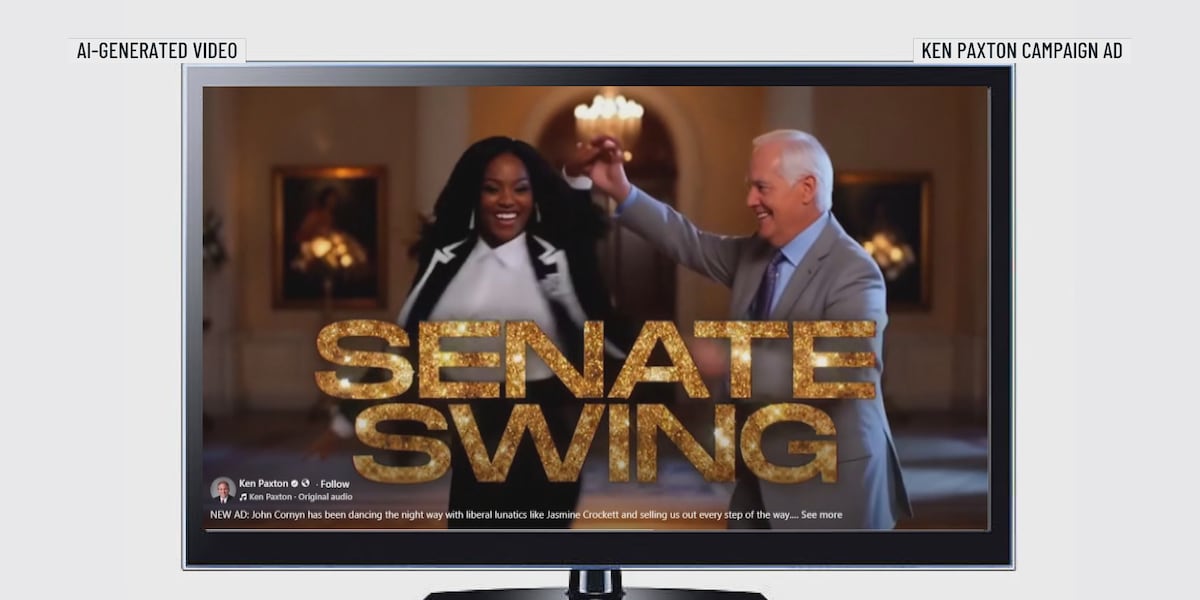
A recent viral example highlighted this issue when an AI-generated video appeared to show Republican Senator John Cornyn and Democratic Representative Jasmine Crockett—political opponents—dancing together. The fabricated scene, which never occurred, demonstrated how convincing these deceptions can be.
“Start by asking yourself, does this make sense?” Castillo advises. “Would it be logical for these two political opponents to be dancing in front of the Capitol or in a ballroom? You’d probably conclude ‘no,’ and that’s your first indication to investigate further.”
When evaluating political content online, Castillo suggests vetting the source’s credibility and track record. Legitimate sources typically have local connections, understand the community, transparently correct mistakes, and maintain clear journalistic standards.
Content designed to provoke emotional responses—particularly anger—should trigger skepticism. This “rage bait” is a common tactic used to increase engagement and sharing of manipulated content.
“If something makes you angry, pause before reacting,” Castillo warns. “Before sharing or reposting, check whether other reputable outlets have covered the same story. Additional context might reveal that the video was deliberately designed to provoke an emotional response.”
For content that remains suspicious, Castillo recommends using reverse image search tools. By uploading a photo or video screenshot to Google Images, users can discover where else the image appears online and whether fact-checkers have already investigated its authenticity.
“Many of these images have been previously fact-checked,” Castillo notes. “You might find stories from credible outlets that have traced the source and determined it was fabricated.”
Several free AI detection tools are now available to the public, though their effectiveness varies as AI technology continues to evolve. These tools can provide an additional layer of verification when encountering suspicious content.
The increasing sophistication of AI-generated political content presents unique challenges during election season, when voters are trying to make informed decisions based on accurate information. Social media platforms have implemented varying degrees of safeguards, but the responsibility ultimately falls on users to approach political content with healthy skepticism.
Castillo’s fundamental advice is straightforward: trust your instincts and apply common sense. Look for labels, watermarks, or disclaimers that may indicate AI-generated content. Most importantly, pause and think critically before sharing anything that triggers a strong emotional response—it might be designed to manipulate rather than inform.
Fact Checker
Verify the accuracy of this article using The Disinformation Commission analysis and real-time sources.

12 Comments
As AI technology continues to advance, the challenge of detecting and combating political disinformation will only intensify. Proactive measures to safeguard the electoral process are essential.
This is a complex issue that requires a multifaceted approach. Collaboration between policymakers, tech companies, and the public will be key to mitigating the risks of AI-driven disinformation.
This is a timely and important issue. Proactive steps to educate the public on spotting AI-generated disinformation could help preserve the integrity of the upcoming elections.
Distinguishing authentic content from AI-generated fakes will be a growing challenge. Media literacy training for the public is crucial to combat the spread of political disinformation.
Agreed. Voters should rely on reputable news sources and fact-checking sites to verify the credibility of online political content.
Maintaining public trust in the electoral system will be crucial as AI-generated content becomes more sophisticated and widespread. Robust verification methods and media literacy campaigns are needed.
Absolutely. Ensuring the authenticity of online political content should be a top priority for election officials and tech platforms alike.
The proliferation of AI-generated fakes is a concerning trend that could undermine the integrity of the electoral process. Voters must be empowered to critically evaluate online political content.
The rapid advancement of AI technology raises valid concerns about the integrity of the electoral process. Effective safeguards and transparency measures will be essential going forward.
This is an important issue that deserves serious attention. Effective strategies to combat AI-driven disinformation will be crucial in the lead-up to the 2026 primary election.
This is a concerning issue as AI-generated content could significantly influence elections if not properly detected and addressed. Voters need to be vigilant and cross-check information from reliable sources.
Deepfakes and other AI-powered manipulation tools pose a serious threat to the democratic process. Voters must be vigilant and seek out authoritative information to make informed decisions.