


Listen to the article
In a direct challenge to claims circulating in Delhi, BJP officials have stepped forward to counter what they describe as misleading information about the new Pink Card system for women using public transportation in the capital.
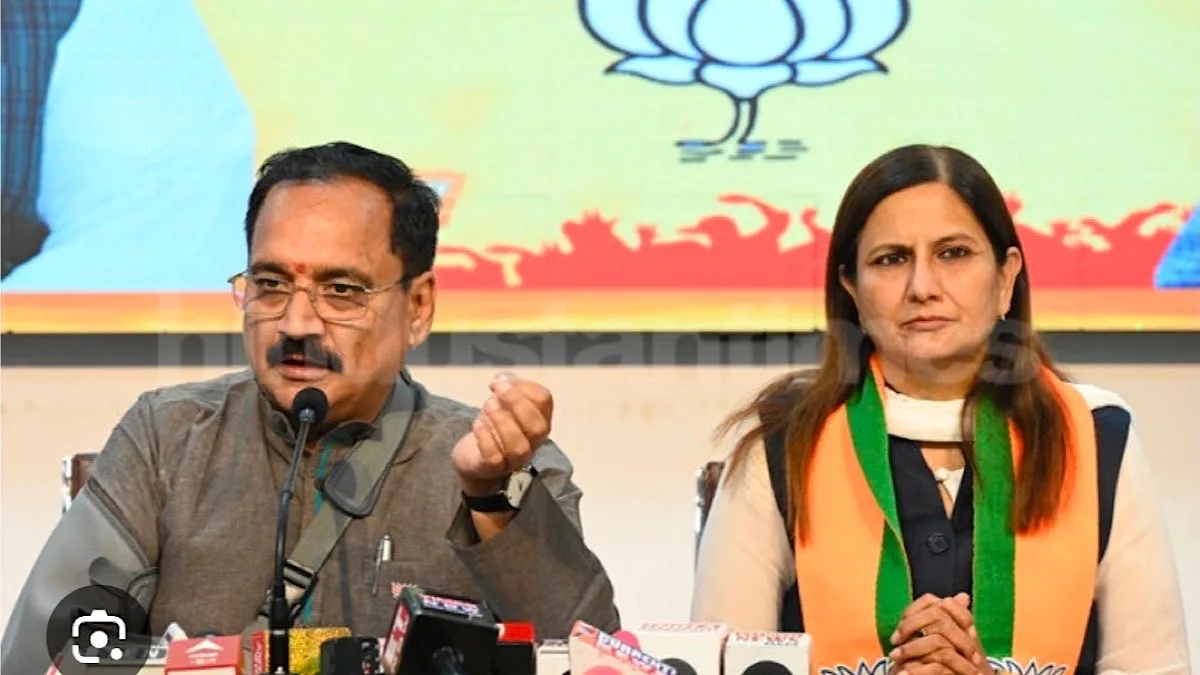
Delhi BJP President Virendra Sachdeva and General Secretary Kamaljeet Sehrawat issued a joint statement refuting allegations that women are restricted from using their Pink Cards multiple times within an hour on Delhi Transport Corporation (DTC) buses. The controversy highlights ongoing tensions between the BJP and the Aam Aadmi Party (AAP) in the politically charged atmosphere of the national capital.
“We have received reports that certain individuals, apparently acting at the direction of AAP leaders, are spreading false information to women passengers,” Sachdeva said. “They’re incorrectly claiming that once a Pink Card is tapped on a bus, it cannot be used again for the next hour.”
To disprove these claims, Sachdeva reported that members of the BJP’s Mahila Morcha (Women’s Wing) conducted a practical demonstration, successfully using a single Pink Card three times within a 30-minute period while changing buses. This test was specifically organized to counter the narrative being promoted, according to the BJP leadership.
The Pink Card initiative represents a significant transportation policy in Delhi, designed to facilitate women’s mobility throughout the city. The program aligns with broader national efforts to improve safety and accessibility for women in public spaces, a priority that has gained increasing attention following high-profile incidents of violence against women on public transport in recent years.
Acknowledging the logistical challenges of distributing Pink Cards to the large female population in Delhi, Sachdeva clarified that Pink Tickets would remain available as an alternative on buses for “the next few months.” This transitional approach aims to ensure uninterrupted service while the card distribution system catches up with demand.
The BJP leader also announced that DTC has been directed to work with public representatives’ offices to facilitate Pink Card distribution, potentially expanding access points beyond traditional transport hubs.
The dispute over Pink Card usage rules reflects the intense political rivalry between BJP and AAP in Delhi, where control over public services and their implementation often becomes a flashpoint for partisan disagreement. The AAP, which governs Delhi under Chief Minister Arvind Kejriwal, has made public transportation improvements a key part of its platform.
Urban mobility experts note that clear communication about transportation policies is crucial for public adoption, particularly for programs targeting specific demographics like women. Confusion about usage rules can undermine even well-designed initiatives.
Women’s access to safe, reliable public transportation remains a critical issue in Delhi, where female workforce participation has historically been impacted by mobility constraints. Transportation initiatives like the Pink Card system aim to address these barriers, making the accuracy of information about how they function particularly important.
The BJP’s public clarification emphasizes that women should “freely travel anywhere in the city using Pink Cards or Pink Tickets” on both the newer e-buses and traditional DTC fleet.
As the implementation of the Pink Card system continues, both political parties will likely keep a close watch on its performance, with the service quality and accessibility becoming potential talking points in future electoral contests in the capital region.
Fact Checker
Verify the accuracy of this article using The Disinformation Commission analysis and real-time sources.

14 Comments
This seems like a complex issue with political undertones. I hope the relevant authorities can work together to provide clear and accurate information to the public, especially to the women who will be affected by this policy.
Ultimately, the goal should be to ensure that women have reliable and affordable access to public transportation, regardless of political affiliations. Transparency and collaboration are key.
The BJP’s demonstration is an interesting data point, but I’d be cautious about drawing firm conclusions. Ongoing monitoring and user feedback will be important to fully understand how the Pink Card system is working in practice.
Given the political tensions, it will be important for all sides to focus on the needs of women commuters rather than engaging in partisan rhetoric. Transparency and open dialogue are crucial.
I’m curious to learn more about the practical implications of the Pink Card system and how it’s being implemented on the ground. It’s important to understand the user experience and any potential challenges.
The BJP’s claim of disproving the misinformation is interesting, but I’d like to see independent verification of how the system is actually working for women commuters.
Interesting development in the ongoing political tensions in Delhi. It’s important that accurate information is provided to the public, especially on issues that impact women’s access to public transportation.
The BJP’s demonstration seems to counter the misinformation claims. Transparency and factual reporting are crucial in these types of policy debates.
The BJP’s demonstration is an interesting attempt to counter the claims of misinformation. However, I’d caution against assuming this fully resolves the issue. Ongoing monitoring and feedback from women commuters will be important.
Given the political tensions, it will be important for both sides to engage in constructive dialogue and focus on the needs of the end-users rather than scoring political points.
This highlights the need for clear and consistent communication from the government on new initiatives like the Pink Card system. Conflicting narratives can sow confusion and undermine public trust.
Both sides should focus on providing reliable information to women commuters rather than engaging in political posturing. The goal should be to ensure equitable access to public transport.
This is a complex issue that touches on important questions of equity, access, and transparency in public services. I hope the authorities can work together to ensure women have a positive experience with the Pink Card system.
Reliable data and feedback from women commuters will be crucial to evaluating the real-world impact of this initiative. Constructive collaboration between stakeholders is key.