


Listen to the article
Lok Sabha Speaker Om Birla warned Friday that deepfakes and misinformation pose growing challenges to democratic discourse, calling for robust safeguards alongside technological advancement to protect against manipulation.
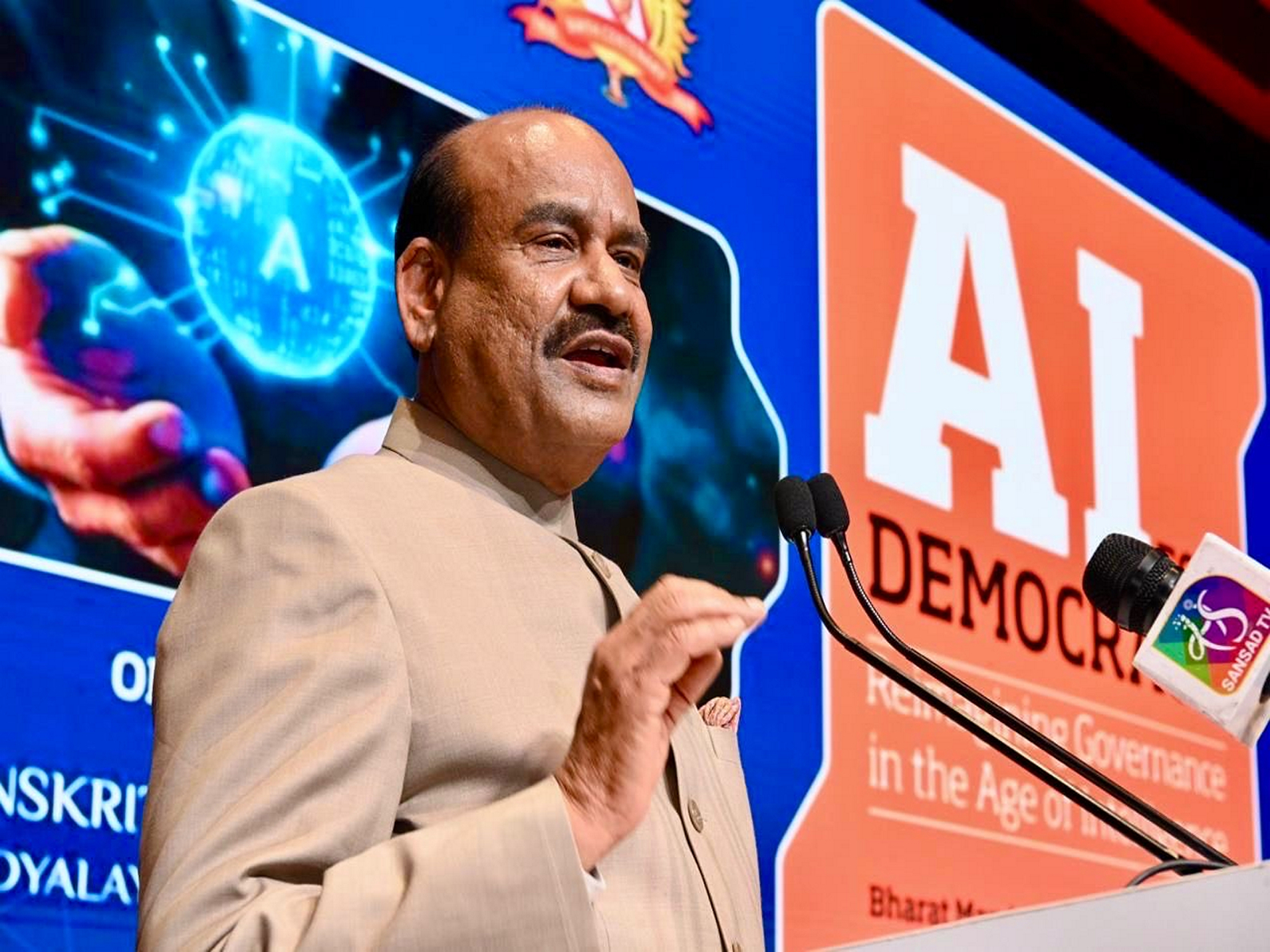
Speaking at the “AI for Democracy” special session during the India AI Impact Summit at New Delhi’s Bharat Mandapam, Birla emphasized that artificial intelligence should strengthen truth and credibility rather than distort facts.
“AI has the potential to make democracy more transparent, accountable and citizen-centric,” Birla said, noting that India’s guiding principle has always been “Sarvajan Hitaya, Sarvajan Sukhaya” – for the welfare and happiness of all. He added that India’s approach is rooted in its civilizational values while working toward global well-being.
The Speaker highlighted how technology is transforming legislative functions, with initiatives like “Digital Parliament” simplifying communication between citizens and their representatives. This initiative has made parliamentary proceedings paperless, modern, and environmentally sustainable.
“With the help of AI tools, thousands of hours of parliamentary debates and records have been systematically organized and made easily searchable and accessible to the public,” Birla explained. “This enhances transparency and enables citizens to closely monitor the performance of their elected representatives.”
Addressing India’s linguistic diversity, Birla pointed to the “Sansad Bhashini” initiative, which uses AI-enabled translation tools to make parliamentary debates available in multiple regional languages. This technological advancement allows citizens across the country to access and understand proceedings in their native tongues, strengthening democratic participation.
International parliamentary forums have recognized the importance of integrating modern technology with democratic institutions, Birla noted. India’s innovations in leveraging AI for legislative efficiency have gained recognition as a global model worth emulating.
The Speaker emphasized how AI tools and modern data systems help parliamentarians better understand constituency needs, leading to more informed and citizen-focused policymaking. This technological integration serves the broader vision of responsive governance.
India’s AI strategy follows the principle of inclusive development, according to Birla. He explained that AI applications in education, healthcare, and agriculture will accelerate India’s journey toward becoming a developed nation by 2047. “By enhancing access to quality education, improving healthcare delivery systems, and empowering farmers with data-driven solutions, AI can transform the lives of millions, particularly those in underserved and unorganized sectors,” he said.
The country’s digital infrastructure has become globally exemplary for its scale, inclusivity, and efficiency, Birla stated. He reaffirmed India’s commitment to sharing its digital experiences and technological expertise with the international community for collective progress.
Despite advocating for AI adoption, Birla cautioned that technology cannot replace human sensitivity and ethical judgment. “AI is a means, not an end,” he remarked, stressing that human values, democratic principles, and ethical standards must remain paramount in developing and deploying emerging technologies.
The Speaker called for nurturing a generation of youth equipped not only with technological expertise but also with compassion and strong moral foundations. He expressed confidence that the session’s deliberations would contribute meaningfully to shaping a future where technology and democratic values advance together.
The “AI for Democracy” program was jointly organized by Dev Sanskriti Vishwavidyalaya and the Inter-Parliamentary Union. Several international dignitaries participated, including the UK’s Minister for AI & Online Safety, Hungary’s Deputy Speaker of Parliament, and the Secretary-General of the Inter-Parliamentary Union.
As nations worldwide grapple with the implications of AI on democratic systems, India’s approach of balancing technological innovation with democratic values and ethical considerations offers potential lessons for the global community.
Fact Checker
Verify the accuracy of this article using The Disinformation Commission analysis and real-time sources.

8 Comments
Deepfakes and misinformation are indeed a growing concern, but it’s encouraging to hear that India is taking a proactive stance in addressing these challenges. Strengthening truth and credibility should be a top priority as we harness the power of AI.
Lok Sabha Speaker Om Birla raises important points about the need to balance technological advancement with robust safeguards against manipulation and misinformation. Protecting democratic discourse should be a key priority as we continue to integrate AI into our political systems.
The potential for AI to transform legislative functions and improve citizen-government communication is intriguing. I hope India’s approach can serve as a model for other countries looking to leverage technology to enhance democratic processes.
Agreed, India’s emphasis on rooting its technology initiatives in civilizational values is a thoughtful approach that could help ensure the responsible development and deployment of AI tools.
India’s approach of balancing technological advancement with its civilizational values is commendable. Prioritizing the welfare and happiness of all citizens should be the guiding principle as we navigate the complex interplay of AI and democracy.
The Digital Parliament initiative sounds like a positive step in making legislative processes more accessible and environmentally sustainable. I’m curious to learn more about how AI tools are being used to enhance transparency and communication.
Deepfakes and misinformation are indeed a serious threat to democratic discourse. It’s critical that we develop robust safeguards to protect against manipulation while still leveraging AI’s potential to strengthen transparency and accountability.
I agree, we need to be vigilant about the risks of AI-powered disinformation while also exploring how it can enhance citizen engagement and participation in the political process.