


Listen to the article
ACP President Addresses Medical Misinformation and Primary Care Challenges in Candid Interview
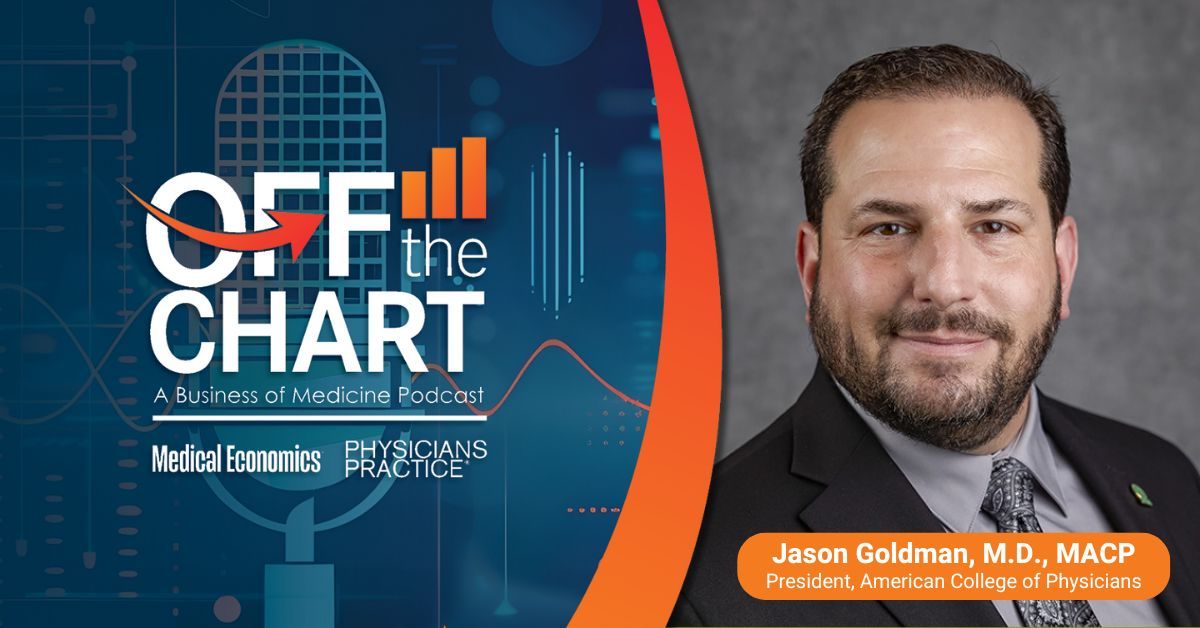
In an era where medical facts compete with viral falsehoods, physicians face an uphill battle in maintaining patient trust. American College of Physicians President Jason Goldman, M.D., MACP, recently shared his frontline perspective on how misinformation is reshaping clinical practice.
“We’re in a polarized environment where echo chambers have replaced evidence,” Goldman explained during a wide-ranging interview for Medical Economics. The conversation revealed how political divisions have infiltrated what were once straightforward clinical discussions, particularly around vaccines.
Goldman expressed particular concern about the erosion of scientific standards in public health discourse. He called for the Advisory Committee on Immunization Practices (ACIP) to return to evidence-based approaches rather than being swayed by political pressures. This shift, he noted, has real-world consequences.
“When vaccine recommendations become political footballs rather than medical decisions, we see immediate effects—confusion among patients, preventable disease outbreaks, and growing skepticism toward even well-established preventive care,” Goldman said.
The ripple effects extend beyond individual patient encounters. Healthcare providers now routinely face resistance to vaccines that were once widely accepted, creating new barriers to public health initiatives. Goldman described a troubling convergence of access problems and hesitancy—patients face pharmacy restrictions and supply issues while simultaneously becoming more reluctant to accept recommended immunizations.
When addressing how physicians can effectively counter misinformation in the exam room, Goldman emphasized relationship-building over confrontation. “The most effective approach isn’t debating or dismissing patient concerns, but rather understanding their information sources and addressing specific worries with evidence they can trust,” he explained.
The interview highlighted particularly difficult scenarios where vaccine resistance affects entire families. Goldman recounted cases where parents’ decisions against routine childhood immunizations led to preventable disease transmission within households, challenging the notion that vaccination is purely a “personal choice.”
He also addressed the persistence of debunked medical claims, such as purported links between vaccines and autism or recent controversies surrounding Tylenol use during pregnancy. “These theories gain traction because they spread through trusted networks, even when repeatedly disproven by rigorous research,” Goldman noted.
A significant portion of the discussion examined why patients increasingly rely on filtered information sources rather than consulting primary evidence or public health data. Goldman observed that many patients exist within information bubbles that continuously reinforce particular viewpoints while excluding contradictory evidence.
The conversation then shifted to the financial and operational challenges facing primary care practices. Goldman described a sector under extreme pressure, with reimbursement rates remaining flat while regulatory burdens multiply. “The economic reality for independent primary care physicians has become unsustainable in many markets,” he said.
Despite promises of reform, prior authorization requirements continue to burden physician practices. Goldman expressed frustration that despite industry pledges to streamline these processes, most physicians report seeing little meaningful improvement in their daily workflow.
Looking toward solutions for the growing physician shortage, Goldman advocated for structural changes in medical education, student debt relief, and strategic investments in primary care infrastructure. “We can’t solve the physician shortage without addressing the fundamental economic and workflow challenges that make primary care less appealing to medical students,” he explained.
Goldman concluded with a message of solidarity for primary care physicians navigating these complex challenges. He emphasized the importance of professional advocacy, resilience, and unity as essential components of preserving patient care quality in a strained healthcare system.
The interview serves as a window into how misinformation is reshaping the physician-patient relationship while compounding existing structural problems in American healthcare delivery. As these trends continue to evolve, the ability of medical professionals to effectively communicate evidence-based information may prove as important as their clinical expertise.
Fact Checker
Verify the accuracy of this article using The Disinformation Commission analysis and real-time sources.

7 Comments
This is a timely and important discussion. Dr. Goldman raises valid concerns about how misinformation and political polarization are undermining evidence-based medicine. Restoring trust in public health institutions will be crucial going forward.
This is a thoughtful and nuanced perspective on a complex issue. I appreciate Dr. Goldman’s candor in addressing the corrosive effects of misinformation on the patient-provider relationship and public trust in healthcare institutions.
Agreed. Restoring that trust will require a concerted effort to elevate facts over falsehoods, and to ensure that medical decisions are driven by science rather than politics.
It’s concerning to hear how political divisions have crept into medical decision-making. Physicians should be empowered to provide evidence-based care without undue external influence. This interview highlights the challenges they face in an increasingly polarized environment.
Misinformation around vaccines is a serious issue that has real public health consequences. I’m glad to see the ACP president speaking out and calling for a return to ACIP recommendations grounded in scientific evidence rather than politics.
Absolutely. Vaccine hesitancy fueled by misinformation can lead to dangerous disease outbreaks. Rebuilding confidence in immunization based on facts rather than falsehoods is critical for protecting community health.
Combating medical misinformation is crucial, but it’s a daunting task in our current climate of echo chambers and partisan divides. I’m glad to see the ACP taking a strong stance in defense of evidence-based practice.