


Listen to the article
In a move highlighting the growing tensions between school officials and online community engagement, Hinsdale High School District 86 board members have taken a firm stance against using social media as a communication channel for district matters.
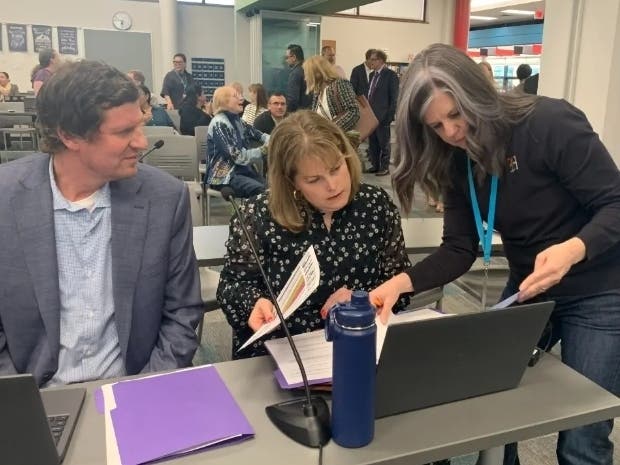
During a recent board meeting in Darien, Illinois, board member Liz Mitha expressed concerns about the spread of misinformation on social platforms. “There’s a fair amount of misinformation out there,” Mitha stated. “Most board members are not monitoring social media for community concerns. Sharing questions or comments on social media is not an effective way to solve problems.”
Instead, Mitha encouraged residents to follow proper communication protocols, suggesting email as the preferred method of contact. The board can be reached collectively at boe@hinsdale86.org, while individual member email addresses are available on the district’s official website.
Mitha also emphasized the importance of respecting the established chain of command when addressing school-related issues. She advised parents to begin by contacting their student’s teacher before escalating concerns to board level, highlighting the district’s desire for structured communication channels.
Fellow board member Jeff Waters echoed Mitha’s sentiments, drawing a sharp distinction between genuine communication and what he characterized as “social media degradation.” His comments reflect growing frustration among public officials regarding the tone and accuracy of online discussions about school matters.
The stance taken by Hinsdale District 86 officials mirrors similar concerns expressed by other local government bodies. Just last year, Darien city officials voiced their own frustrations with social media commentary, with some characterizing online comments as “malicious” in nature.
Despite these concerns from officials, community engagement on social platforms remains robust. Several Facebook pages dedicated to Hinsdale High School District 86 issues continue to thrive, with “D86 Strong” standing out as particularly active. The group, which is open to public participation, has amassed approximately 3,000 members—representing a significant portion of the district’s community.
This tension between official communication channels and social media forums highlights a broader challenge facing educational institutions nationwide. As communities increasingly turn to social platforms for information sharing and discussion, school districts must navigate the complex landscape of online engagement while maintaining effective governance.
Education communication experts note that this disconnect reflects changing expectations about transparency and accessibility in public institutions. While board members prefer formal, direct communication through established channels, many community members find social media a more convenient and immediate way to voice concerns and share information.
The situation in District 86 exemplifies the evolving relationship between educational governance and digital communication. Research from the National School Boards Association indicates that districts across the country are grappling with similar issues, trying to balance open communication with the need for accurate information and productive dialogue.
For residents of Hinsdale High School District 86, the board’s message is clear: while social media conversations about district matters will inevitably continue, those seeking official responses or solutions should utilize email and follow established protocols rather than expecting engagement through social platforms.
As digital communication continues to reshape civic engagement, school districts like Hinsdale 86 face the ongoing challenge of adapting their communication strategies while maintaining effective governance structures in an increasingly connected and vocal community.
Fact Checker
Verify the accuracy of this article using The Disinformation Commission analysis and real-time sources.

11 Comments
It’s concerning to hear about the spread of misinformation on social media regarding school district matters. Transparent and structured communication channels seem prudent to address community concerns effectively.
I agree, direct email to the board is likely the best way to ensure issues are properly addressed.
Social media can be a double-edged sword when it comes to community engagement on school matters. Emphasizing the proper chain of command is prudent to effectively resolve concerns.
Relying on direct email to the board is a measured way to ensure important issues get the attention they deserve.
Social media can be a double-edged sword when it comes to school district matters. Emphasizing structured communication through established protocols is a prudent move by the board.
Maintaining transparency and effective communication is critical for school districts. Directing residents to official channels like email is a sensible way to address concerns constructively.
It’s understandable the board wants to curb the spread of misinformation on social media regarding district matters. Directing residents to official communication channels seems like a practical solution.
Misinformation on social media can be disruptive for school districts trying to effectively address community concerns. Promoting official communication channels is a reasonable solution.
Misinformation on social media can be problematic, especially for sensitive topics like school operations. Encouraging residents to follow established protocols is a reasonable approach.
Focusing communication through official channels makes sense to maintain accountability and provide structured solutions.
Addressing misinformation on social media is a challenge many school districts face. Encouraging structured communication through established protocols is a reasonable approach.