


Listen to the article
Benue Stakeholders Unite Against Misinformation to Foster Social Cohesion
Stakeholders across Benue State have emphasized the urgent need for collective efforts to combat misinformation, disinformation, and hate speech as essential steps toward strengthening peace and social cohesion in the region.
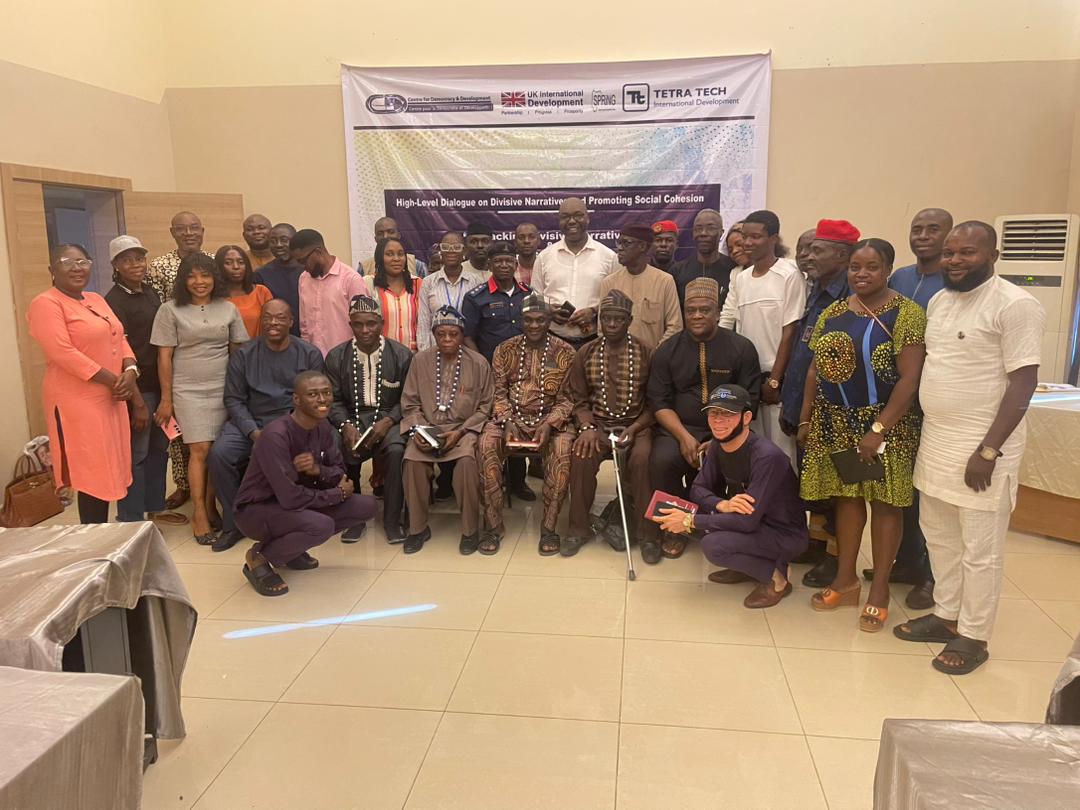
The call emerged from a High-Level Dialogue and Roundtable Discussion focused on “Unpacking Divisive Narratives and Promoting Social Cohesion,” organized by the Centre for Democracy and Development (CDD) in partnership with Tetra Tech. The initiative received support from UK Aid and the SPRiNG Project, highlighting international interest in Nigeria’s information ecosystem.
Mary Okpe, CDD Head of Programme and Team Lead, explained that the initiative was specifically designed to enhance information literacy while encouraging inclusive participation in policy discussions aimed at building sustainable peace in the state.
“The programme is about strengthening information literacy for the sake of building peace and social cohesion,” Okpe stated during the gathering, which brought together a diverse coalition of stakeholders including civil society organizations, academics, traditional and religious leaders, and women and youth groups.
A distinctive feature of the project is its emphasis on a bottom-up approach to policymaking, moving away from traditional top-down governance models that have often failed to address community-specific concerns in Nigeria’s Middle Belt region.
“The idea is to have these segments of persons contribute to discussions that would eventually lead to policy recommendations that are not top-down but bottom-up, so people can relate with them, connect with them and also implement them,” Okpe noted.
The dialogue created a platform for participants who had previously engaged in smaller group discussions to collaborate on broader issues surrounding information literacy and social cohesion, establishing a more cohesive approach to tackling divisive narratives that have plagued the state.
Benue State has experienced significant communal tensions and farmer-herder conflicts in recent years, making initiatives focused on social cohesion particularly relevant. Misinformation has frequently exacerbated these conflicts, with false narratives spreading rapidly through social media and informal communication channels.
Development Communication Practitioner and CDD Consultant Odoh Diego Okenyodo described the program as strategic training designed to equip community leaders and information managers with essential knowledge for countering harmful narratives that often fuel conflict.
“This is a training on countering misinformation, disinformation and hate speech. The idea is to equip information managers, academics, traditional and religious leaders with tools and understanding of how these issues can create tension in society,” he explained.
The timing of this initiative carries additional significance as Nigeria begins preparing for the 2027 general elections. Historical patterns suggest that election periods often witness increased circulation of misinformation and hate speech, potentially triggering violence in vulnerable communities.
“As we head towards the elections in 2027, security issues need to be better managed to ensure we have hitch-free and peaceful elections,” Okenyodo emphasized, noting that participants had already begun identifying practical strategies to counter disinformation and hate speech within their communities.
The program featured interactive sessions designed to deepen participants’ understanding of divisive narratives while strengthening strategies for promoting peace and responsible information sharing. These practical components aim to transform theoretical knowledge into actionable community-based initiatives.
Upon conclusion of the meeting, participants were encouraged to return to their communities as ambassadors of the initiative, spreading awareness about the importance of verifying information before sharing and avoiding the propagation of rumors or falsehoods.
The CDD initiative represents part of a growing recognition among civil society organizations and international partners that information literacy and social cohesion are fundamental components of conflict prevention and peacebuilding in Nigeria’s diverse and sometimes fragile communities.
As digital penetration continues to increase across Nigeria, including in semi-urban and rural areas of Benue State, efforts to build resilience against misinformation and hate speech have become increasingly vital to maintaining peace and stability in the region.
Fact Checker
Verify the accuracy of this article using The Disinformation Commission analysis and real-time sources.

18 Comments
This initiative highlights the importance of international cooperation in addressing complex social challenges. The partnership between local and global stakeholders is a positive sign.
Absolutely. Combining local knowledge and expertise with international resources and best practices can lead to more effective and sustainable solutions.
This partnership between local and international organizations is a positive step. Leveraging diverse perspectives and resources to tackle complex social issues like this is admirable.
Agreed. Collaborative efforts that bring together different stakeholders are crucial for finding sustainable solutions to complex problems.
Glad to see the stakeholders in Benue coming together to address misinformation and promote social cohesion. Strengthening information literacy is key to building sustainable peace in the region.
Absolutely. Combating divisive narratives and hate speech is crucial for fostering unity and progress.
Enhancing information literacy is a smart approach to address the root causes of social conflict. Empowering citizens with critical thinking skills can make a real difference in the long run.
Definitely. Fostering a more informed and engaged citizenry is key to building resilient communities that can withstand the spread of misinformation.
Strengthening information literacy to combat misinformation and hate speech is a smart and proactive approach. Addressing these challenges at the community level is crucial for long-term stability.
Agreed. Equipping citizens with the tools to critically assess information and recognize divisive narratives is an important step in building a more resilient society.
This community-driven initiative to engage local stakeholders and counter misinformation is an important step. Encouraging inclusive participation in policy discussions will help build trust and social stability.
Agreed. International support for this program highlights the global interest in Nigeria’s information ecosystem and the need for local solutions.
The emphasis on inclusive participation in policy discussions is a critical aspect of this program. Ensuring that all voices are heard is essential for building trust and social cohesion.
Definitely. Promoting inclusive governance and decision-making processes can help address the root causes of conflict and division.
This community-driven approach to combating misinformation and fostering social cohesion is commendable. Empowering local stakeholders to lead the charge is a wise move.
Agreed. Grassroots initiatives that involve diverse voices and perspectives are more likely to have a lasting impact on the ground.
Promoting social cohesion through information literacy initiatives is a smart long-term strategy. Addressing the root causes of division and mistrust is essential for lasting peace and progress.
Absolutely. Building a well-informed and engaged citizenry is key to creating the conditions for sustainable development and social stability.