


Listen to the article
The assault on democratic institutions has intensified in recent months as former president Donald Trump’s approach to truth and facts reaches unprecedented levels, threatening the nation’s “epistemic infrastructure” that ensures a shared reality.
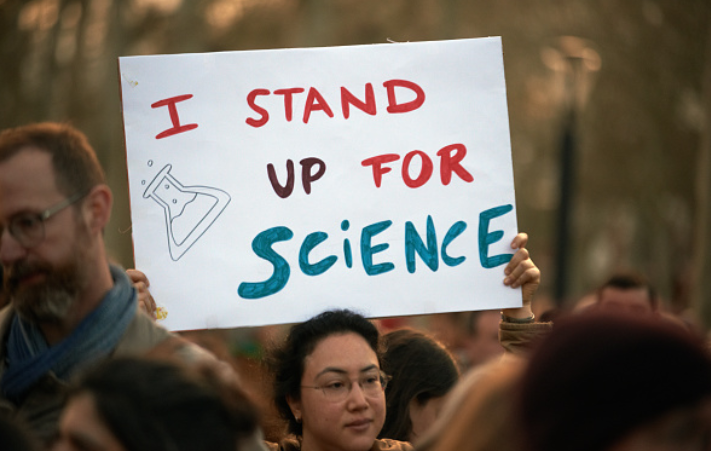
Democracy relies on evidence-based institutions to prevent authoritarian control. However, what began as Trump’s perceived showmanship has evolved into a systematic attack on factual foundations, with his supporters expected to accept his version of reality or face retribution. The January 6 Capitol attack marked a turning point in this strategy, which now includes dismantling science agencies and undermining fact-based governance.
“In the first term, the administration was censoring science by erasing websites,” explains Dr. Lucky Tran, a prominent scientist and science communicator. “And now that’s scaled up to dismantling entire science agencies.”
Tran, who has been at the forefront of clear messaging around climate change and COVID-19, emphasizes that evidence-based understanding is critical for societal progress. “If we don’t have a shared truth, then we can’t build solutions together,” he notes. “That’s another reason why it’s under attack, because if you are not interested in building equitable solutions, then one way to do that is to manipulate a perception of reality.”
The consequences of this approach are increasingly visible. Trump’s dismissal of the Bureau of Labor Statistics commissioner following a disappointing jobs report drew comparisons to Stalinist methods of controlling reality. Similarly, the administration recently canceled the USDA’s annual survey on food insecurity – a move that conveniently prevents public scrutiny of the effects of recent cuts to SNAP benefits affecting millions of Americans.
Authoritarian tactics typically don’t require attacking every institution simultaneously. By making examples of certain targets, a chilling effect spreads. Disney’s initial capitulation to pressure and the temporary cancellation of Jimmy Kimmel highlighted the fragility of First Amendment protections. In May, seven major free speech organizations issued a warning: “When one institution ‘bends the knee,’ its peers face increased pressure to do the same. Each surrender makes the assertion of First Amendment rights more costly and more perilous.”
The pushback, however, has been significant. A widespread #BoycottDisneyABC campaign quickly gained momentum, with consumers canceling subscriptions and high-profile figures speaking out. The collective pressure worked – Disney reversed course, and even media companies like Sinclair and Nexstar eventually followed suit.
The courts have become a crucial battleground for preserving factual reality. Trump has faced significant legal resistance, with only a 31 percent success rate in courts as of July. A Florida federal judge recently dismissed Trump’s $15 billion defamation lawsuit against the New York Times, stating, “A complaint is not a megaphone for public relations or a podium for a passionate oration at a political rally.” Similarly, District Court Judge Karin Immergut ruled against troop deployment to Portland, contradicting the administration’s claims about violence at ICE facilities.
State and local officials have also stepped up to preserve factual discourse. Western and Eastern states have issued their own vaccine recommendations to counter misinformation from figures like Robert F. Kennedy Jr. Illinois Governor JB Pritzker has publicly challenged false claims about Chicago’s crime rates, while Tennessee State Representative Justin Pearson has spoken out against federal intervention in cities with large Black communities.
The arts and media sectors play crucial roles in maintaining truth. As Serbian activist Srdja Popovic notes, “Humor melts fear. Fear is the air the dictators breathe.” High-profile celebrities like Jane Fonda and Pedro Pascal have used their platforms to challenge administration falsehoods, while new independent media ventures like Mehdi Hasan’s Zeteo and Joy Reid’s newsletter provide alternatives to corporate-controlled information channels.
The digital information landscape presents particular challenges, with research showing falsehoods spread six times faster than truth online. Some researchers are testing “inoculation theory” – exposing people to small amounts of misinformation techniques to build resistance without directly addressing specific falsehoods.
“Studies show that people listen to their neighbors,” Tran emphasizes. “They listen to people who they know in their communities. The best way to overcome misinformation is in one-on-one conversations that are empathetic and that are built up over time.”
The consequences extend beyond U.S. borders, with authoritarian-leaning governments worldwide adopting similar tactics. At this pivotal moment in global history, efforts to preserve factual discourse and limit the spread of misinformation have never been more essential for the survival of democratic institutions.
Fact Checker
Verify the accuracy of this article using The Disinformation Commission analysis and real-time sources.

10 Comments
This is a deeply troubling development. Dismantling science agencies and undermining fact-based governance is a grave threat to our democratic institutions and societal progress. Combating the spread of misinformation must be a top priority for all concerned citizens.
This is a deeply worrying trend. Dismantling science agencies and undermining fact-based governance is a direct attack on the foundations of our democracy. We must stand firm in defending evidence-based decision making and a shared understanding of reality.
The systematic assault on truth and facts is highly concerning. Eroding public trust in democratic institutions and scientific expertise is a dangerous path that threatens the progress of our society. Combating misinformation must be a top priority.
Dismantling science agencies and undermining fact-based governance is extremely worrying. A shared truth and common understanding of reality is essential for solving complex challenges facing society. This must be defended at all costs.
I agree completely. Without a firm grounding in evidence and objective facts, we risk falling into the trap of authoritarianism and losing the foundations of a free, democratic society.
The assault on democratic institutions and scientific expertise is deeply troubling. Fact-based decision making must be safeguarded against those who would undermine it for political gain. Maintaining a shared reality is crucial for societal progress.
Absolutely. If we lose a common understanding of truth and facts, how can we hope to address urgent issues like climate change, public health, and economic challenges? Protecting evidence-based institutions is vital.
Protecting the integrity of our epistemic infrastructure is crucial for maintaining a healthy democracy. Fact-based decision making and a shared reality are essential for addressing complex challenges. This fight against misinformation must be taken seriously.
Combating the spread of misinformation is a critical task. Authoritarian attempts to distort reality and undermine democratic norms must be resisted. Upholding the integrity of our institutions and scientific expertise is essential for the future of our society.
Combating misinformation is critical for preserving democracy and scientific progress. Fact-based institutions and evidence-based decision making must be protected against attacks that erode public trust. This is a concerning trend that requires vigilant action.