


Listen to the article
Welsh Conservatives Under Fire for Misleading Campaign Targeting Nation of Sanctuary Program
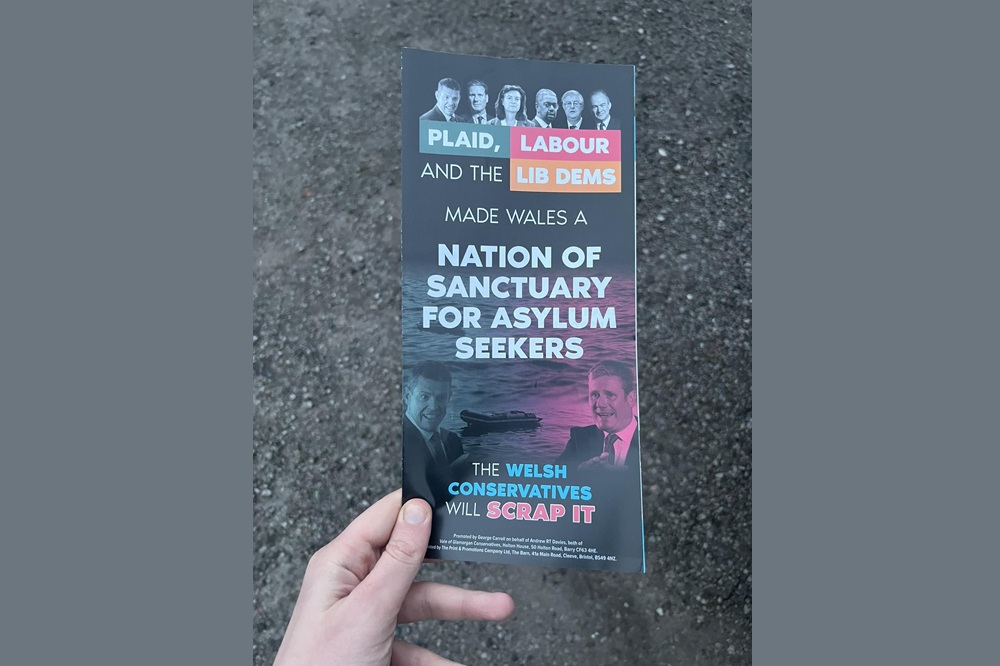
A campaign leaflet distributed by the Welsh Conservatives has sparked controversy for attacking Wales’ Nation of Sanctuary program while omitting critical information about its funding allocation. The leaflet has been criticized for failing to mention that over 90% of the program’s budget has been used to resettle Ukrainian refugees fleeing Russia’s invasion.
Critics point out that the Welsh Conservative campaign materials repeat misinformation previously spread by Reform UK during the Caerphilly by-election, creating what some describe as a coordinated attempt to misrepresent devolved Welsh programs.
Yuliia Bond, a Ukrainian community advocate, expressed concern about how the campaign mischaracterizes a program that has predominantly supported Ukrainian families. “As someone directly connected to the Ukrainian community, this needs to be said clearly: Over 90% of the Nation of Sanctuary scheme funding has supported Ukrainians—families fleeing active war, children carrying trauma from bombs, displacement, and loss,” Bond stated.
The controversy highlights a fundamental misunderstanding—or deliberate misrepresentation—of governmental responsibilities in Wales. Immigration and asylum policy remains under UK Government control, including borders, approvals, processing, and removals. The Welsh Nation of Sanctuary program focuses on integration support for those already granted permission to stay, providing language assistance, housing pathways, employment access, and education.
Political analysts suggest this campaign strategy deliberately exploits public confusion about devolution. By blaming Welsh authorities for issues controlled by Westminster, campaigners can redirect frustration toward local government rather than UK-wide policies.
The timing is significant, coming ahead of the Senedd election scheduled for May 7th. Community leaders are urging voters to question political messaging by asking a simple but effective question: “Which level of government actually decides this?”
Integration experts emphasize that successful refugee settlement programs benefit everyone by reducing long-term costs, increasing economic participation, strengthening social stability, and preventing isolation. Converting these programs into divisive political talking points risks undermining social cohesion efforts.
The Caerphilly by-election demonstrated how coordinated local responses to misinformation can be effective. When residents shared accurate information and engaged in neighborhood discussions, misleading narratives lost traction despite organized campaigns.
Voting rights advocates are using this controversy to remind eligible voters about participation in the upcoming Senedd election. Those eligible include 16 and 17-year-olds, UK citizens, Commonwealth citizens, EU citizens, and refugees or persons with lawful leave to remain who are registered to vote in Wales.
Political observers note that low electoral participation creates space for divisive narratives to gain influence without majority support. High participation, conversely, tends to protect community cohesion by ensuring a broader range of voices shapes policy decisions.
Community leaders are calling on all political parties to commit to accuracy in campaign materials, avoid conflating UK and Welsh governmental responsibilities, reject scapegoating vulnerable populations, promptly correct misinformation, and support independent oversight of electoral communications.
“Strong democracy begins with truth about power and ends when lies go unchallenged,” said one community organizer, urging Welsh voters to respond to misleading campaigning through increased civic engagement rather than disillusionment.
As the May 7th election approaches, the controversy highlights broader questions about political accountability, information integrity, and the responsibilities of democratic institutions during electoral campaigns.
Fact Checker
Verify the accuracy of this article using The Disinformation Commission analysis and real-time sources.

7 Comments
It’s concerning to see echoes of previous disinformation campaigns in this latest controversy. Coordinated efforts to misrepresent facts pose a serious threat to the integrity of the electoral process.
This highlights the need for greater transparency and accountability in political messaging. Voters deserve the full picture, not selectively spun narratives that obscure the facts.
Well said. Misinformation can have real consequences, especially for marginalized groups seeking assistance. Responsible reporting and fact-checking are essential.
It’s troubling to see political campaigns spreading misinformation about programs that are helping vulnerable communities. Providing accurate, contextual information is crucial for voters to make informed decisions.
Over 90% of the Nation of Sanctuary scheme funding supporting Ukrainian families is an important statistic that should be prominently featured. Omitting this context is misleading at best.
Agreed. The Welsh Conservatives’ campaign materials seem to be deliberately downplaying the program’s role in aiding Ukrainian refugees. Voters deserve the full, unbiased story.
While political parties have the right to critique government programs, they must do so honestly and responsibly. Spreading misinformation for political gain is unethical and undermines democracy.