


Listen to the article
The battle against health misinformation is rapidly becoming one of the most pressing public health challenges of our time. As false claims spread at unprecedented speeds across digital platforms, the potential for real-world harm grows increasingly dangerous.
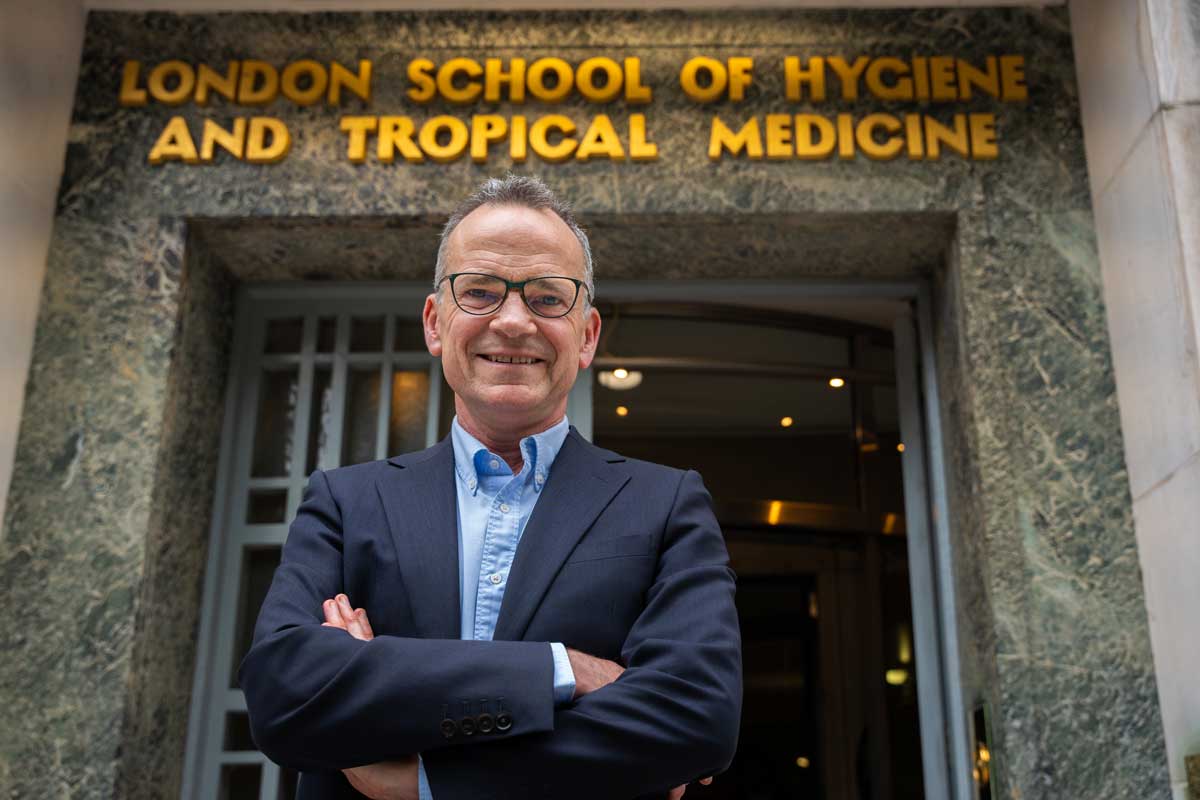
Last month, Professor Liam Smeeth, Director of the London School of Hygiene & Tropical Medicine (LSHTM), issued a call to action, declaring that 2025 should become a united front in the fight against health misinformation. The institution has now developed six key communication principles aimed at countering the flood of false health information.
“The problem we’re seeing is people sharing information that plays into their existing narrative,” explains Professor Smeeth. “Social media algorithms send people down routes that align with their beliefs, and they forward things to people who already agree with them.”
This echo chamber effect has transformed many scientific issues into political flashpoints. During the COVID-19 pandemic, this phenomenon became particularly evident in the United States, where even simple preventative measures like mask-wearing became politically charged indicators.
“You don’t have to love the idea of a measles vaccine – there might be lots of reasons related to your political outlook,” Professor Smeeth notes. “But just because you don’t like the idea of it doesn’t mean it causes autism.”
The COVID-19 pandemic initially sparked hope among scientists when technical concepts like the R number and mRNA technology entered mainstream discourse. However, this familiarity with scientific terminology didn’t necessarily translate to deeper understanding.
“When vaccines were made, people were hearing about mRNA. Unfortunately, there was misinformation that vaccines could alter our genes,” Smeeth explains. “I don’t think most people who believed or shared that were being malicious. They were genuinely concerned because it wasn’t clear how the vaccines worked.”
This highlights a critical challenge for science communicators: how to convey complex information simply without creating knowledge gaps that misinformation can fill. “There’s a real need to communicate simply,” says Smeeth. “It is always worth remembering that what is obvious to scientists isn’t obvious to the general public.”
LSHTM’s six principles for countering misinformation were developed collaboratively between academics specializing in this area and the institution’s communications department. The approach acknowledges the practical constraints of time, budget, and energy that scientific organizations face.
“A unifying feature of the principles is being pragmatic about what scientific organizations can achieve, especially in response to major political shifts in the world,” Smeeth says. “We try to focus on our remit, which is health and health equity, and things that impact on it. We stick to the science.”
Empathy stands as a cornerstone of LSHTM’s approach. Rather than vilifying those who spread misinformation, the principles recognize that fear and concern – not malice – drive most sharing of false information.
Rebuilding public trust damaged during the pandemic presents another significant challenge. Smeeth advocates for greater transparency from policymakers about the complex trade-offs involved in public health decisions.
“In many countries, the total shutdown of so many industries wasn’t considered in a very balanced way,” he reflects. “The need to balance different priorities – for example, controlling viral circulation versus getting the economy moving – was never explicitly shared with the public.”
LSHTM is now actively implementing its counter-misinformation strategy, starting with vaccine misinformation. The communications team is gathering essential messages, statistics, and examples to effectively respond to misinformation across media platforms.
The institution is also exploring the creation of an informal UK network of academic experts and communications professionals to share intelligence on health misinformation and effective interventions. Plans are underway for an event later this year focused on knowledge-sharing about misinformation response strategies.
Looking ahead, Smeeth acknowledges the importance of expanding these efforts globally. “A coordinated global network could really help,” he emphasizes. “One thing we have seen time and again is that it is more important to get one really crucial message across than 2,000 smaller ones.”
As digital platforms continue evolving and AI-generated content becomes increasingly sophisticated, LSHTM’s principles offer a pragmatic framework for scientific institutions navigating the complex challenge of health misinformation – a challenge that shows no signs of diminishing in our increasingly connected world.
Fact Checker
Verify the accuracy of this article using The Disinformation Commission analysis and real-time sources.

8 Comments
I’m curious to learn more about the specific strategies and tools the LSHTM plans to deploy in this fight against misinformation. Combating false claims on social media will require a multi-faceted approach.
Combating health misinformation is crucial, especially with the spread of false claims on social media. Fact-checking and responsible information sharing are essential to counter these challenges.
The LSHTM’s call to action highlights the urgency of addressing health misinformation. Consistent, fact-based messaging across platforms will be critical to counter the spread of false claims.
Interesting to see the guidelines focused on breaking echo chambers and avoiding politically charged narratives. Maintaining scientific objectivity while communicating complex health topics is certainly a challenge.
Interesting guidelines from the LSHTM to address the echo chamber effect and politically charged issues around health topics. Maintaining objectivity and science-based communication will be key.
Agreed. Misinformation can be very damaging, so these principles for combating it seem well-considered. Transparency and engaging diverse perspectives will be important.
The call for a unified front against health misinformation by 2025 is an ambitious but necessary goal. Coordinating efforts across institutions and platforms will be key to making real progress.
This is a timely issue given the politicization of health measures during the pandemic. Developing clear communication strategies to combat misinformation is an important public health priority.