


Listen to the article
CMU Students Advocate Against Health Misinformation at Michigan Capitol
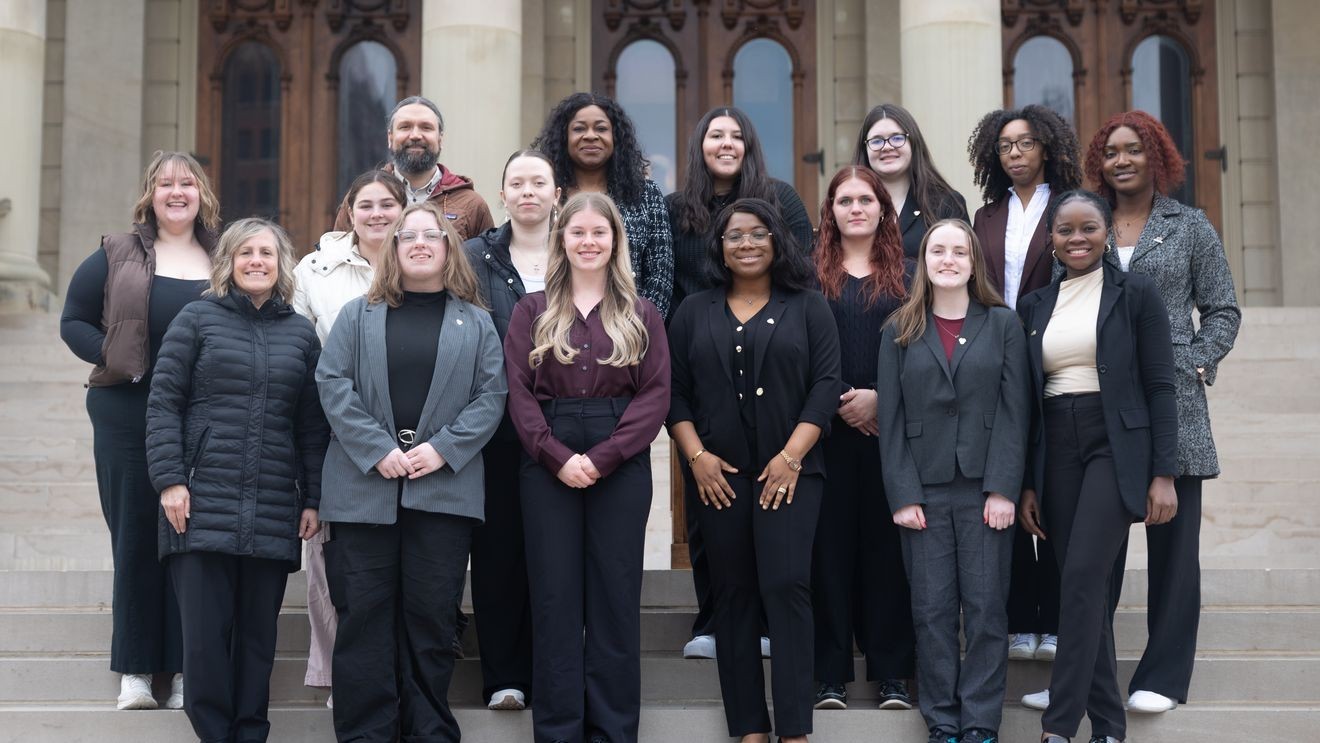
Central Michigan University students stepped into the role of public health advocates last Thursday, engaging Michigan lawmakers in crucial discussions about combating health misinformation during the Michigan Association for Local Public Health’s “Day at the Capitol” event.
The delegation met with nine legislators in Lansing, presenting their concerns about the growing problem of health misinformation and its tangible impacts on healthcare delivery and patient outcomes, particularly in Michigan’s rural communities.
“It’s thrilling to see students be able to put into practice a skill that they learn in the classroom and knowing that these skills are ones they’re going to carry with them when they work with their residents and community members and their future jobs,” said CMU Public Health Professor Jodi Brookins-Fisher, who helped coordinate the students’ participation.
The timing of this advocacy comes as rural healthcare systems across Michigan continue to face unique challenges. Rural communities often have limited access to healthcare providers, making them particularly vulnerable to health misinformation that can spread rapidly through close-knit community networks and social media.
Health misinformation has emerged as a significant public health challenge nationwide since the COVID-19 pandemic, with studies showing it can lead to vaccine hesitancy, delayed medical care, and the use of unproven or potentially harmful treatments. In Michigan’s rural counties, where healthcare resources are already stretched thin, the consequences can be especially severe.
Michigan’s lawmakers acknowledged the value of hearing directly from future public health professionals about these issues. One legislative aide, who requested anonymity because they weren’t authorized to speak officially, noted that “these student perspectives provide crucial insights that help shape more effective policy responses to complex public health challenges.”
Beyond the immediate impact of their advocacy, the event served as valuable professional development for the CMU students. Public health experts emphasize that advocacy skills are increasingly essential for professionals entering the field, particularly as public health becomes more politicized and communication challenges grow more complex.
For many of the participating students, this represented their first direct engagement with state policymakers. The experience allowed them to translate classroom learning into real-world advocacy—explaining technical public health concepts to legislators while connecting those issues to the lived experiences of Michigan residents.
The Michigan Association for Local Public Health, which organizes the annual Capitol event, has increasingly focused on health misinformation in recent years. The organization represents local health departments across Michigan’s 83 counties and works to strengthen public health infrastructure statewide.
Michigan’s struggle with health misinformation mirrors national trends. According to recent surveys by the Kaiser Family Foundation, nearly two-thirds of adults in the United States find it difficult to determine whether health information is accurate, with rural residents reporting even greater challenges navigating contradictory health claims.
Legislators who met with the students indicated that addressing health misinformation requires a multifaceted approach, potentially including enhanced digital literacy programs, greater support for local health departments, and improved communication strategies between health authorities and the public.
As the CMU students returned to campus, they carried with them not just the experience of legislative advocacy but also strengthened connections with policymakers who shape Michigan’s public health landscape. These relationships may prove valuable as they progress in their public health careers, facing challenges that increasingly bridge science, communication, and policy.
The day at the Capitol demonstrated that while combating health misinformation remains a significant challenge, engaging future public health professionals in advocacy efforts represents an important step toward building more resilient and informed communities across Michigan.
Fact Checker
Verify the accuracy of this article using The Disinformation Commission analysis and real-time sources.

13 Comments
It’s encouraging to see students using their skills and knowledge to advocate for public health priorities. Addressing misinformation is critical, especially in underserved areas. I hope the legislators are receptive to the students’ concerns and ideas.
Me too. Rural healthcare challenges make these communities particularly susceptible to the harms of misinformation. Student involvement can be a powerful catalyst for positive change.
This is an important issue that needs to be addressed. Health misinformation can have serious consequences, especially in rural areas with limited healthcare access. It’s great to see students taking an active role in advocating for more accurate and reliable health information.
This is an important and timely issue. I hope the CMU students’ advocacy leads to concrete policy changes and initiatives to better support rural health education and information access. Empowering local communities is key.
Agreed. Targeted outreach and community-based solutions will be critical to addressing health misinformation, especially in areas with limited healthcare resources. The students’ involvement is a great step forward.
Combating the spread of health misinformation is vital for improving public health outcomes, especially in underserved rural areas. I’m glad to see the CMU students leveraging their education and skills to advocate for positive change on this critical issue.
Health misinformation is a growing problem that needs to be taken seriously. I’m glad the CMU students are bringing this issue to the attention of state lawmakers. Their firsthand insights from working in communities will be invaluable.
This is a complex issue without easy answers, but I applaud the CMU students for taking an active role. Mitigating the spread of health misinformation requires a multifaceted approach involving education, regulation, and community engagement.
This is a complex challenge, but I’m encouraged to see students taking such a proactive role. Addressing health misinformation requires a multifaceted approach, and I hope the legislators are receptive to the students’ insights and recommendations.
Combating health misinformation is crucial for improving public health outcomes. I’m glad to see the CMU students engaging directly with lawmakers to raise awareness and push for solutions. Targeted outreach to rural communities will be key.
Absolutely. Rural residents are often more vulnerable to misinformation due to healthcare access challenges. Student-led advocacy can make a real difference in getting the right information to the people who need it most.
Kudos to the CMU students for stepping up and using their voices to influence policy on this critical public health issue. Equipping rural communities with accurate, science-based health information should be a top priority.
Absolutely. Rural residents deserve the same access to reliable healthcare information as anyone else. This student-led advocacy is an important step in the right direction.