


Listen to the article
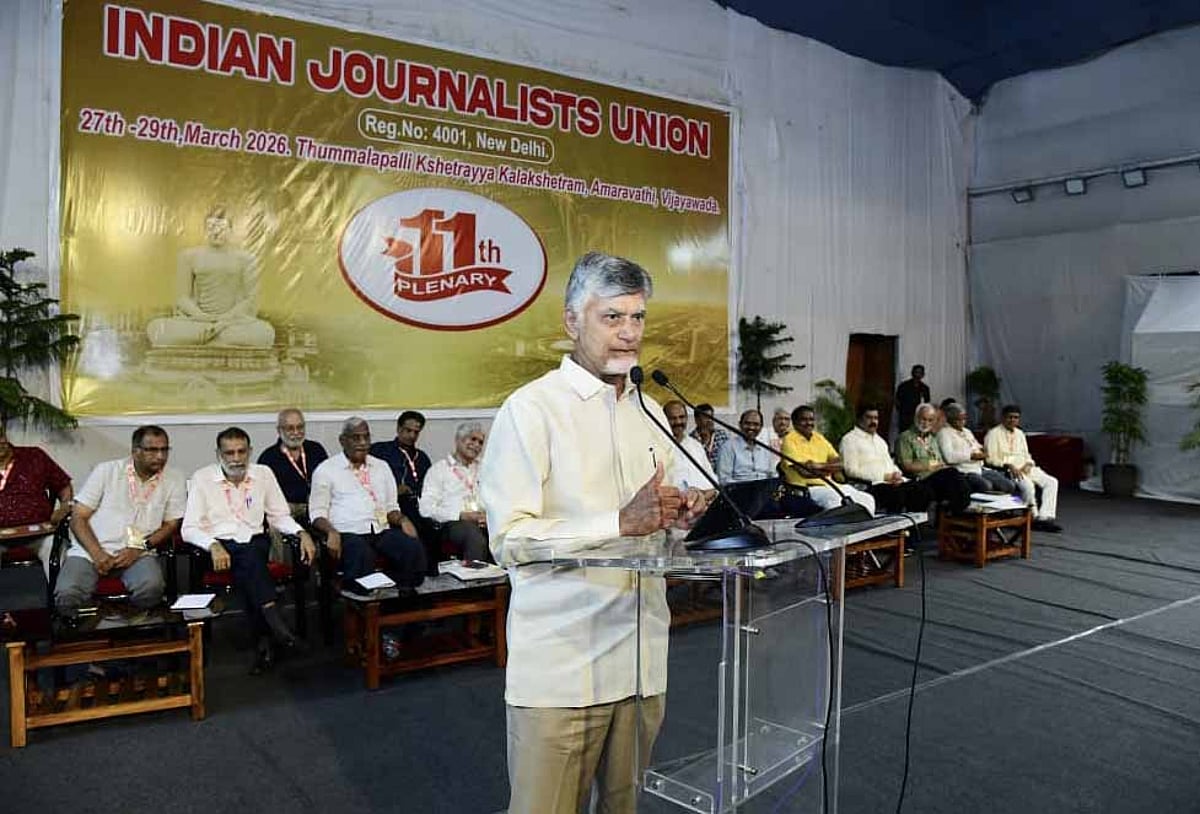
In a call for media integrity amid the evolving landscape of journalism, Chief Minister N Chandrababu Naidu urged reporters to embrace responsible and ethical practices during his address at the 11th plenary session of the Indian Journalists Union (IJU) on Saturday. The event, held at Tummalapalli Kalakshetram in Vijayawada, brought together prominent media representatives and public officials.
Speaking to the assembled journalists, Naidu reflected on his four-decade relationship with the press, characterizing it as one founded on “affection and mutual trust.” The Chief Minister, who has maintained consistent engagement with media professionals since 1995, emphasized the importance of journalistic standards in maintaining democratic values.
“The media serves as society’s conscience, but this role comes with significant responsibility,” Naidu said, expressing concern over the increasing prevalence of sensationalism and false narratives in certain sectors of the media landscape.
IJU President Srinivasula Reddy presided over the plenary, which saw attendance from various political representatives including Kolusu Parthasarathy, Nimmala Ramanaidu, Bonda Umamaheswara Rao, MP Appala Naidu, and Andhra Pradesh Media Academy Chairman Alapati Suresh.
Naidu highlighted his administration’s commitment to strengthening journalistic institutions, noting the establishment of the Press Academy in 1996 as a milestone initiative to enhance professional standards in reporting. The academy has since served as a training ground for journalists across Andhra Pradesh, providing resources and professional development opportunities.
The Chief Minister’s address came at a critical juncture for Indian journalism, which faces challenges from rapid digitalization and changing consumer habits. He specifically pointed to social media as a “major challenge,” citing the platform’s capacity for spreading unverified information at unprecedented speeds.
“The instantaneous nature of social media has transformed how information circulates, often outpacing fact-checking mechanisms,” noted a media analyst present at the event. “This creates a precarious environment where misinformation can flourish unchecked.”
Andhra Pradesh, like many states across India, has witnessed the dual impact of digital transformation in journalism—increased access to information alongside growing concerns about accuracy and accountability. Local media outlets have struggled to maintain traditional reporting standards while adapting to digital platforms and competing with social media content creators.
The Press Academy of Andhra Pradesh, established under Naidu’s previous administration, has been instrumental in addressing some of these challenges through training programs, workshops, and professional guidelines for journalists. Industry experts suggest that such institutions play a vital role in maintaining journalistic standards during periods of technological disruption.
Naidu’s call for “progressive journalism” underscores the potential for media to contribute positively to social development while maintaining critical oversight of governance and public affairs. This balanced approach remains challenging in an era of polarized political discourse and commercially-driven news cycles.
The IJU plenary serves as an important forum for dialogue between government officials and media professionals, facilitating discussions on press freedom, professional ethics, and the evolving role of journalism in democratic societies. The union represents thousands of journalists across India and advocates for their rights and working conditions.
As the media landscape continues to evolve, the relationship between political leaders and journalists remains a cornerstone of democratic functioning. Naidu’s long-standing engagement with the press reflects the complex interdependence between governance and media—a relationship that requires ongoing negotiation and mutual respect to serve the public interest effectively.
The Chief Minister concluded his address by calling on journalists to take proactive measures in combating misinformation and ensuring fact-based reporting prevails in public discourse, emphasizing that a responsible media is essential for the health of both society and democracy.
Fact Checker
Verify the accuracy of this article using The Disinformation Commission analysis and real-time sources.

6 Comments
Naidu’s four-decade relationship with the press underscores the symbiotic nature of the government-media dynamic. However, the media must maintain its independence and not become beholden to any particular political agenda.
Ethical journalism is crucial for a healthy democracy. CM Naidu’s call for responsible media practices is timely, as the spread of misinformation poses a real threat. Fact-checking and objectivity should be the cornerstones of journalism.
As a key pillar of democracy, the media must remain vigilant against the rising tide of misinformation. CM Naidu’s call for responsible journalism is a timely reminder of the industry’s vital role in society.
Naidu’s long-standing relationship with the media industry gives weight to his message. Nurturing a culture of ethical journalism is vital, especially in the digital age where information can spread rapidly. Journalists have a responsibility to the public they serve.
It’s encouraging to see a public leader like Naidu emphasize the importance of media integrity. In an era of information overload, the public relies on journalists to cut through the noise and provide accurate, unbiased reporting.
It’s heartening to see a public leader emphasize the importance of media integrity. Journalists must uphold high standards to maintain public trust. Sensationalism and false narratives undermine the credibility of the press.