


Listen to the article
Naidu Calls for Ethical Journalism at Indian Journalists Union Plenary
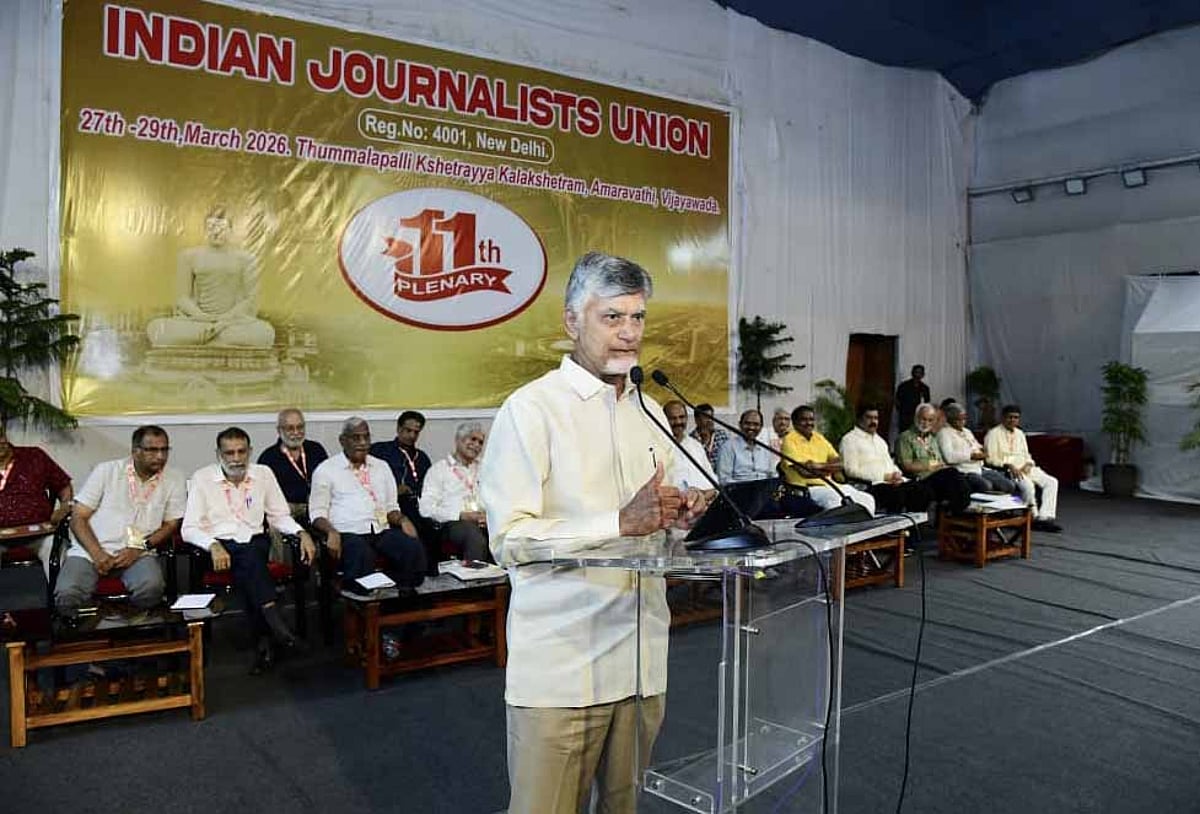
Chief Minister N Chandrababu Naidu emphasized the critical need for responsible, ethical, and progressive journalism during his address at the 11th plenary of the Indian Journalists Union (IJU) on Saturday. The event, held at Tummalapalli Kalakshetram in Vijayawada, brought together prominent journalists and political leaders from across Andhra Pradesh.
“The spread of false narratives and sensationalism in certain media outlets poses a significant threat to our democratic fabric,” Naidu told the assembled journalists. He highlighted social media as a particular concern, noting how unverified information can rapidly circulate and influence public opinion before facts can be established.
The Chief Minister reflected on his four-decade relationship with the press, describing it as a bond built on “affection and mutual trust.” Since 1995, Naidu has maintained close ties with media professionals, establishing the Press Academy in 1996 as part of his commitment to strengthening journalistic institutions and professional standards in the state.
IJU President Srinivasula Reddy led the event, which was attended by numerous public representatives including Kolusu Parthasarathy, Nimmala Ramanaidu, Bonda Umamaheswara Rao, MP Appala Naidu, and AP Media Academy Chairman Alapati Suresh.
Naidu’s comments come at a time when India’s media landscape is undergoing significant transformation. The country now has over 900 television channels and more than 17,000 registered newspapers, according to recent Ministry of Information and Broadcasting data. However, this expansion has been accompanied by growing concerns about media ethics and the quality of reporting.
Media experts note that the financial pressures facing news organizations have contributed to a rise in sensationalism and a decline in investigative reporting. According to a 2022 Reuters Institute Digital News Report, India has one of the highest levels of concern about misinformation among the countries surveyed, with 77% of respondents expressing worry about distinguishing real news from fake news.
Andhra Pradesh’s media environment reflects these national trends, with fierce competition among regional outlets sometimes leading to rushed reporting. The state has witnessed several high-profile cases of misinformation in recent years, particularly during election periods and times of social unrest.
The Chief Minister’s call for journalists to counter misinformation represents a growing recognition among political leaders of the media’s crucial role in maintaining democratic health. “Journalists must act as the first line of defense against the spread of false information,” Naidu stated, urging media professionals to prioritize fact-checking and context in their reporting.
The AP Press Academy, which Naidu referenced in his speech, has trained thousands of journalists since its establishment and continues to offer professional development programs. The institution has recently expanded its curriculum to include specialized courses on digital ethics and verification techniques for online content.
The IJU plenary comes as regional journalists face mounting challenges, including economic pressures from declining advertising revenue and the ongoing digital transition. Local journalists in Andhra Pradesh have also reported increasing instances of harassment and intimidation when covering sensitive political topics.
Media analysts suggest that Naidu’s engagement with the journalistic community reflects the strategic importance of maintaining positive relations with the press, particularly as the state approaches its next electoral cycle. However, his comments also address legitimate concerns about the quality of public discourse and information integrity.
As the plenary concluded, the IJU leadership announced plans to establish a state-level committee to develop new guidelines for ethical reporting in the digital age, responding directly to the concerns raised by the Chief Minister and other speakers at the event.
Fact Checker
Verify the accuracy of this article using The Disinformation Commission analysis and real-time sources.

13 Comments
Naidu’s warning against the threat of false narratives and sensationalism is a timely wake-up call. Upholding ethical journalism should be a top priority for the media industry.
The Chief Minister’s four-decade-long relationship with the press is an interesting perspective. It highlights the importance of open communication and collaboration between politicians and journalists.
It’s good to see political leaders acknowledging the challenges facing the media industry. Naidu’s longstanding commitment to media professionals is commendable.
Establishing the Press Academy demonstrates a proactive approach to improving journalistic standards. This type of institutional support is vital for the industry.
Strengthening journalistic institutions and professional standards is a laudable goal. Naidu’s initiatives in this direction deserve recognition and emulation by other state governments.
The rise of sensationalism and false narratives in certain media outlets is indeed a concerning trend. Naidu’s warning highlights the need for a renewed focus on ethical practices.
Unverified information circulating on social media is a real challenge. Naidu’s emphasis on fact-checking and verification is crucial to combat the spread of misinformation.
The Chief Minister’s long-standing relationship with the media industry could provide unique insights on the evolving dynamics between politics and journalism.
Promoting ethical journalism is crucial to counter the rise of misinformation. CM Naidu’s call for responsible reporting is timely and necessary to safeguard democratic values.
Agreed. Social media has exacerbated the spread of unverified information. Strengthening journalistic integrity is key to restoring public trust.
Responsible journalism is the bedrock of a healthy democracy. Naidu’s call for ethical practices is timely and deserves support from all stakeholders.
Naidu’s four-decade relationship with the press is an interesting angle. Building trust and mutual understanding between politicians and journalists is crucial for effective governance.
The Press Academy initiative seems like a positive step towards strengthening journalistic institutions. It will be interesting to see how it impacts reporting standards in the state.