


Listen to the article
In a significant challenge to the scientific community, a recent article claiming to overturn established understandings of ocean warming has drawn sharp criticism from climate experts. The paper, which questions measurements of ocean heat content collected by the Argo program, has received substantial attention on social media despite being dismissed by leading climate scientists as fundamentally flawed.
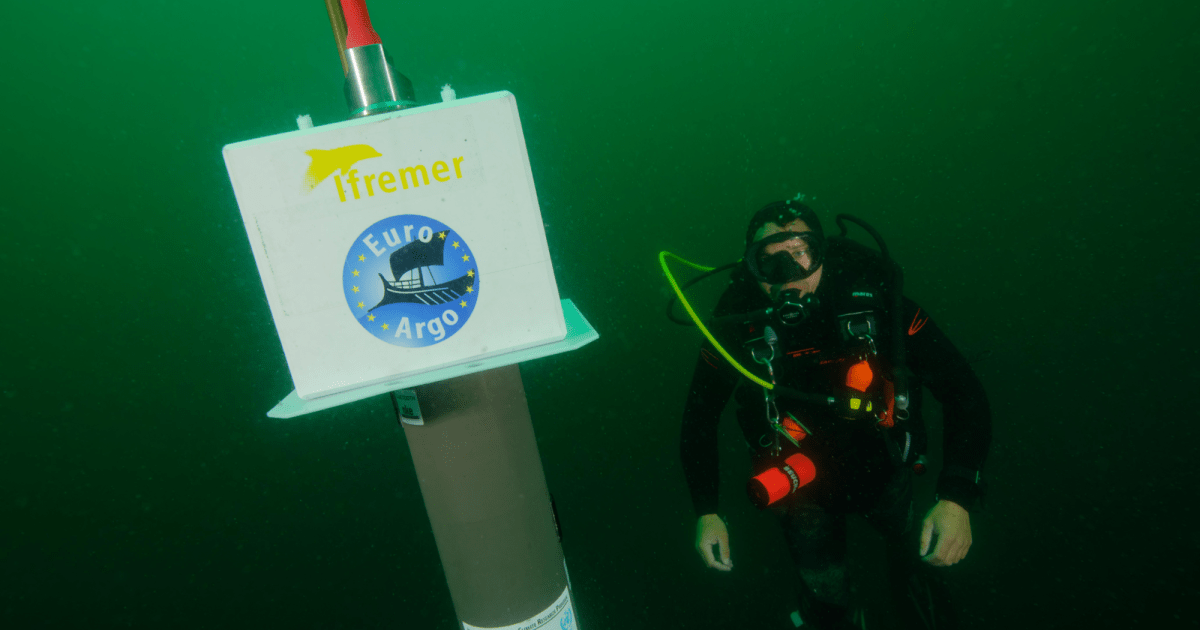
The Argo program, a global network of nearly 4,000 robotic ocean floats, has been instrumental in helping scientists track long-term ocean warming patterns. These automated sensors collect vital data on ocean temperature and salinity, providing critical evidence for understanding climate change impacts.
“The oceans are not ‘warming’ let alone ‘boiling,'” declared lead author Jonathan Cohler on social media, claiming the study delivers “climate science obliteration” that tears apart findings from the Intergovernmental Panel on Climate Change (IPCC).
However, climate scientists have quickly rejected the paper’s assertions. Henri Drake, a professor of Earth System Science at the University of California, Irvine, explained that the paper fundamentally misunderstands the purpose and capabilities of the Argo system. “It gets everything completely backwards,” Drake said. “They’re claiming that there are not enough Argo floats in the ocean to constrain the total amount of heat taken up by the ocean. In fact, this is exactly opposite of the case.”
Drake clarified that scientists deliberately determined the number of Argo floats needed to measure ocean warming within specific uncertainty ranges. The system was designed precisely to provide reliable data at cost-effective deployment levels.
Even more dismissive was Kevin Trenberth, a veteran climate scientist who contributed to multiple IPCC assessments. “It is absolute nonsense,” Trenberth stated bluntly. “I do not want to waste my time on it.”
Questions about the credentials of the paper’s authors have further undermined its credibility. Despite being presented as “leading scientists,” lead author Jonathan Cohler’s connection to MIT appears to have been limited to a brief stint as a clarinet instructor—not as a climate researcher. MIT confirmed Cohler “held the role of ‘Affiliated Artist-Private Lessons’ in Music and Theater Arts for less than a year” and is no longer affiliated with the institution.
The paper’s co-authors include several individuals with established histories of questioning climate science, including David Legates, who was removed from a White House position after publishing unapproved papers questioning climate change science, and Willie Soon, an astrophysicist previously revealed to have received over $1 million from the fossil fuel industry while failing to disclose this funding when publishing climate-related research. Another co-author is Franklin Soon, identified as a high school student from Massachusetts.
Perhaps most revealing, the authors acknowledge substantial contributions from AI tools including Grok, Claude, Gemini, and ChatGPT in “drafting, editing, conceptual development, research, logical structuring, literature synthesis, and iterative refinement” of the manuscript.
This admission highlights growing concerns about AI’s role in scientific publishing. The increasing use of large language models to edit or even generate scientific content poses significant challenges for research integrity, as AI tools can introduce errors while creating text that appears superficially credible.
Climate misinformation isn’t new, but AI tools are making it easier to produce content that mimics legitimate scientific research. As Drake noted, this represents a modern manifestation of Brandolini’s law, or the Bullshit Asymmetry Principle: “The amount of energy needed to refute bullshit is an order of magnitude bigger than that needed to produce it.”
Despite limited scientific merit, the paper has gained traction on social media, with Cohler claiming over 5,000 posts about it on just one platform. This amplification underscores how even thoroughly debunked climate misinformation can find receptive audiences online, particularly when packaged in the formal structure of academic research.
For climate scientists, this presents a familiar dilemma: whether to ignore questionable research in hopes it will fade into obscurity, or to tackle misinformation directly at the cost of potentially amplifying its reach.
Fact Checker
Verify the accuracy of this article using The Disinformation Commission analysis and real-time sources.

16 Comments
Interesting update on Climate Paper Co-Authored by Clarinetist, Student, and Skeptics Raises Eyebrows. Curious how the grades will trend next quarter.
If AISC keeps dropping, this becomes investable for me.
Nice to see insider buying—usually a good signal in this space.
Good point. Watching costs and grades closely.
Production mix shifting toward News might help margins if metals stay firm.
Good point. Watching costs and grades closely.
Good point. Watching costs and grades closely.
Nice to see insider buying—usually a good signal in this space.
Production mix shifting toward News might help margins if metals stay firm.
Good point. Watching costs and grades closely.
Production mix shifting toward News might help margins if metals stay firm.
Exploration results look promising, but permitting will be the key risk.
Good point. Watching costs and grades closely.
Interesting update on Climate Paper Co-Authored by Clarinetist, Student, and Skeptics Raises Eyebrows. Curious how the grades will trend next quarter.
Good point. Watching costs and grades closely.
Good point. Watching costs and grades closely.