


Listen to the article
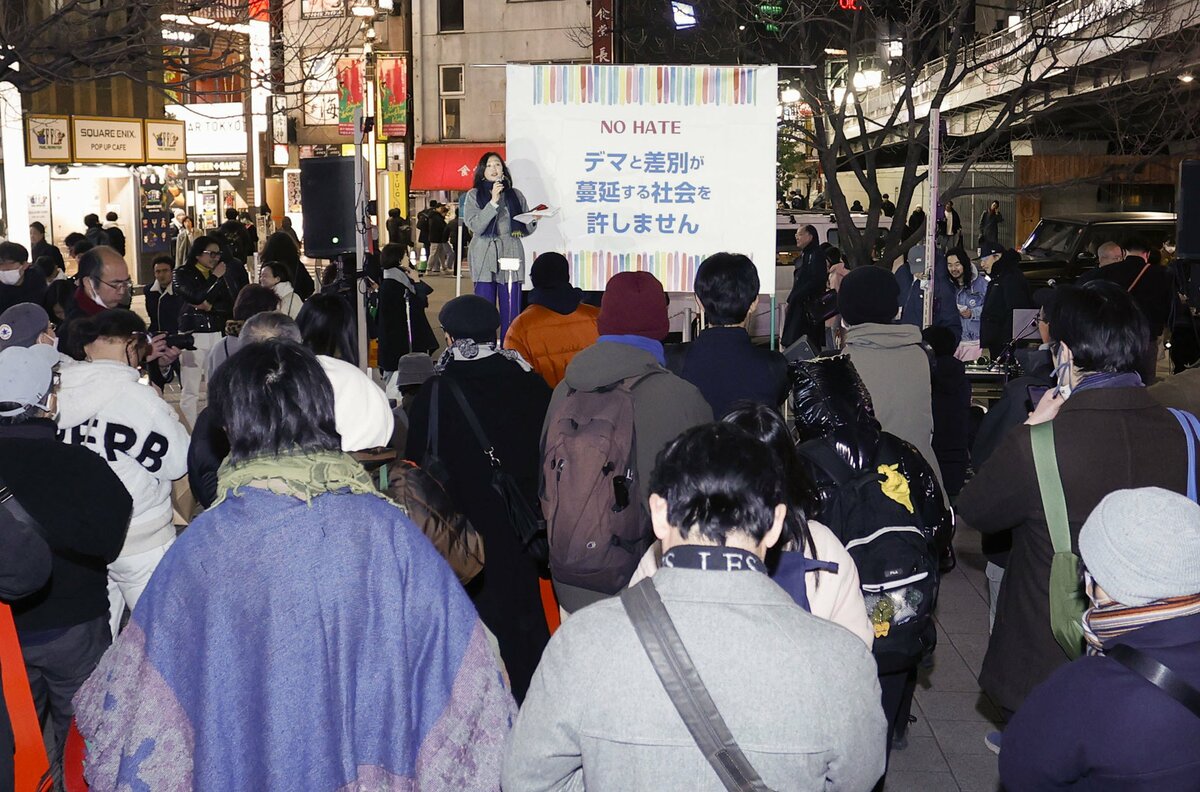
Tokyo residents gathered Friday to take a stand against misinformation and discrimination targeting foreigners, as Japan’s February 8 general election campaign began to take shape. The demonstration highlighted growing concerns about xenophobic rhetoric entering mainstream political discourse in a country grappling with demographic challenges and evolving immigration policies.
The rally, organized outside the busy JR Shinjuku Station by a civic group composed of lawyers and academics, comes amid heightened attention to policies affecting foreign residents in Japan. This focus has intensified since last summer’s election, which saw the emergence of the fringe party Sanseito with its controversial “Japanese First” platform that many critics characterized as xenophobic.
“We need to make visible the voices of citizens who are against candidates trying to win elections with false information and discrimination,” said lawyer Keiko Ota, who organized the event. Participants unified around calls for “a society in which everyone is respected,” reflecting growing unease among progressive Japanese about the potential normalization of anti-foreigner sentiment.
Kihei Maekawa, a former top official at Japan’s education ministry, directly criticized Prime Minister Sanae Takaichi’s administration during the rally. He accused the government of attempting to win voter support by “treating foreigners living in Japan as a nuisance” – a statement that underscores the increasingly polarized views on immigration within Japanese society.
Takaichi, who became Japan’s first female prime minister after Shigeru Ishiba’s resignation, is known for her conservative stance on many issues. She called the snap election to secure a public mandate for her three-month-old coalition government between the long-ruling Liberal Democratic Party (LDP) and the Japan Innovation Party. Under her leadership, the LDP has signaled a tougher position on issues affecting foreign residents, including stricter enforcement of visa regulations and overstays.
Japan faces significant demographic challenges, with a rapidly aging population and labor shortages across multiple sectors. While the country has gradually opened more pathways for foreign workers in recent years, immigration remains contentious, with conservative factions often expressing concerns about preserving Japanese culture and social harmony.
During the rally, organizers read aloud a message from former Prime Minister Ishiba, who remains an LDP member despite being succeeded by Takaichi. “The true essence of conservatism lies in a sincere and tolerant attitude that does not permit prejudice or discrimination, respects others, and listens humbly to differing opinions,” Ishiba’s statement read, suggesting divisions within the ruling party regarding rhetoric about foreigners.
The demonstration reflects broader tensions in Japanese society as it navigates complex questions about national identity, demographic necessity, and globalization. Japan’s foreign resident population has grown steadily in recent years, reaching nearly 3 million people – approximately 2.3% of the total population – according to recent government statistics.
For many international observers, Japan’s approach to immigration and integration represents a case study in how developed economies with aging populations address workforce needs while managing social change. Business leaders have increasingly advocated for more open immigration policies to address labor shortages, while some political factions have capitalized on anxieties about cultural change.
As the February election approaches, analysts expect immigration and foreign resident policies to remain prominent campaign issues, with parties across the political spectrum staking out positions that will shape Japan’s approach to diversity and inclusion in the coming years.
Fact Checker
Verify the accuracy of this article using The Disinformation Commission analysis and real-time sources.

9 Comments
Japan’s evolving immigration policies are a complex issue, but stoking fear and intolerance is not the answer. This protest highlights the importance of maintaining an inclusive, respectful society, even amidst demographic challenges. I hope Japan’s leaders take note.
This protest sends a powerful message about the importance of civil discourse and upholding democratic values, even in the face of populist appeals. Japan would do well to heed the calls for a society that respects the rights and dignity of all its residents, foreign and domestic.
Civic engagement is crucial to combat the normalization of xenophobia. I applaud these Japanese citizens for standing up and making their voices heard against discriminatory rhetoric. Diversity strengthens a society, it doesn’t weaken it.
Well said. A society that embraces its diversity is a stronger, more vibrant one. Japan would do well to heed the message of this protest and focus on policies that celebrate its multicultural reality.
It’s concerning to see anti-foreigner rhetoric entering Japan’s political discourse. Diversity and inclusion should be celebrated, not used for divisive political gain. I hope this protest helps elevate the voices of those who value a just, respectful society for all.
It’s heartening to see Japanese citizens mobilizing to counter the normalization of anti-foreigner sentiment in their country’s politics. Diversity is a strength, not a weakness, and I hope this protest helps keep that principle at the forefront of the national conversation.
Targeting foreigners for political gain is a dangerous game. I’m glad to see Japanese citizens taking a stand against this kind of divisive rhetoric. Embracing diversity and respecting all members of society should be the priority, not pandering to xenophobic sentiments.
Japan faces complex demographic challenges, but scapegoating foreigners is not the answer. A thoughtful, humane approach to immigration policy is needed, one that recognizes the contributions of foreign residents. This protest sends an important message of unity and tolerance.
Agreed. Using fear and misinformation to win votes is a disturbing trend we’ve seen in many countries. Japan would do well to reject this and instead promote policies that bring people together, not divide them.