


Listen to the article
China’s Free HPV Vaccination Program Faces Hurdles Beyond Cost
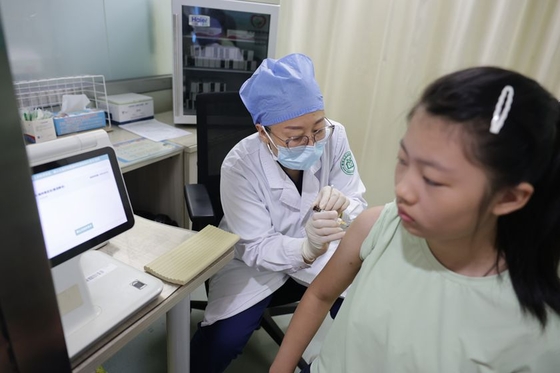
China took a significant step forward in public health on November 10, 2025, by incorporating the human papillomavirus (HPV) vaccine into its national immunization program. The initiative now provides free vaccinations to all girls turning 13, removing what had been a substantial financial barrier for many families.
However, public health officials have quickly recognized that eliminating cost is merely the first hurdle in achieving widespread HPV vaccination coverage among adolescents. According to experts gathered at a recent symposium hosted by Duke Kunshan University’s Vaccine Delivery Research Innovation Lab, two critical challenges remain: physical access to eligible students and growing vaccine hesitancy among parents.
These challenges could potentially undermine China’s efforts to meet the World Health Organization’s target of 90% HPV vaccine coverage among girls by age 15, a benchmark established to significantly reduce cervical cancer rates globally.
Unlike many countries where school-based vaccination programs have proven highly effective, China’s immunization infrastructure primarily operates through community health service centers and maternal and child health hospitals. Liu Qin from Chongqing Medical University referenced a comprehensive study of 92 countries during the symposium, noting that nearly two-thirds implement in-school vaccination programs, which have shown remarkable success in boosting immunization rates—particularly among underserved communities.
“In-school vaccination programs in France alone improved immunization rates by approximately 5.5%, with the most significant gains observed in disadvantaged areas,” Liu explained. By contrast, China’s approach typically requires students to visit clinics, often accompanied by parents on weekends, creating logistical barriers that can limit participation.
Some provinces have made notable progress through inter-departmental collaboration. Jiangxi province, for instance, has achieved an 80% vaccination rate among its target population since launching its program in 2023, administering approximately 1.5 million doses. This success stems from effective coordination between health and education departments—precisely the kind of collaboration experts are advocating nationwide.
In response to accessibility concerns, China’s National Health Commission has encouraged clinics to extend their hours to include weekends. However, many public health experts believe that following the lead of countries like Australia and Singapore by bringing vaccination directly into schools would prove more effective in reaching the target population.
Even with improved access, officials are increasingly concerned about rising vaccine hesitancy among parents—a trend that has intensified since 2023. Because recipients are minors, parental consent is mandatory, giving significant weight to guardians’ attitudes toward vaccination.
Studies presented at the Duke Kunshan symposium revealed that nearly 70% of parents who refused the vaccine for their children cited distrust in its efficacy or expressed beliefs that natural immunity provides sufficient protection. A pilot survey conducted by researchers at Duke Kunshan University showed declining student participation in HPV vaccination programs regardless of notification method, suggesting growing parental resistance.
This hesitancy mirrors global trends. Australia, once a leader in HPV vaccination, has reported decreasing coverage rates since 2024, partly attributed to “vaccine fatigue” following the COVID-19 pandemic.
In China, social media has exacerbated the problem, with algorithms amplifying misinformation about supposed side effects of the HPV vaccine, including unfounded claims about infertility and ovarian failure. Medical specialists at the symposium emphasized that adverse event rates for the HPV vaccine—30.38 per 100,000 doses between 2017 and 2020—are actually lower than the average for all vaccines administered in China.
To combat growing hesitancy, health officials are advocating for what they call “vaccine health education prescriptions,” encouraging doctors to proactively discuss and recommend HPV vaccination during routine checkups. Clear, accurate guidance from trusted healthcare providers is seen as crucial to rebuilding public confidence in the vaccination program.
As China continues its rollout of free HPV vaccines, the success of this public health initiative will likely depend not just on its affordability, but on addressing these twin challenges of access and hesitancy through coordinated, evidence-based approaches.
Fact Checker
Verify the accuracy of this article using The Disinformation Commission analysis and real-time sources.

19 Comments
This is an important public health initiative in China, but misinformation can be a real challenge. Addressing vaccine hesitancy through education and outreach will be crucial for achieving high coverage rates.
Absolutely. Providing accurate, science-based information to counter misinformation will be key. Removing financial barriers is a great first step, but public trust and accessibility are equally vital.
It’s encouraging to see China taking steps to improve HPV vaccination rates, but the barriers highlighted are significant. A coordinated national effort with local community engagement will be crucial.
Providing free HPV vaccines is a great step, but China faces significant challenges in reaching high coverage rates. Addressing both logistical and social factors, like hesitancy, will be crucial for success.
Absolutely. Leveraging both top-down policy changes and bottom-up community engagement could help China navigate these complex issues and improve public health outcomes.
Misinformation around vaccines is a persistent global challenge. China’s efforts to provide free HPV vaccines are commendable, but addressing public concerns will require a sustained, transparent public health campaign.
Reaching 90% HPV vaccine coverage among girls by 15 is an ambitious but admirable goal. China will need a multi-pronged approach to overcome the physical access and hesitancy issues mentioned.
Agreed. Leveraging school-based programs where feasible, while also strengthening community outreach, could help improve both access and education around the importance of HPV vaccination.
Kudos to China for taking this important step in public health. However, the challenges of misinformation and accessibility highlighted are significant. A well-coordinated, multi-pronged approach will be essential.
China’s move to provide free HPV vaccines is a positive step, but the challenges highlighted around hesitancy and access are concerning. Proactive, evidence-based outreach will be critical for success.
Vaccine hesitancy is a complex issue, and China will need to take a multi-faceted approach to address it effectively. Engaging with local communities and addressing their concerns directly could help build trust.
Agreed. Tailoring the messaging and outreach to specific community needs, rather than a one-size-fits-all approach, may be more effective in overcoming hesitancy.
Providing free HPV vaccines is a great start, but China must also focus on improving physical access and tackling misinformation. Holistic solutions that address both logistical and social factors will be key.
Absolutely. Addressing the root causes of vaccine hesitancy, like mistrust or lack of information, will be just as important as ensuring the vaccines are physically available.
Removing the financial barrier for HPV vaccines is a positive move, but China must also confront the issues of physical access and misinformation. A comprehensive strategy is needed to achieve the 90% coverage goal.
Overcoming physical and psychological barriers to HPV vaccination in China is crucial, given the significant public health benefits of reducing cervical cancer rates. A comprehensive strategy is needed.
Absolutely. Combining improved access with robust public education could go a long way in achieving the WHO’s 90% target. Transparency and trust-building will be key.
China’s efforts to provide free HPV vaccines are commendable, but the obstacles around hesitancy and access are concerning. Addressing both the practical and psychological barriers will be crucial for success.
Agreed. Combining improved infrastructure with targeted public education campaigns could help overcome these hurdles and drive up vaccination rates among the target population.