


Listen to the article
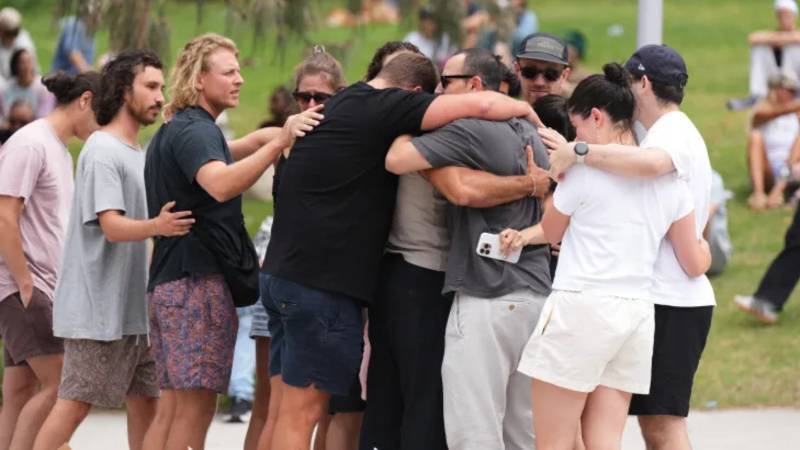
The gunfire that shattered the tranquility of Sydney’s Bondi Beach on December 14, 2025, did more than claim victims—it exposed a shifting global narrative about terrorism and blame in South Asia.
Within hours of the attack, a familiar pattern emerged on social media. Before Australian authorities had released official information, coordinated networks linked to Indian and Afghan nationalist groups began circulating claims that Pakistani nationals were responsible. Some posts suggested connections to Kashmir and Islamist groups, rapidly spreading through partisan news outlets and digital platforms.
This narrative collapse came days later when authorities in the Philippines and India identified the attackers as Indian nationals. Investigations revealed that one attacker, Naveed Akram, had traveled to Southeast Asia for training. The Pakistani connection that had been so confidently asserted simply did not exist.
The swift attribution and equally quiet correction highlight a significant shift in international perceptions. For decades, India benefited from an automatic presumption of victimhood in matters of terrorism, while Pakistan was cast as the perpetual villain. This dynamic is now changing—not because Pakistan has transformed into a model state, but because global observers have become more demanding of evidence.
Pakistan’s internal evolution has been gradual and complex. Between 2007 and 2014, the country experienced devastating terrorist violence that claimed thousands of Pakistani civilian lives. Markets, schools, and military installations became targets, making ideological justifications for extremism increasingly untenable among the population.
This period coincided with meaningful political developments. The civilian government that took office in 2008 was the first in Pakistan’s history to complete a full constitutional term. The Eighteenth Amendment in 2010 decentralized power and curtailed presidential authority after decades of military dominance. By 2013, the government took the unprecedented step of prosecuting a former military ruler.
The retreat from militant proxy strategies was uneven and often reluctant. International pressure following Pakistan’s grey listing by the Financial Action Task Force in 2018 accelerated reforms, but the process had begun years earlier. By the late 2010s, terrorism within Pakistan had declined significantly, though religious conservatism remained prevalent.
During this same period, India’s trajectory moved in the opposite direction. Narendra Modi’s rise to power in 2014 marked the consolidation of Hindutva as state ideology. The Bharatiya Janata Party and its parent organization, the Rashtriya Swayamsevak Sangh, reframed Indian nationalism around Hindu majoritarianism, increasingly positioning Muslims as internal adversaries.
Kashmir became the most visible manifestation of this shift. Before headline-grabbing attacks, Indian security forces deployed pellet guns against civilian protesters, blinding thousands—including children. Human rights organizations extensively documented these injuries after 2016, raising questions about whether such tactics represented counterterrorism or social control.
The August 2019 revocation of Article 370, which stripped Jammu and Kashmir of its semi-autonomous status, came with mass detentions and a communications blackout in one of the world’s most militarized regions.
The pattern continued when violence erupted in Pahalgam in April 2025. Pakistan was swiftly blamed, groups were named, and the narrative was disseminated internationally before investigations were complete. The response—detentions, home demolitions, and collective punishment—was framed as counterterrorism but functioned as community intimidation.
International skepticism had already been building through other developments. In September 2023, Canadian Prime Minister Justin Trudeau publicly accused India of involvement in the killing of Sikh separatist Hardeep Singh Nijjar on Canadian soil. In the United States, federal prosecutors charged individuals allegedly connected to Indian intelligence interests in assassination plots.
Meanwhile, India deepened engagement with the Taliban government in Afghanistan after its 2021 return to power—a regime enforcing gender apartheid and harboring militant networks. India framed this as pragmatic diplomacy, while Pakistan’s similar engagement had long been characterized as complicity.
The Delhi car bombing in November 2025 further challenged established narratives. The suspects weren’t foreign infiltrators but educated Indian professionals, including doctors. Their radicalization pointed to internal factors: communal polarization, shrinking civic space, and normalized hate speech.
The pattern at Bondi Beach was simply the latest example. Initial claims aligned with expectations, while corrections aligned with reality. Only one traveled widely—a structural rather than accidental outcome. Accusations spread faster than verifications because they serve established power structures.
What’s emerging is not an export model of terrorism but a feedback loop: oppression generates resistance; resistance is labeled terrorism; the label legitimizes further oppression; and eventually, violence becomes homegrown.
The world hasn’t suddenly sided with Pakistan. It has simply begun asking questions. For a state accustomed to moral certainty without scrutiny, this new environment of inquiry has proven destabilizing, exposing ideology where evidence was promised and revealing power dynamics where innocence was claimed.
Fact Checker
Verify the accuracy of this article using The Disinformation Commission analysis and real-time sources.

11 Comments
Tragic that misinformation can spread so rapidly on social media, especially around sensitive topics like terrorism. It’s important to wait for official details before jumping to conclusions.
This story raises important questions about how we consume and share information in the digital age. We must be more vigilant in verifying claims, especially around sensitive geopolitical issues.
The rapid spread of misinformation in the aftermath of this attack is a sobering reminder of the challenges we face in the digital age. Robust fact-checking and media accountability will be crucial in addressing this problem.
It’s disheartening to see how quickly misinformation can take root, even in the face of contradictory evidence. This underscores the importance of media literacy and a healthy, informed public discourse.
It’s concerning to see how quickly old narratives can resurface, even in the face of contradictory information. This case underscores the fragility of public perceptions and the importance of media integrity.
You’re right. Responsible journalism and digital literacy are crucial to prevent the spread of misinformation, which can have real and lasting consequences.
This highlights the need for more responsible reporting and fact-checking, rather than allowing partisan narratives to take hold. Attribution of blame should be based on evidence, not assumptions.
Absolutely. Rushing to judgment based on preconceived notions only inflames tensions and distracts from the real issues at hand.
This story serves as a cautionary tale about the dangers of confirmation bias and the tendency to cling to familiar narratives, even when they are not supported by facts. We must strive for greater objectivity and nuance in our understanding of complex issues.
This incident highlights the need for greater transparency and accountability in the media landscape. Responsible reporting and fact-checking are essential to prevent the proliferation of harmful misinformation.
The rapid spread of unsubstantiated narratives is a troubling trend. It’s a reminder that we need to critically examine the sources and motives behind the information we consume and share.