


Listen to the article
Belgium’s Export-Oriented Economy Particularly Vulnerable to Global Risks, Analysis Finds
Belgium faces heightened vulnerability to global risks due to its open, export-dependent economy, according to a specialized analysis of the World Economic Forum’s Global Risks Report released Wednesday. The assessment, conducted by Jan Van Calster of insurance company Marsh, highlights how geopolitical tensions, social fragmentation, and misinformation pose particular threats to Belgian businesses.
“Belgium is a distinctly open and export-oriented economy, and that is precisely what makes us extra vulnerable in an increasingly uncertain world,” Van Calster explained. “Geopolitical tensions, sanctions against countries, borders closing again: these are no longer abstract risks. Many CEOs today are asking themselves who they can still trade with reliably, not only outside Europe but sometimes even within the European Union.”
The specialized Belgian analysis builds upon the WEF’s global assessment, which identified geo-economic confrontations, armed conflicts between states, extreme weather events, societal polarization, and misinformation as the most pressing short-term global risks. According to Van Calster, these challenges are particularly relevant for Belgium’s business landscape.
Business leaders require stability to make sound investment decisions and develop market strategies, but the current environment offers little certainty. While inflation receives less attention in the broader WEF report, it remains a significant concern for Belgian companies, creating ripple effects throughout society.
“This economic uncertainty also has an impact on society,” Van Calster noted. “Inflation and loss of purchasing power widen the gap between groups in society and can increase social tensions and polarisation – risks that in turn have economic consequences.”
The analysis also points to Belgium’s critical infrastructure vulnerabilities. Energy and communication networks in the North Sea, ports, and coastal areas face dual threats from climate change and geopolitical tensions, creating additional challenges for the country’s economic resilience.
Climate and environmental risks, while receiving less attention in the immediate term as companies grapple with more pressing challenges, continue to pose significant long-term threats. This reflects a broader pattern identified in the global WEF report, where climate concerns have fallen in the short-term risk rankings despite maintaining their position as leading long-term threats.
The WEF’s comprehensive Global Risks Report draws on insights from 1,300 leaders and experts across academia, business, government, international organizations, and civil society. From this extensive consultation, the Forum identifies and ranks 33 risks over both short-term (two-year) and long-term (ten-year) horizons.
In the short term, geo-economic confrontations dominate global concerns, with increasing rivalry and protracted conflicts threatening supply chains and global economic stability. Economic risks show the most significant rise in the rankings, with mounting concerns about debt levels and potential financial market bubbles, especially against the backdrop of geo-economic tensions.
“There is a risk that if we lose sight of the short-term focus on climate, the consequences will be even greater in the longer term,” warned Saadia Zahidi, WEF managing director, highlighting the danger of deprioritizing climate action despite its drop in short-term risk rankings.
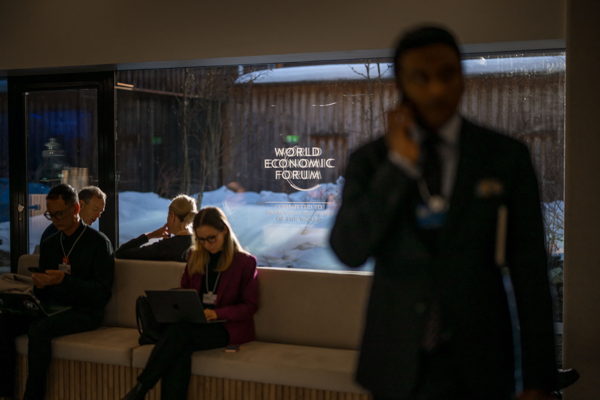
The WEF’s annual meeting, which serves as a global platform for addressing these interconnected challenges, is scheduled for January 19-23 in Davos-Klosters, Switzerland. Belgian representatives are expected to participate in discussions that will shape responses to these critical economic and social risks.
For Belgian businesses, the risk assessment serves as a stark reminder of how global challenges translate into local vulnerabilities, particularly for an economy so deeply integrated into international trade networks. As geopolitical tensions rise and social divisions deepen, the country’s economic resilience will depend on how effectively both public and private sectors adapt to this increasingly uncertain landscape.
Fact Checker
Verify the accuracy of this article using The Disinformation Commission analysis and real-time sources.

16 Comments
The vulnerability of Belgium’s export-dependent economy to global risks is a sobering reminder of the interconnectedness of modern trade. Strengthening domestic capabilities and exploring new markets may be prudent strategies.
It’s interesting to see how the WEF’s global risk assessment applies so directly to Belgium’s economy and trade relationships. Navigating geopolitical tensions and misinformation campaigns will be critical challenges for Belgian businesses.
Absolutely, the specialized analysis for Belgium provides valuable insights into the unique vulnerabilities faced by open, export-driven economies in an unstable global environment.
The specialized analysis for Belgium provides valuable insights into the unique challenges faced by export-oriented economies in today’s geopolitical climate. Proactive risk management and diversification will be crucial for Belgian businesses.
Agreed, the findings highlight the need for Belgian firms to closely monitor global developments and be prepared to adapt quickly to changing trade conditions.
It’s concerning to see how Belgium’s open economy can be impacted by broader global trends and tensions. Strengthening domestic capabilities and exploring new trade partnerships may be prudent strategies for Belgian companies.
Belgium’s reliance on exports makes it particularly exposed to global shocks and disruptions. Proactive risk management and contingency planning will be crucial for Belgian companies to navigate these turbulent times.
Agreed, the findings underscore the need for Belgian firms to closely monitor geopolitical developments and be prepared to adapt quickly to changing trade conditions.
This analysis highlights the vulnerabilities of Belgium’s export-oriented economy in an increasingly uncertain global landscape. The risks of geopolitical tensions, trade disruptions, and misinformation campaigns are very real concerns for Belgian businesses.
It’s concerning to see how open and interconnected economies like Belgium’s can be impacted by broader geopolitical dynamics. Diversifying trade partners and supply chains may be key for resilience.
This report highlights the complexity of operating in today’s global business environment, where geopolitical tensions, trade disruptions, and misinformation campaigns can have significant impacts on export-oriented economies like Belgium’s.
It will be crucial for Belgian firms to stay vigilant and nimble in order to navigate these turbulent waters and protect their trade relationships and market access.
The findings underscore the need for Belgian companies to closely monitor global risks and have robust contingency plans in place. Diversifying trade partners and supply chains could help build resilience.
This report underscores the importance of robust contingency planning and risk management for Belgian companies operating in an increasingly uncertain global environment. Diversifying trade partners and supply chains may be key strategies.
This analysis provides a timely wake-up call for Belgian businesses to assess their exposure to geopolitical and trade-related risks. Proactive risk management and diversification efforts will be key to building resilience.
Absolutely, the findings underscore the need for Belgian firms to stay agile and adaptable in the face of an increasingly unpredictable global landscape.