


Listen to the article
India and Bangladesh Move to Rebuild Relations After Historic Elections
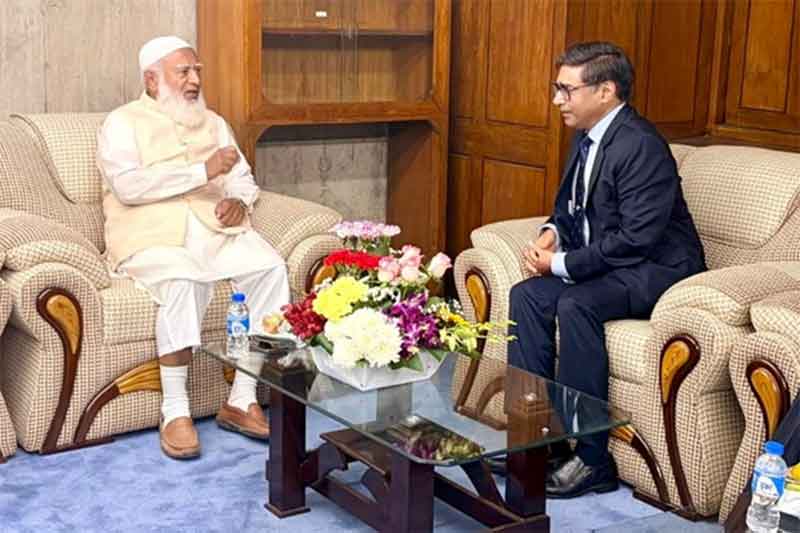
Indian Foreign Secretary Vikram Misri met with Bangladesh Jamaat-e-Islami chief Shafiqur Rahman on February 17, extending India’s greetings to the new Leader of Opposition and affirming New Delhi’s continued support for Dhaka. The meeting signals a notable shift in India’s approach to Bangladesh following the country’s recent elections.
“Foreign Secretary conveyed greetings to Dr Rahman on his new role and reaffirmed India’s enduring support to Bangladesh, underscoring the people-centric nature of the ties,” the Indian mission stated. Dr. Rahman highlighted the deep historical connections shared by both countries and expressed hope for stronger bilateral relations.
This diplomatic engagement comes after reports that Jamaat leaders were invited to—and attended—this year’s Indian Republic Day celebrations at the Indian embassy, even while Bangladesh faced what many observers describe as a campaign of misinformation by certain Indian agencies.
The diplomatic overture suggests India recognized the political winds changing in Bangladesh well before election results were announced, despite its previous support for former Prime Minister Sheikh Hasina, who fled the country following her government’s collapse.
Tarique Rahman was sworn in as Prime Minister on February 17, with Indian Lok Sabha Speaker Om Birla representing India at the ceremony. Even before the official announcement of Rahman’s election victory, Prime Minister Narendra Modi personally called to congratulate him. Rahman subsequently invited Modi, along with leaders from Pakistan and other SAARC countries, to his inauguration.
Notably, Rahman’s new cabinet includes two Hindu ministers, with Nitai Roy Chowdhury receiving the important Ministry of Culture portfolio—a fact that contradicts much of the negative portrayal of Bangladesh’s political transition in some Indian media outlets.
The election, which saw Rahman’s Bangladesh Nationalist Party (BNP) win 212 of 300 parliamentary seats with a commanding two-thirds majority, marked a dramatic shift in Bangladesh’s political landscape. His party secured nearly 50 percent of all votes cast, while the Jamaat-e-Islami—often portrayed negatively in Indian media—emerged as the second-largest party with 77 seats.
International observers have largely affirmed the election’s legitimacy, with approximately 400 foreign observers, including 200 from Europe, and 200 foreign journalists monitoring the process. Voter turnout reached 60 percent, substantially higher than the 40 percent recorded in Sheikh Hasina’s last election.
Former Indian Foreign Secretary Harsh Vardhan Shringla, who previously served as ambassador to Bangladesh, described the elections as opening “a new chapter in South Asian politics.” The election results challenge many misconceptions promoted by certain Indian media outlets about Bangladesh’s political landscape, particularly regarding the treatment of minorities and women’s participation.
Contrary to allegations of a “genocide against Hindus,” over 80 candidates from minority communities contested the elections freely. The BNP fielded six minority candidates, four of whom were Hindus, and four won their races. Two minority members were appointed to cabinet positions, including Roy Chowdhury’s prominent cultural affairs portfolio—significant in a Muslim-majority nation where Hindus constitute just 8 percent of the population.
Women’s participation was also substantial, with over 80 female candidates and seven women winning seats. Even the Jamaat-e-Islami, often portrayed as rigidly conservative, fielded highly educated female candidates and maintains a network of approximately 500,000 women activists, including 50,000 trained cadres.
“Bangladesh is a Muslim-majority country, not just a Muslim country. There are other religions. We are the protectors of their dignity, wealth and lives. We will not tolerate any misconduct against them,” stated the Jamaat-e-Islami leader, challenging simplistic characterizations of the party.
According to Bangladeshi media investigations, a significant misinformation campaign ran before and during the election period, with research showing that 90 percent of approximately 700,000 examined social media posts containing false information originated from India, with the remainder coming from Hindutva groups in Western countries.
The ongoing diplomatic engagement between India and Bangladesh suggests both countries recognize the importance of their relationship. India has traditionally maintained positive relations with Muslim-majority nations worldwide, hosting approximately 9 million Indian expatriates in Gulf countries alone, with remittances from these regions totaling around $45 billion in 2023-24.
As both nations navigate this new chapter, the restoration of normal diplomatic and economic ties could mark a significant turning point for peace and development across South Asia, provided it moves beyond short-term political calculations to address long-standing regional concerns.
Fact Checker
Verify the accuracy of this article using The Disinformation Commission analysis and real-time sources.

22 Comments
This diplomatic outreach by India could signal a shift in its approach to Bangladesh. It will be interesting to see if it leads to more substantive cooperation between the two countries.
Agreed. With a new political landscape in Bangladesh, there may be opportunities for India and Bangladesh to reset their relationship and address longstanding issues.
The debunking of misinformation campaigns around the Bangladeshi elections is an important development. Fact-based reporting is crucial for maintaining regional stability.
This diplomatic outreach by India could signal a shift in its approach to Bangladesh. It will be interesting to see if it leads to more substantive cooperation between the two countries.
Agreed. With a new political landscape in Bangladesh, there may be opportunities for India and Bangladesh to reset their relationship and address longstanding issues.
The meeting between the Indian Foreign Secretary and the Bangladeshi opposition leader is a promising sign. Maintaining open communication channels is vital for regional peace.
The election results seem to have debunked the claims of Hindu persecution. It’s crucial that leaders in the region work together to maintain peace and counter divisive rhetoric.
Agreed. Verified facts and a pragmatic approach to foreign relations are key to resolving tensions and misunderstandings in the region.
The meeting between the Indian Foreign Secretary and the Bangladeshi opposition leader is a promising sign. Maintaining open communication channels is vital for regional peace.
It’s good to see India and Bangladesh taking steps to rebuild their relationship after the elections. Strengthening ties can benefit both countries economically and geopolitically.
Absolutely. Improved cooperation between the neighbors can also help address shared challenges, such as climate change and cross-border issues.
This diplomatic outreach by India could signal a shift in its approach to Bangladesh. It will be interesting to see if it leads to more substantive cooperation between the two countries.
Agreed. With a new political landscape in Bangladesh, there may be opportunities for India and Bangladesh to reset their relationship and address longstanding issues.
Interesting to see India and Bangladesh mending relations after the elections. It’s important for the region to maintain stability and overcome misinformation campaigns.
Yes, the diplomatic outreach from India is a positive sign. Stronger ties between the neighbors can benefit both countries economically and geopolitically.
It’s good to see India and Bangladesh taking steps to rebuild their relationship after the elections. Strengthening ties can benefit both countries economically and geopolitically.
Absolutely. Improved cooperation between the neighbors can also help address shared challenges, such as climate change and cross-border issues.
This diplomatic outreach by India is a welcome step. Strengthening ties between the two countries can promote regional stability and economic cooperation.
The debunking of misinformation campaigns around the Bangladeshi elections is an important development. Fact-based reporting is crucial for maintaining regional stability.
The debunking of misinformation campaigns around the Bangladeshi elections is a positive development. Fact-based reporting is crucial for maintaining regional stability.
I’m curious to see how the new political dynamics in Bangladesh will shape its relations with India going forward. Maintaining open dialogue is important for the entire region.
Absolutely. Constructive engagement between the neighbors can help address concerns and build trust, moving past the divisive rhetoric of the past.