


Listen to the article
Mattel’s Autistic Barbie Arrives Amid Year of Harmful Autism Narratives
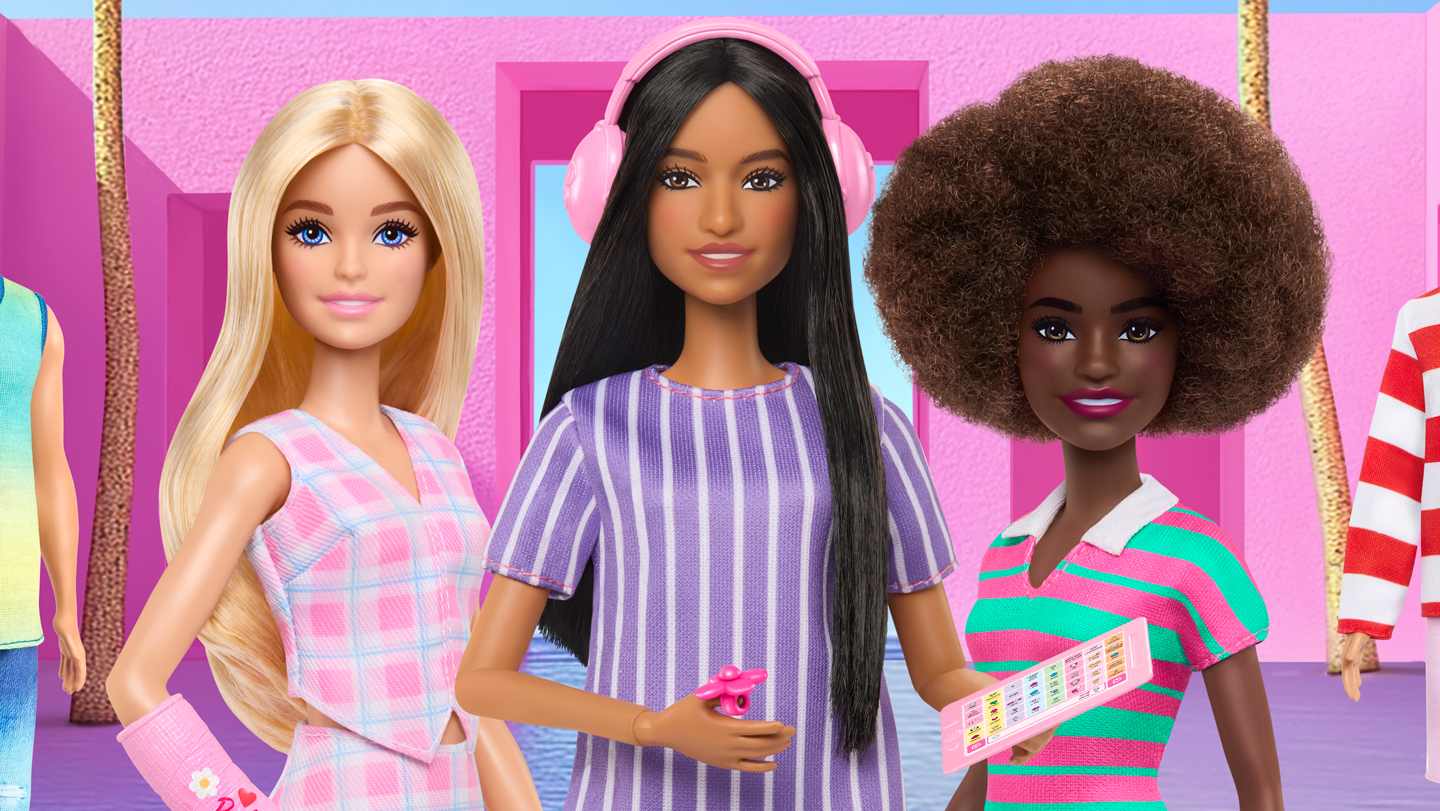
In January, toymaker Mattel made a significant step toward inclusion with the release of the first-ever autistic Barbie doll. Wearing a loose purple dress and headphones, with slightly averted eyes and holding a communication tablet and fidget spinner, the doll represents some of the different ways autistic people experience the world.
Designed with input from autistic individuals, this new Barbie invites more children—and adults—to see parts of themselves reflected in the iconic toy line. The significance extends beyond playtime, as dolls and toys shape how we understand ourselves and others through the stories they help us tell.
This positive representation stands in stark contrast to the harmful narratives about autism that emerged from senior U.S. government officials throughout 2025.
In April, the Centers for Disease Control and Prevention released a report estimating that approximately 1 in 31 children in the United States receive an autism diagnosis by age 8—a significant increase from the 1 in 150 figure reported in 2000. Most researchers attribute this rise to improved awareness, more frequent screenings, and evolving diagnostic criteria.
However, U.S. Secretary for Health and Human Services Robert F. Kennedy Jr. used these statistics to paint a distressing picture during a news briefing, describing rising autism rates as an “alarming epidemic” that “tears families apart.” Kennedy went further, claiming that autistic children “will never pay taxes, never hold a job, never play baseball. They’ll never write a poem, never go out on a date. Many of them will never use a toilet unassisted.”
“Pity and dehumanization are very closely linked,” explains Noor Pervez, a community engagement manager at the Autistic Self Advocacy Network. “Seeing autistic people’s lives as something to be afraid of ignores the root of what makes being autistic difficult for a lot of people—which is ableism.”
The administration’s problematic messaging continued in September when Kennedy and President Donald Trump claimed—without scientific evidence—that acetaminophen, the active ingredient in Tylenol, causes autism. This assertion contradicts a careful assessment published in January in The Lancet: Obstetrics, Gynaecology and Women’s Health, which found no association between maternal acetaminophen use during pregnancy and autism, ADHD, or intellectual disability.
At the same briefing, officials announced that leucovorin, a medication used to counteract side effects of cancer treatments, could treat autism. While some small studies suggest potential benefits, larger well-designed studies are lacking. Despite the preliminary nature of this research, Trump declared, “We’re going to save a lot of children from a tough life, a really tough life. We’re going to save a lot of parents from a tough life.”
Perhaps most concerning was the administration’s revival of the thoroughly debunked claim linking vaccines to autism. On November 20, the official CDC webpage on autism and vaccines was altered to state, “The claim, ‘vaccines do not cause autism’ is not an evidence-based claim…” This change directly contradicts numerous rigorous scientific studies that have found no connection.
Alison Singer, cofounder and president of the Autism Science Foundation, highlighted the damage this framing causes. “The idea that vaccines cause autism is not only scientifically false, but it’s also profoundly stigmatizing to autistic people and to their families,” she said. “It frames autism as being caused by parental action as if autism is a preventable injury resulting from a choice that parents make. It positions autistic people as victims of damage, which undermines the dignity of our children. It implies that autistic lives are less valuable.”
A more hopeful and scientifically sound perspective emerged at the annual meeting of the Society for Neuroscience in San Diego in November. Experts discussed efforts to improve autism diagnosis in historically overlooked populations, including girls, adults, and people of color. Developmental psychologist Jed Elison from the University of Minnesota emphasized the importance of early intervention: “Because this is a time period of such great plasticity, it is also a time period of opportunity to help these kids get on the right track.”
UCLA behavioral child neurologist Shafali Jeste reminded attendees not to overlook joy in discussions about autism. “Yes, there are challenges, there’s no question,” she acknowledged. “But those challenges aren’t the whole story. [These children] also do bring a tremendous amount of joy. They teach people to be compassionate. They raise awareness about differences.”
As the contrast between Mattel’s inclusive Barbie and the government’s harmful rhetoric demonstrates, stories have power. They can perpetuate damaging stereotypes or foster understanding and acceptance. Ultimately, the more we understand about what’s possible for people with autism, the wider the world becomes for everyone.
Fact Checker
Verify the accuracy of this article using The Disinformation Commission analysis and real-time sources.

16 Comments
This is a great step towards better representation and understanding of autism. Dolls and toys have a powerful influence on how we perceive and relate to different communities.
I’m glad to see Mattel working with autistic individuals to create an authentic and thoughtful representation.
Mattel’s Autistic Barbie is a positive step towards greater inclusion and understanding. Dolls and toys play a crucial role in shaping our perceptions and narratives.
This doll could be a valuable educational tool for families, schools, and communities to learn more about autism and celebrate neurodiversity.
While the rise in autism diagnoses is significant, it’s important to recognize that autistic individuals are not defined by their diagnosis. This Barbie doll celebrates the diversity of the autism spectrum.
I’m curious to learn more about the design process and the insights from autistic individuals that went into creating this Barbie. Representation matters.
The Autistic Barbie doll is a welcomed addition to the iconic toy line. Representation in play can have a profound impact on how children and adults perceive and understand autism.
I’m curious to learn more about the specific design features of this Barbie and how they were informed by input from the autism community.
The increase in autism diagnoses is likely due to improved awareness and screening, not any underlying rise in the condition itself. Inclusive toys like this Autistic Barbie can help combat harmful misconceptions.
Storytelling through dolls and toys is an effective way to promote empathy and understanding. This Barbie doll is an important step in the right direction.
It’s heartening to see a major toy brand like Mattel taking steps to represent the autism community. This Barbie doll can help normalize and celebrate neurodiversity.
Increased autism diagnoses reflect improved screening, not a rise in the condition itself. Inclusive toys like this can combat harmful stereotypes.
Autistic Barbie is a powerful example of how storytelling can challenge misinformation and foster greater understanding. Kudos to Mattel for this thoughtful and inclusive product.
I wonder if this doll will be accessible and affordable for families. Representation in toys should be available to all children.
The release of Autistic Barbie is an important milestone in promoting more accurate and empathetic representations of autism. Kudos to Mattel for their thoughtful approach.
I hope this Barbie doll inspires more inclusive and diverse toy lines that reflect the full spectrum of human experiences and identities.