


Listen to the article
PBS News to Host Special AMA Event Addressing Science Communication Challenges in Era of Misinformation
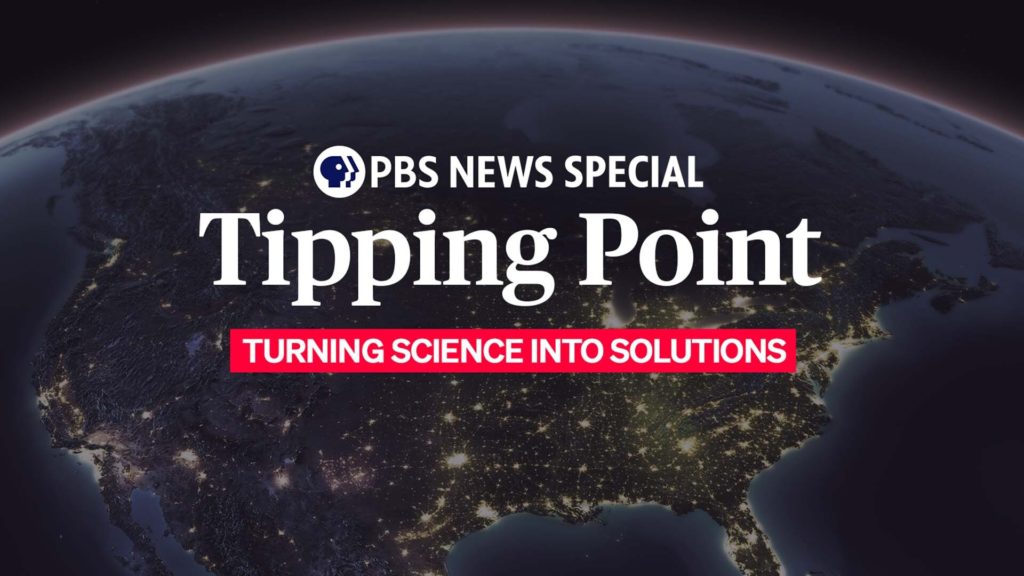
In an age where scientific facts struggle to compete with widespread misinformation, PBS News is taking an innovative approach to bridge the gap between scientific knowledge and public understanding. On Wednesday, December 10, the network will host a special livestreamed Reddit “Ask Me Anything” (AMA) event titled “Tipping Point – Turning Science Into Solutions,” bringing together leading scientists, academics, and digital creators to tackle one of today’s most pressing communication challenges.
Beginning at 11 a.m. EST, science correspondent Miles O’Brien and digital anchor Deema Zein will lead discussions exploring how evidence-based information can break through media silos, polarization, and the growing tide of misinformation affecting public discourse on critical issues like climate change, health, and technology.
The interactive event will stream live on YouTube and across PBS News’ social media platforms, including Facebook, X, and TikTok. Viewers are encouraged to submit questions directly through the AMA hosted on Reddit’s r/IAmA platform, making audience participation central to the conversation.
“The challenge isn’t just about having scientific facts—it’s about effectively communicating them in today’s fractured media landscape,” said a PBS News spokesperson. “This event aims to share successful strategies from those who’ve found ways to connect complex scientific concepts with diverse audiences.”
The impressive lineup features prominent voices from various scientific disciplines. Climate scientist Katharine Hayhoe, chief scientist for The Nature Conservancy and distinguished professor at Texas Tech University, will share insights on communicating climate change research to the public. Astrophysicist Hakeem Oluseyi, CEO of The Astronomical Society of the Pacific and host of NOVA’s “Particles of Thought” video podcast, brings expertise in making complex space science accessible.
Digital creators who have successfully built science communication platforms will also participate, including Joe Hanson (creator of PBS shows “Be Smart” and “Overview”), Phil Cook (known as @chemteacherphil with millions of followers across social platforms), and Raven Baxter (“Raven The Science Maven”), who has pioneered innovative approaches to scientific literacy.
The event also features climate communicators like Rollie Williams from Climate Town Productions, glaciologist Peter Neff (@icy_pete), and climate researcher Miriam Nielsen, who have developed substantial followings by translating complex climate science into digestible content.
Technology and digital literacy will be addressed by Hany Farid, a UC Berkeley professor and co-founder of GetReal Security, who specializes in detecting digital manipulation and deepfakes—an increasingly important skill as synthetic media proliferates online.
The education perspective will be represented by Patti Wolter, founder of Northwestern University’s Medill Media and Science Communication program, along with student Mary Randolph and recent PhD graduate Tabor Whitney, highlighting the importance of training the next generation of science communicators.
This event comes at a critical time when public trust in scientific institutions faces significant challenges. Recent studies have shown that while general trust in science remains relatively high, polarization on specific scientific topics like climate change, vaccine efficacy, and emerging technologies continues to grow along ideological lines.
Media experts note that traditional approaches to scientific communication often fail to reach audiences outside already established science-friendly bubbles. By bringing together traditional scientists with digital creators who have found new ways to engage diverse audiences, PBS News aims to explore communication strategies that can bridge ideological divides.
The “Tipping Point” event represents part of a broader effort by public media to combat misinformation through engagement rather than simply fact-checking after falsehoods have spread. By focusing on effective communication techniques and audience participation, PBS News hopes to provide practical tools for science advocates and communicators facing today’s challenging information landscape.
Fact Checker
Verify the accuracy of this article using The Disinformation Commission analysis and real-time sources.

8 Comments
As someone with a background in the mining and energy sectors, I’m hopeful this AMA can shed light on strategies for addressing misinformation related to the role of natural resource development in sustainable solutions. Objective, fact-based dialogue is sorely needed.
Bridging the gap between scientific consensus and public understanding is critical, especially on issues like climate change that require urgent action. I hope this AMA can provide practical insights into effective science communication strategies.
As someone working in the mining and energy sectors, I’m interested to learn how the panelists plan to tackle misinformation related to the role of technology and natural resource development in addressing global challenges. Objective, fact-based dialogue is sorely needed.
Kudos to PBS for hosting this AMA. Combating misinformation requires innovative approaches to science communication. I’m curious to hear the panelists’ perspectives on leveraging new media platforms to reach younger, more diverse audiences.
This is a timely and important event to address the serious challenge of science misinformation. I’m curious to hear how the panelists plan to cut through media silos and reach diverse audiences with evidence-based information.
This is a timely and important initiative. In an era of increasing polarization, finding ways to cut through media silos and echo chambers with evidence-based information is crucial. I look forward to seeing how the AMA participants tackle this challenge.
I appreciate PBS News taking on this important challenge. Misinformation has become a major obstacle to evidence-based policymaking and public engagement on crucial scientific topics. I look forward to seeing how the AMA participants approach this complex problem.
Agreed, this event could provide valuable insights. Constructive dialogue between experts and the public is essential for building trust in science.