


Listen to the article
Montenegrin Media Sensationalism Fuels Fear of Bears Despite Lack of Substantive Threat
When bears make headlines in Montenegrin media, they’re typically accompanied by words like “fear” and “horror,” creating an impression of constant danger despite a lack of scientific evidence supporting these claims. Analysis of data on bear encounters reveals a reality far less dramatic than media portrayals suggest.
According to the Center for the Protection and Study of Birds (CZIP), all recorded bear incidents in 2025 involved property damage, not human attacks. The only attack on a person occurred in 2024, when a hunter sustained serious injuries in the Piva region.
Last year’s incidents included alleged attacks on beehives near Mojkovac and Nikšić, and reports of livestock killings including a foal, several sheep, and a cow. However, these cases largely rely on local assumptions rather than official verification from veterinarians or relevant authorities, pointing to potential flaws in reporting standards.
Despite this reality, media coverage frequently employs alarming language, with one article describing rural communities as being “under siege.” This terminology, typically reserved for describing systematic violence and disruption of normal life, dramatically mischaracterizes isolated incidents occurring in rural areas that have historically been part of bears’ natural habitat.
Content analysis reveals another troubling pattern: media outlets often fail to distinguish between different types of bear encounters, equating attacks on beehives or livestock with threats to human safety. This oversimplification prioritizes sensationalism over accurate public understanding.
“The most common causes of bears descending into villages are caused by human activities,” explained Marija Iković, a biologist from CZIP, in an interview with the Center for Investigative Journalism of Montenegro. “Unsecured landfills and containers, organic waste near properties, beekeeping without adequate protection, livestock carcasses in the open, orchards near forests, and hunting offal left in nature are the primary factors drawing bears to human settlements.”
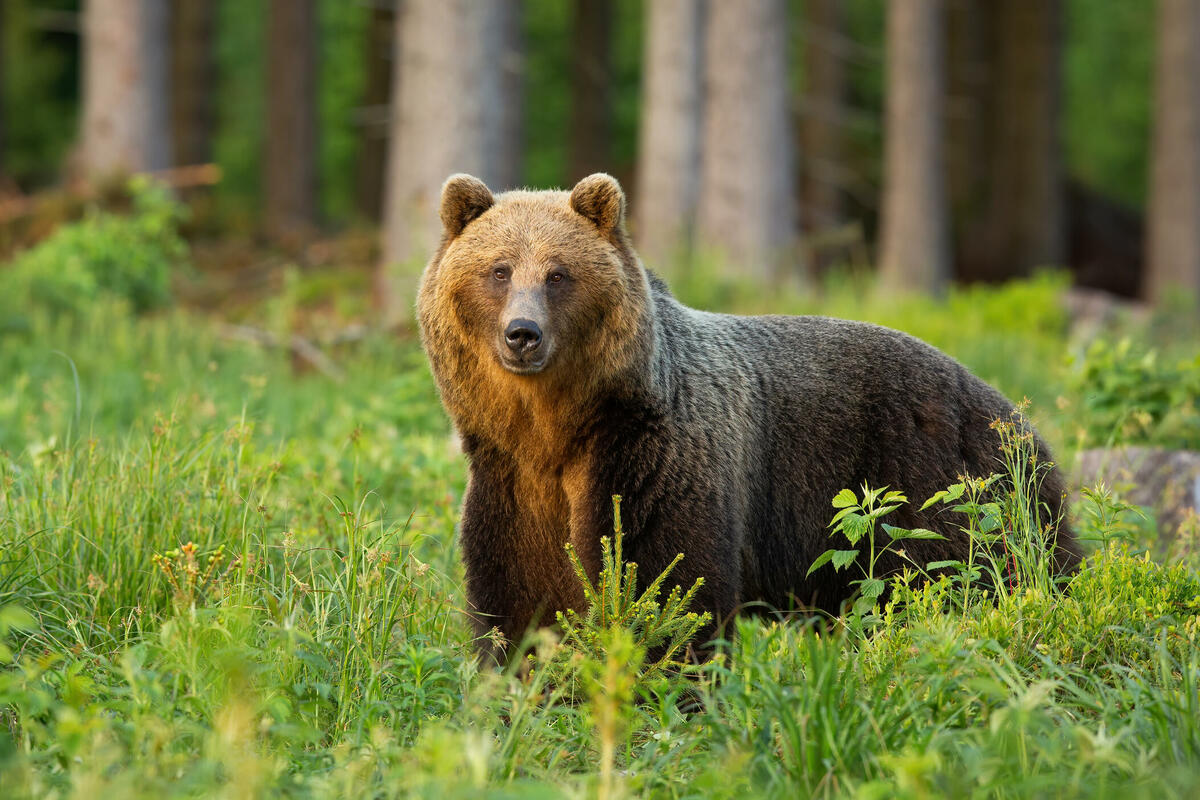
The brown bear (Ursus arctos), Montenegro’s only native bear species and largest land predator, is predominantly herbivorous and naturally avoids human contact. Conflicts typically arise when natural food sources become scarce or when human negligence creates easy access to food.
Following the rare 2024 bear attack on a hunter, hunting associations began advocating for culling. This placed pressure on government officials, with Agriculture, Forestry and Water Management Minister Vladimir Joković indicating the department would consider approving brown bear culling despite its protected status. However, he later told CIN-CG that no immediate culling plans exist.
Media coverage has amplified calls for culling from livestock farmers and rural residents without adequately discussing preventive measures, compensation programs, or scientific management approaches. More concerning is the absence of reliable population data needed to inform responsible wildlife management decisions.
“Today, the accepted method of estimating population size is through genetic analysis of collected samples. This has been attempted twice in Montenegro, but both campaigns collected insufficient samples. All other methods are based on guesswork,” Iković noted.
She added that early 2026 saw the launch of the Life DinPin Bear project, a collaboration between the Environmental Protection Agency and CZIP aimed at conducting Montenegro’s first scientific brown bear population count.
“Only when we conduct a valid count will we be able to create a brown bear management plan and possibly set a culling quota if the numbers show it’s necessary,” Iković explained.
Đuro Huber, a veterinarian who has devoted his career to brown bear research, warns that traditional counting methods using hunting organization data are unreliable. He noted that European Union member states must comply with the Habitats Directive, which requires regular population status reporting and prohibits actions that would worsen population conditions.
“The ecological role of bears is to help with the overall stability of the ecosystem. Bears are successful dispersers of plant seeds that they eat but do not fully digest,” Huber explained.
Both experts emphasize that emergency culling of problematic individuals requires a clear, established protocol. Irresponsible or scientifically unfounded culling could disrupt ecosystems and cause financial losses to the state and local communities.
Responsible media coverage should separate fact from fear, clearly explaining actual risks and available preventive measures. Instead, current reporting generates clicks and comments while producing distrust, panic, and pressure for hasty decisions.
International examples, including Japan’s systematic approach to increased bear encounters and Italy’s Trentino region where sensationalist media coverage influenced wildlife management decisions, provide valuable lessons for Montenegro as it navigates its relationship with this protected species.
Fact Checker
Verify the accuracy of this article using The Disinformation Commission analysis and real-time sources.

10 Comments
While bear sightings can certainly be unsettling, it’s concerning to see the media amplifying fear rather than presenting a more measured perspective. A more balanced approach that focuses on factual evidence would be more constructive.
Interesting article on the bear situation in Montenegro. It’s important to have a balanced perspective and not let sensational media coverage unduly influence public perception. The data seems to indicate the actual threat level is lower than commonly portrayed.
You’re right, it’s crucial to rely on verified facts rather than unsubstantiated claims. The media’s tendency to dramatize these issues can be counterproductive.
This analysis highlights the need for more rigorous reporting standards when it comes to wildlife encounters. Relying on local assumptions instead of official verification skews the narrative. Proper data collection is key to understanding the true scope of the issue.
Agreed. Transparency and accuracy in reporting are essential, especially for sensitive topics like human-wildlife conflicts. Better coordination with relevant authorities could improve the reliability of information.
This article raises important questions about the role of the media in shaping public perception of wildlife issues. While bear encounters can be concerning, it’s clear that accurate, fact-based reporting is crucial to avoid undue fear and panic.
Well said. Responsible journalism that prioritizes scientific evidence over sensationalism is essential for fostering constructive dialogue and sustainable solutions.
This is an interesting case study on the challenges of reporting on wildlife issues. The tendency to sensationalize can undermine efforts to foster coexistence and conservation. I hope further research can shed more light on the true dynamics at play.
Absolutely. Sensationalism often crowds out nuanced discussion. Focusing on data-driven, solution-oriented reporting could lead to more constructive dialogue on this topic.
The disparity between media coverage and the actual data highlights the importance of critical thinking when consuming news about environmental issues. It’s a good reminder to always seek out authoritative and objective sources.