


Listen to the article
Malaysian Prime Minister Warns Against Misinformation on Oil Prices Amid Regional Tensions
Prime Minister Datuk Seri Anwar Ibrahim has issued a strong rebuke against what he describes as the spread of inaccurate information regarding recent oil price increases in Malaysia, particularly claims linking them directly to the ongoing conflict in West Asia.
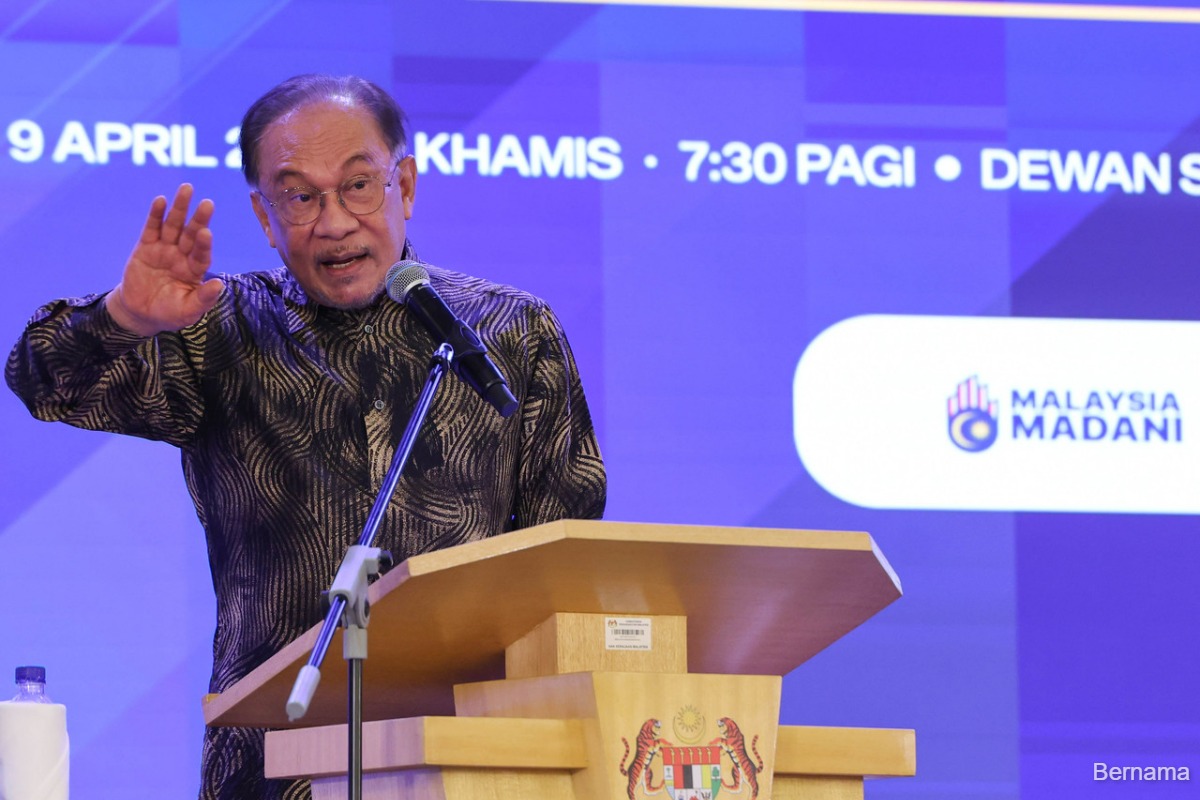
Speaking at the Transport Ministry’s monthly assembly in Putrajaya on Thursday, Anwar criticized politicians and other public figures for making what he characterized as irresponsible statements that have contributed to public confusion rather than clarity on the matter.
“There are comments from some politicians who speak hastily, offering half-truths and presenting them as absolute facts,” Anwar said during his address. “They have only a partial understanding but attempt to portray their views as definitive.”
The Prime Minister’s comments come amid growing public debate over fuel price adjustments in Peninsular Malaysia. Transport Minister Anthony Loke and Chief Secretary to the Government Tan Sri Shamsul Azri Abu Bakar were also present at the assembly.
Anwar emphasized that while freedom of expression remains a fundamental right, public discourse should be based on accurate information. “We have the right to criticise and offer counter-views. However, we do not have the right to make judgements based on incorrect or misleading information,” he stressed.
The Prime Minister appeared particularly concerned about attempts to frame economic policy discussions within religious contexts, suggesting such approaches often lack substance. “This reflects a superficial understanding cloaked in religious references, which may appear convincing but ultimately misleads the public,” he added.
Anwar’s comments appear to be a direct response to recent criticisms from opposition figures, including PAS president Tan Sri Abdul Hadi Awang. In a statement released Wednesday, Hadi claimed that Malaysians were being “deceived” by the government regarding fuel price increases in Peninsular Malaysia, while questioning why similar pricing policies were not implemented in the East Malaysian states of Sabah and Sarawak.
Hadi had further argued that there was insufficient justification for the price adjustments, pointing out that Malaysia is not directly involved in Iran’s actions concerning the Strait of Hormuz, a critical maritime chokepoint for global oil shipments.
The dispute highlights the complex relationship between global oil markets and domestic fuel pricing in Malaysia. While the country is a net oil exporter, refined petroleum products are still subject to international price fluctuations. The government has maintained a system of targeted subsidies to manage consumer fuel costs, but these policies have come under increasing scrutiny amid broader economic reforms.
Energy market analysts note that tensions in the Middle East, particularly concerning Iran and the Strait of Hormuz, have contributed to global oil price volatility in recent months. Approximately 20% of the world’s oil passes through this narrow waterway, making any threat to shipping in the region significant for international markets.
The disagreement also reflects Malaysia’s complex political landscape, where economic policies often become focal points for opposition criticism. The differential pricing between Peninsular Malaysia and East Malaysia stems from longstanding regional agreements and logistical considerations that date back to the formation of the Malaysian federation.
As global oil markets continue to respond to geopolitical tensions, Malaysian consumers and businesses remain sensitive to fuel price adjustments, which can have cascading effects throughout the economy. The government has repeatedly emphasized its commitment to balancing subsidy reform with consumer protection measures.
The Prime Minister’s comments signal growing concern within the administration about the quality of public discourse on economic issues and reflect attempts to counter what government officials view as misleading narratives about policy decisions.
Fact Checker
Verify the accuracy of this article using The Disinformation Commission analysis and real-time sources.

16 Comments
Anwar’s comments highlight the importance of responsible, fact-based discourse, especially on sensitive issues like energy prices. I hope his leadership can help steer the public debate in a more constructive direction.
Anwar’s emphasis on promoting fact-based dialogue is commendable. Combating the proliferation of misinformation is crucial for ensuring the public has a clear, accurate understanding of the factors driving oil price changes.
Absolutely. Responsible leadership that prioritizes transparency and evidence-based discourse is vital, especially on sensitive issues with broad economic and social impacts.
It’s concerning to hear about politicians making misleading statements on this topic. The public deserves a clear, evidence-based understanding of the factors driving oil price changes in the region.
Absolutely. Anwar is right to call out irresponsible rhetoric. Fact-based discussion is the best way forward to address public concerns.
This is a complex issue that deserves careful, impartial analysis. I’m glad to see the Prime Minister taking a stand against the spread of inaccurate information and calling for a more informed public dialogue.
Agreed. Transparent, evidence-based communication is crucial for addressing public concerns and maintaining trust in policymaking, especially on matters with broad economic and geopolitical implications.
Anwar’s comments highlight the importance of responsible public discourse, especially on matters with economic and geopolitical implications. I appreciate his efforts to counter misinformation and promote transparency.
Agreed. Nuanced, evidence-based communication is crucial for maintaining public trust and informed decision-making, particularly around complex energy and economic issues.
I appreciate Anwar’s call for a more constructive, fact-based discussion around oil prices. Misinformation can be highly damaging, so his efforts to promote accountability and nuance are important.
I’m glad the Prime Minister is taking a strong stance against misinformation. Maintaining public trust is so important, especially during times of economic uncertainty and regional tensions.
Agreed. Anwar seems to recognize the need for transparent, nuanced communication on complex issues like this. Hopefully his leadership can help steer the debate in a more constructive direction.
It’s heartening to see the Prime Minister taking a firm stance against the spread of misinformation. Fact-based policy discussions are essential for addressing concerns around oil prices and related challenges.
This is an important issue that deserves a fact-based discussion. I appreciate Anwar’s call for accountability and transparency around oil price changes. Misinformation can be damaging, so I hope all stakeholders engage constructively.
Agreed. Providing accurate information to the public is crucial, especially on sensitive topics like energy prices. Anwar seems committed to that approach.
This is a sensitive issue that requires careful, impartial analysis. I hope Anwar’s call for fact-based discussion leads to a more informed public dialogue around oil prices and their drivers.