


Listen to the article
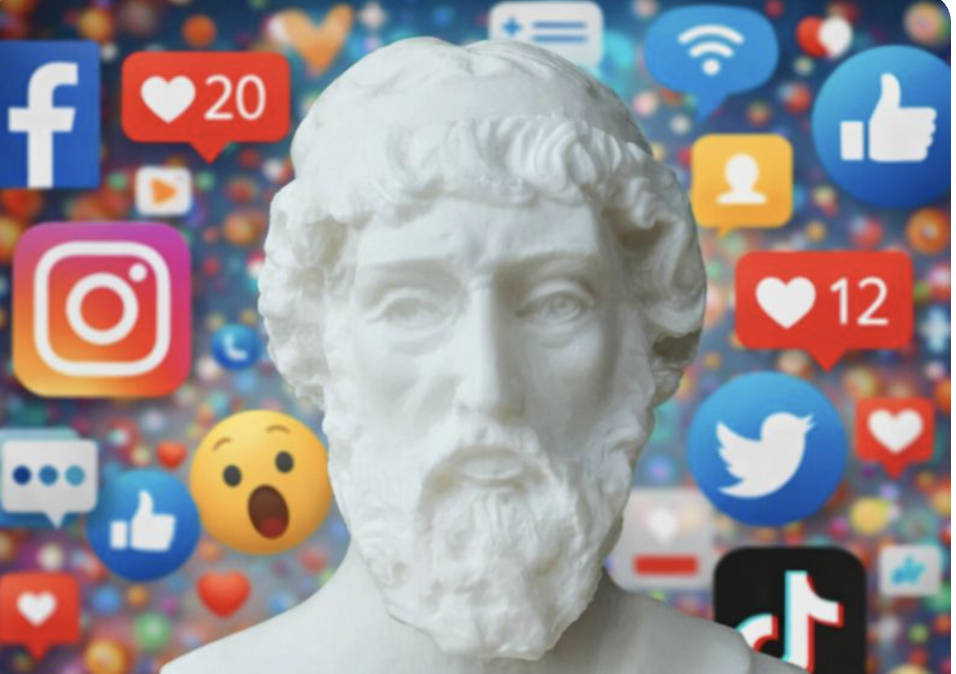
In an age dominated by misinformation and rapidly evolving technologies, the wisdom of ancient thinkers offers surprisingly relevant guidance. Though separated by millennia, Greek and Roman scientists grappled with many of the same challenges we face today in distinguishing fact from fiction.
Ancient scientists can be easy to dismiss. Greek philosopher Thales of Miletus, often considered the West’s first scientist, believed Earth was suspended on water. Roman encyclopedist Pliny the Elder recommended remedies for snakebites that included entrails, chicken brains, and mice cut in two. When Aristarchus of Samos proposed that Earth orbits the Sun, his contemporaries universally rejected the idea.
Despite these misconceptions, thinkers from 2,500 years ago developed sophisticated approaches to knowledge that remain valuable today. They confronted fundamental problems of epistemology that have only been amplified by social media and artificial intelligence.
Five key lessons from ancient Greek and Roman science stand out as particularly relevant to our current information landscape.
The first lesson emphasizes observation before conclusion. Almost every ancient scientific text advises collecting data before making decisions. First-century astronomer Marcus Manilius described how his predecessors “observed the appearance of the whole night sky and watched every star return to its original place… by doing this repeatedly, they built up their knowledge.” These early scientists gathered evidence methodically before drawing conclusions, a practice they encouraged in their readers.
Critical thinking forms the second pillar of ancient scientific wisdom. The anonymous volcanic treatise “Aetna” warns readers about potential misinformation from both authors and other people. Whether through deliberate deception or simple error, the text urges readers to scrutinize claims against evidence from their own senses and reasoning power (ratio). This approach remains fundamental to navigating today’s complex information environment.
The third lesson—acknowledging the limits of knowledge—may be particularly valuable today. Even self-proclaimed experts in ancient Greece and Rome frequently admitted when they didn’t have complete answers. Roman philosopher Lucretius proposed three different explanations for solar eclipses without claiming certainty about any single theory. He considered it “unscientific” to eliminate plausible explanations simply to appear more definitive. This intellectual honesty stands in stark contrast to contemporary discourse, where acknowledging uncertainty is often perceived as weakness.
Fourth, ancient thinkers recognized that science exists within cultural contexts. The Hippocratic text “On the Sacred Disease” attempted to explain epilepsy’s physical causes during a time when Greek doctors were divided between supernatural and natural explanations of disease. Ancient scientists understood that an individual’s beliefs and values significantly impact what they promote as “factual,” a reminder that remains crucial in our polarized information landscape.
Finally, ancient scientists believed scientific understanding should be accessible to everyone. Manilius insisted that the only requirement for scientific learning was “a teachable mind”—interest and willingness to learn rather than innate talent. Similarly, the Aetna author declared, “Science is no place for genius.” While they recognized the importance of expert knowledge, ancient scientists wanted their readers to understand how scientific facts are established and verified.
These insights helped build the foundations of modern scientific knowledge. Though we’ve advanced technologically, the fundamental challenges of determining truth remain remarkably consistent across millennia. The ancient Greeks and Romans developed sophisticated frameworks for navigating an uncertain information environment—frameworks that remain valuable as we confront misinformation in our digitally connected world.
Their approaches remind us that verifying information, thinking critically, acknowledging uncertainty, recognizing cultural biases, and making scientific thinking accessible are not modern innovations but enduring principles of human inquiry that have withstood the test of time.
Fact Checker
Verify the accuracy of this article using The Disinformation Commission analysis and real-time sources.

21 Comments
The cost guidance is better than expected. If they deliver, the stock could rerate.
Interesting update on Ancient Greek and Roman Scholars’ Advanced Methods for Combating Scientific Misinformation. Curious how the grades will trend next quarter.
Uranium names keep pushing higher—supply still tight into 2026.
Good point. Watching costs and grades closely.
Good point. Watching costs and grades closely.
If AISC keeps dropping, this becomes investable for me.
Good point. Watching costs and grades closely.
Good point. Watching costs and grades closely.
Uranium names keep pushing higher—supply still tight into 2026.
Exploration results look promising, but permitting will be the key risk.
Good point. Watching costs and grades closely.
Good point. Watching costs and grades closely.
Interesting update on Ancient Greek and Roman Scholars’ Advanced Methods for Combating Scientific Misinformation. Curious how the grades will trend next quarter.
Good point. Watching costs and grades closely.
Good point. Watching costs and grades closely.
Silver leverage is strong here; beta cuts both ways though.
Production mix shifting toward News might help margins if metals stay firm.
I like the balance sheet here—less leverage than peers.
Uranium names keep pushing higher—supply still tight into 2026.
Good point. Watching costs and grades closely.
Good point. Watching costs and grades closely.