


Listen to the article
INEC Chairman Urges Broadcasters to Uphold Editorial Standards Ahead of 2027 Elections
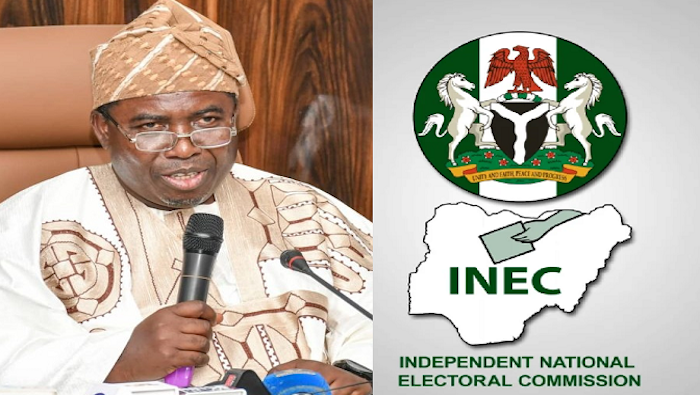
The Chairman of the Independent National Electoral Commission (INEC), Prof. Joash Amupitan, has issued a stark warning to Nigeria’s broadcast media, emphasizing that the integrity of the upcoming 2027 general elections will depend heavily on responsible management of the nation’s airwaves.
Speaking at the 81st General Assembly of the Broadcasting Organisations of Nigeria (BON) in Abuja on Wednesday, Amupitan framed the information landscape as “the new frontline of democratic contestation,” where the most potent threat to election integrity comes not from physical ballot box interference but from digital misinformation.
“In the 2027 general election, the most dangerous weapon will not be a ballot-snatcher’s gun, but a smartphone user’s lie amplified by an uncritical broadcast station,” Amupitan stated, according to a release from INEC’s Director of Voter Education and Publicity, Victoria Eta-Messi.
The INEC chairman provided a precise timeline for the upcoming electoral cycle, noting that only 283 days remain until the Presidential and National Assembly Elections scheduled for January 16, 2027, followed by Governorship and State House of Assembly Elections on February 6, 2027.
With Nigeria’s complex political landscape featuring 22 registered political parties, Amupitan emphasized broadcasters’ legal obligation to provide equitable airtime and balanced coverage. He highlighted several key provisions in electoral regulations, including Section 96(1) of the Electoral Act, which prohibits inflammatory language that could trigger ethnic, religious, or sectional tensions in Nigeria’s diverse society.
The chairman also drew attention to the mandatory 24-hour “cooling-off period” before polling day, during which political advertisements and campaign broadcasts are prohibited. “Elections are not only about campaigning; they are also about reflection. The law creates a quiet space for citizens to make independent decisions free from undue influence,” he explained.
While acknowledging the constitutional guarantee of freedom of expression under Section 39 of the 1999 Constitution, Amupitan argued that the finite nature of broadcast spectrum necessitates appropriate regulation to ensure all political entities receive fair treatment. Violations of these regulations carry significant penalties, including substantial fines for media organizations and their executives, and potential imprisonment in severe cases.
The convergence of traditional broadcasting with digital platforms has created new regulatory challenges, as broadcast content can now be “clipped, amplified, and weaponised online within minutes,” according to Amupitan. This rapid dissemination of information—and misinformation—poses unprecedented risks to electoral integrity.
To address these evolving threats, the INEC chairman proposed a comprehensive reform agenda spanning legal, institutional, and industry domains. His recommendations include developing clearer statutory definitions of “equal access,” strengthening coordination between INEC and the National Broadcasting Commission (NBC), enhancing regulatory independence, and implementing more robust internal editorial guidelines within media organizations.
Amupitan also called for stronger fact-checking mechanisms and increased transparency in political advertising, with clear disclosure requirements for sponsorship and standardized pricing structures to prevent unfair advantages.
The INEC chairman warned that voter apathy remains a significant challenge to Nigeria’s democratic consolidation. He acknowledged the financial pressures facing broadcasters during election cycles but urged them to resist prioritizing lucrative political advertisements over balanced, factual reporting.
“Elections are no longer contested only at the polling units. They are contested in the information space,” Amupitan concluded, calling on broadcast media to stand firm against misinformation and disinformation to safeguard the electoral process.
As Nigeria’s democracy continues to mature, the role of responsible media in facilitating informed civic participation has never been more critical. With less than a year remaining before voters go to the polls, the INEC chairman’s address serves as both a warning about potential pitfalls and a roadmap for navigating the complex media landscape of a modern election campaign.
Fact Checker
Verify the accuracy of this article using The Disinformation Commission analysis and real-time sources.

8 Comments
The INEC chairman raises a valid concern about the power of digital misinformation. Broadcast media have a responsibility to uphold editorial standards and fact-check claims, especially during election periods.
I agree, the threat of misinformation spread through social media and uncritical reporting is very real. Proactive measures are needed to protect the democratic process.
With only 283 days until the next general election, it’s critical that media organizations work quickly to implement robust fact-checking procedures. The integrity of Nigeria’s democracy depends on it.
Agreed. The timeline is tight, so media outlets need to act swiftly to ensure they are not inadvertently amplifying false narratives during the campaign period.
This is an important issue that needs to be addressed. Misinformation can have serious consequences for the integrity of elections. Stronger media guidelines are crucial to ensure factual, balanced reporting.
The INEC chairman is right to frame digital misinformation as the new frontline of democratic contestation. Social media has become a powerful tool for spreading lies and undermining electoral processes.
Stricter media guidelines are a sensible approach to combating election misinformation. Accurate and impartial reporting is essential for citizens to make informed choices at the ballot box.
It’s good to see the INEC chairman taking a strong stance on this issue. Upholding journalistic integrity will be key to maintaining public trust in the electoral system.